
Are you struggling with CNC quotes that come back much higher than your budget and wondering “Why Is CNC Machining Expensive”? These unexpected costs often delay projects, force design changes, and cause major headaches for engineering teams
CNC machining costs are driven by machine time, labor for setup and programming, material waste, and the complexity of your part. To lower these costs, you must focus on reducing setup changes, loosening non-critical tolerances, and choosing standard material sizes to minimize waste and manual labor hours.
I have spent over 20 years on the shop floor at Ranglink. I see many talented engineers send over beautiful designs that are simply too expensive to make. It breaks my heart to tell a customer that a small feature doubled their price. This guide will show you exactly where that money goes and how you can get high-quality parts without breaking the bank.
Why is CNC machining so expensive?
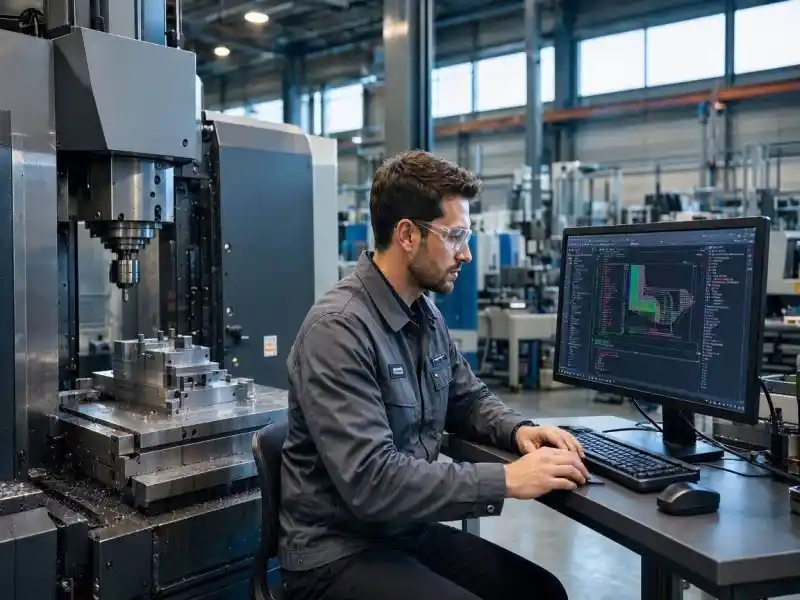
Do you feel like you are being overcharged when you see a quote for a simple aluminum¹ block? It is easy to think the machine does all the work, but the hidden costs are often found in the preparation and human skill required.
The high price of CNC machining is mostly due to human labor for programming and setup, not just the machine itself. Complex geometries require multiple setups or expensive 5-axis machines, while tight tolerances and material waste from poor design further drive up the total production cost.
Many people believe the machine price is the main factor. In reality, the “person” is more expensive than the “machine.” For a complex part, my team might spend half a day just on programming and setting up the tools. If you only order one or ten parts, that labor cost is spread across a very small number of pieces. This makes the price per part look huge. Another big cost is what I call “cutting air.” If a design does not match standard material sizes, the tool must spend 20% more time just removing extra metal. This is a total waste of time and electricity.
Complexity also adds risk. If a part needs to be flipped four times to hit every side, the chance of a mistake goes up. At Ranglink, we focus on high quality to keep our scrap rate² below 1%. If a supplier has a 10% scrap rate, they will eventually charge you for those mistakes. Finally, let’s talk about tolerances. Moving from a ±0.1mm tolerance³ to ±0.01mm can triple your cost. It requires slower cutting, more expensive jigs, and constant measuring in a temperature-controlled room. Most parts do not need that level of precision everywhere.
| Factor | Cost Impact | Why it costs more |
|---|---|---|
| Setup & Programming | High (for small batches) | Requires skilled engineers and several hours of prep. |
| Geometry Complexity | Medium to High | Requires 5-axis machines or multiple manual flips. |
| Tolerances | Very High | Slower speeds, specialized tools, and more inspection. |
| Material Waste | Low to Medium | Using oversized raw blocks means more machining time. |
How to calculate CNC machining cost?
Do you wonder how a machine shop arrives at a specific number for your quote? Understanding the formula we use can help you spot where your design is pushing the price higher than it needs to be.
CNC machining costs are calculated by adding material costs, machine hourly rates, and one-time tooling or programming fees. The total is then divided by the number of parts, meaning larger batches significantly lower the unit price by spreading out the fixed setup costs.
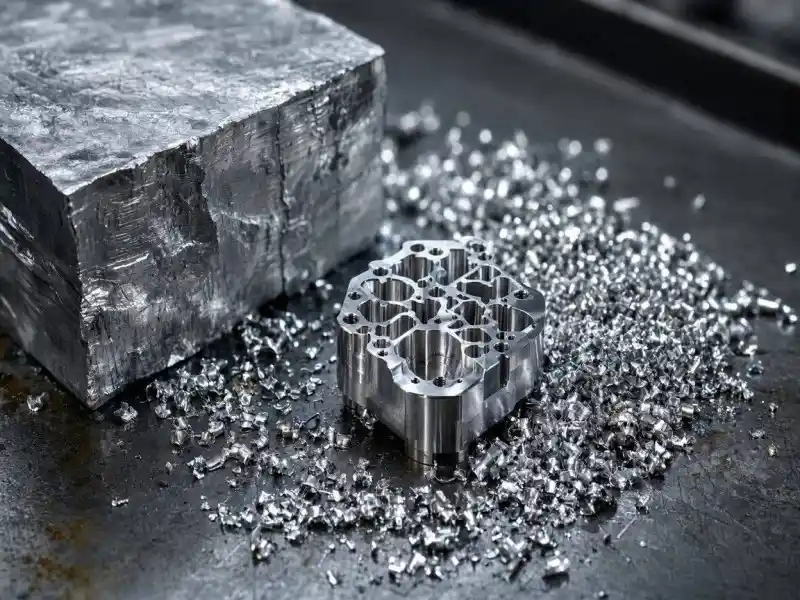
When I sit down to quote a project for a customer , I look at three main buckets. First is the material cost. This is not just the weight of the final part; it is the cost of the raw block plus the waste. If a part has an odd shape, I might only get a 50% “utilization rate” from a sheet of aluminum. I often suggest small changes to the part’s outline so I can fit more pieces onto one standard sheet. This simple move can cut material costs in half. Second is the machine time. This includes “cutting time” and “secondary time.” Secondary time is for loading parts, changing tools, and checking dimensions. If we can reduce how many times we touch the part, the price drops.
The third bucket is the one-time engineering fee. This covers the CAM programming⁴ and any custom jigs⁵ we need to build. For a single prototype, this might be 70% of your bill. For 1,000 parts, it is almost zero. I always tell my customers to check the “setup fee” vs the “unit price.” If the setup fee is high, adding more parts to the order will give you a much better deal. Also, remember geography. While shops in the US or Australia might charge $100 per hour, our rates in China are closer to $20-$30. Even with shipping, the total “landed cost” is often much lower for steady production runs.
| Cost Component | Description | Strategy to Reduce |
|---|---|---|
| Material | Raw stock + scrap | Use standard sizes; improve utilization. |
| Machine Rate | Hourly fee for the CNC | Reduce cycle time and setup changes. |
| Labor | Programming & Setup | Order larger batches to dilute this cost. |
| Post-Processing | Anodizing⁶, coating, etc. | Use standard finishes; avoid manual polishing. |
What are some ways to reduce CNC machining costs?
Are you looking for practical ways to trim your budget without losing the quality of your mechanical parts? You can often save 30% or more by making a few small adjustments to your engineering drawings before you send them to the shop.
To reduce CNC costs, you should minimize the number of setups, use standard material thicknesses, and avoid deep, narrow cavities or sharp internal corners. Relaxing tolerances on non-critical dimensions and using standard thread sizes will also significantly speed up production and lower your bill.
The best advice I give after 20 years is to reduce setup changes. If your part needs to be machined from five different directions, it is going to be expensive. Try to design so everything can be reached from one or two sides. This allows me to use standard vises⁷ instead of custom fixtures. Another big win is tolerances. Don’t mark everything as ±0.01mm. Keep the tight tolerances for where parts actually touch, and use ±0.1mm for the rest. This allows us to run the machines faster and spend less time measuring.
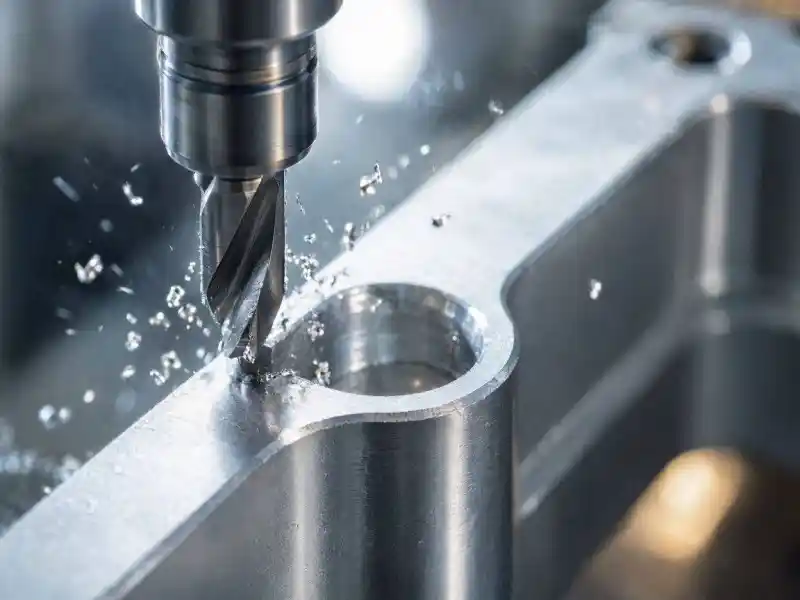
I also see many designers choose non-standard material sizes. If you design a part that is 18mm thick, but the standard plate is 20mm, I have to mill off 2mm of perfectly good metal. If you can make the part 16mm or exactly 20mm, you save money immediately. Also, please avoid sharp internal corners and tiny deep holes. These require special tools that break easily and run very slowly. Adding a small radius⁸ (like 3mm) allows us to use a standard end mill⁹ at high speeds. Lastly, think long-term. If you work with Ranglink as a regular partner, we keep your programs and jigs ready. Your second and third orders will always be cheaper because the hard work is already done.
Conclusion
Reducing CNC costs is about balancing design needs with manufacturing reality. By simplifying setups, choosing standard materials, and using realistic tolerances, you can turn expensive designs into affordable, high-quality reality.
Ready to start your next project?
Whether you need high-precision batch production or expert advice on the best machining path, I am here to help.
Contact me today for a fast quote:
Email: info@ranglink.com
WhatsApp: Message us on WhatsApp
- Overview of the properties and applications of aluminum in industry.
- Definition of scrap and manufacturing waste material.
- Guide to engineering tolerances and limits in precision manufacturing.
- Explanation of Computer-Aided Manufacturing (CAM) software used in CNC.
- Overview of jigs and their function in controlling machining tools.
- Technical explanation of the anodizing surface treatment process.
- Information on vises used to secure workpieces during machining.
- Engineering principles behind using a radius or fillet to reduce stress.
- Details on end mill cutting tools used in CNC milling operations.