
Choosing the wrong aluminum alloy can ruin your project budget and timeline. This guide helps you decide between aluminum 6061 vs 7075 based on real factory experience and material performance.
6061 aluminum is the best all-around choice for most CNC machining projects because it is affordable, easy to weld, and corrosion-resistant. 7075 aluminum is superior only when you need extreme strength or hardness, though it costs significantly more and is much harder to weld.
I have seen many engineers over-specify materials because they want the “best” for their design. However, the best material is the one that meets your functional needs without wasting money. This article will help you understand the real-world differences between these two popular alloys from a machinist’s perspective.
What is the best aluminum for CNC machining?
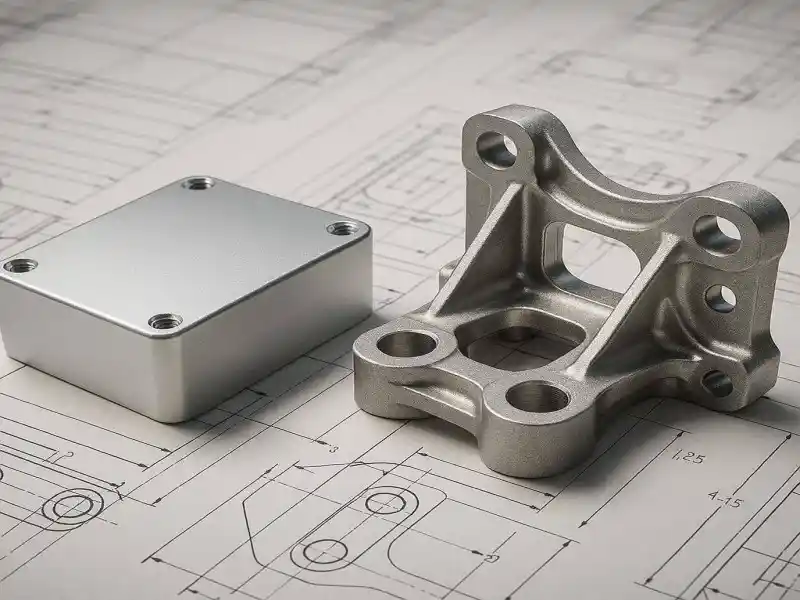
Choosing the wrong material leads to high costs and manufacturing delays. You need a balance between performance and price to keep your project on track and within budget.
Aluminum 6061 is the best general-purpose alloy for CNC machining due to its excellent balance of strength, weldability, and low cost. It is the industry standard for frames, brackets, and consumer goods where extreme structural loads are not a primary concern.
At Ranglink, I often see customers ask for the “best” aluminum. I always tell them that “best” depends on the application. 6061¹ is the all-rounder. It is easy to machine, easy to anodize², and very cheap. 7075³ is a specialist. It has strength and hardness close to soft steel, but it is expensive and difficult to weld. If you are making a simple bracket or a housing, 6061 is always the right choice. Its biggest advantage is actually how common it is. Every CNC shop has it in stock. This means your lead times are shorter and prices are predictable.
I once helped a client save 30% on an automated fixture. His drawing called for 7075. I asked him what the fixture was holding and how many cycles it would run. It was holding aluminum parts for a 500-unit run. I suggested 6061 instead. We saved him one-third on material costs and finished the job two days faster.
Comparison of Key Applications
| Feature | Aluminum 6061 | Aluminum 7075 |
|---|---|---|
| Best For | General structures, enclosures, frames | Aerospace⁴, high-stress tools, racing |
| Weldability | Excellent | Poor (Avoid welding) |
| Availability | Extremely high (Stocked everywhere) | Moderate (Often requires special order) |
| Surface Finish | Very good (Clean anodizing) | Good (May look dull/yellowish) |
How much stronger is 7075 than 6061 aluminum?
Using a material that is too weak causes part failure. However, using one that is too strong can lead to brittle parts that snap under impact.
7075-T6 aluminum is nearly twice as strong as 6061-T6, with a tensile strength of about 570 MPa compared to 310 MPa. This makes 7075 the top choice for high-load applications like aerospace components or high-performance mountain bike parts.
Strength is impressive, but it comes with a trade-off in toughness. 7075 is much more brittle than 6061. It has only about half the elongation of 6061. This means under a heavy impact, a 6061 part might bend, while a 7075 part might snap. I tell my clients that if their part faces vibration or sudden shocks, 6061 might actually be safer.
Another point I often explain to designers is that hardness does not always mean better wear resistance. Both alloys are still aluminum. If you need serious wear resistance, neither of these is a great choice compared to steel. Also, 7075 has lower thermal and electrical conductivity. I saw a customer use 7075 for a heat sink once. The cooling efficiency dropped by 15% compared to their old 6061 design. They had to switch back because strength wasn’t the goal—heat dissipation was.
Mechanical Property Breakdown
| Property | 6061-T6 Aluminum | 7075-T6 Aluminum |
|---|---|---|
| Tensile Strength⁵ | 310 MPa | 570 MPa |
| Yield Strength⁶ | 270 MPa | 503 MPa |
| Hardness (Brinell) | 95 | 150 |
| Elongation at Break | 12-17% | 7-11% |
Is 7075 easier to machine than 6061?
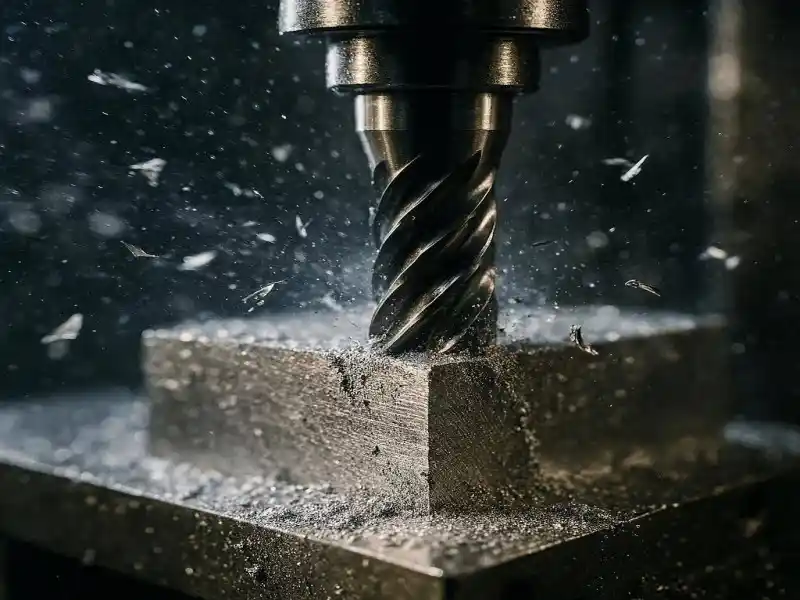
High machining costs can kill a project. If a material is hard to cut, it takes more time and kills your tools faster.
No, 7075 is not easier to machine than 6061. 7075 is much harder, which wears down cutting tools significantly faster and requires slower cutting speeds, typically increasing the total machining time by 20% to 30%.
In our shop, a tool that lasts all morning cutting 6061 might only last two hours on 7075. The chips from 7075 are very fine and powdery, which requires excellent chip evacuation to avoid issues. However, 7075 does have one machining benefit: it is not “sticky.” 6061 is soft and can gum up the cutting edges of a tool. This causes “Built-Up Edge⁷” (BUE), which can ruin the surface finish. 7075 cuts very cleanly and leaves a very sharp finish.
When we machine 7075 at Ranglink, we have to slow down. We usually reduce the cutting speed and increase the coolant flow. This keeps the tool from overheating and ensures the dimensions stay stable. If you have a 100mm square plate, it might take 15 minutes in 6061 but nearly 25 minutes in 7075. These extra minutes and the cost of broken tools will always show up on your final quote.
Machining Comparison Table
| Machining Factor | 6061 Aluminum | 7075 Aluminum |
|---|---|---|
| Tool Life | High | Low to Moderate |
| Surface Finish | Good (can be “sticky”) | Excellent (crisp and clean) |
| Machining Speed | Fast | Slow (20-30% slower) |
| Chip Type | Long, stringy | Small, brittle, powdery |
What are the disadvantages of 7075 aluminum?
Hidden material flaws can lead to field failures. You don’t want your parts to corrode or crack after you have already shipped them.
The main disadvantages of 7075 aluminum are poor corrosion resistance, extremely poor weldability, and high cost. It is prone to stress corrosion cracking in humid environments and can deform easily during machining due to internal stress.
I once had a client use 7075 for marine brackets without any coating. A year later, the parts were covered in white powder and had tiny cracks near the bolt holes. 6061 would have survived much longer because it handles moisture better. Another “dead zone” for 7075 is welding. It tends to crack when welded, and the weld area becomes much weaker than the rest of the part. If your design includes a weld symbol, just forget about 7075.
Internal stress is another hidden trap. When we cut 7075, especially for thin-walled parts, the metal “moves” as we remove material. We often have to stop, let the part “rest,” or even do a secondary heat treatment⁸ to keep it flat. This adds steps and time to the production. Even for aesthetics, 7075 is tricky. If you do a clear anodizing, it often looks a bit yellow or dull compared to the bright silver look of 6061.
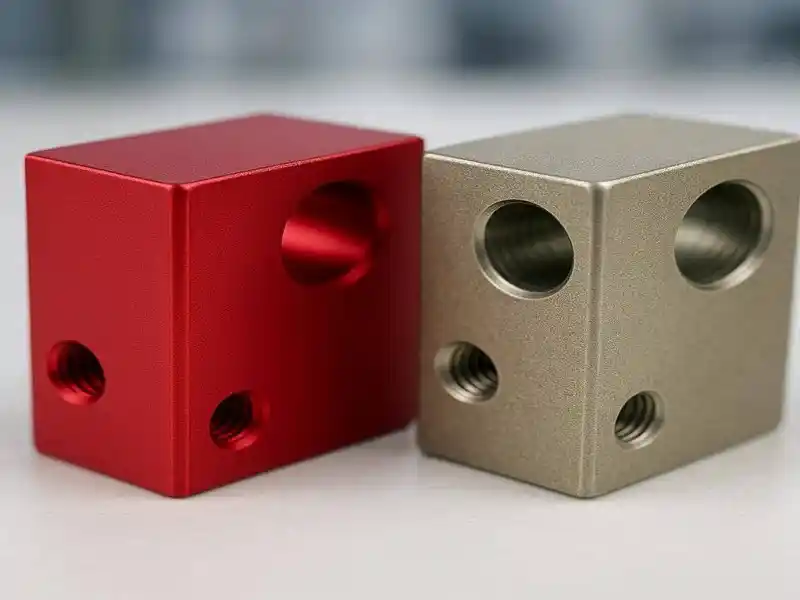
Why 7075 Might Fail You
| Problem Area | Why it happens in 7075 | Result |
|---|---|---|
| Corrosion | High zinc⁹ content | Surface pitting and cracking |
| Welding | Unfavorable alloy mix | Heat cracks in the weld seam |
| Stability | High internal stress¹⁰ | Part warpage during or after machining |
| Appearance | Alloy impurities | Dull or yellowish anodized finish |
What is the price difference between 6061 and 7075?
Every dollar counts in manufacturing. Understanding the price gap helps you justify your material choices to your management or your customers.
Raw 7075 aluminum usually costs 30% to 50% more than 6061. When you include the increased machining time and tool wear, the final price of a 7075 part is often 50% to 100% higher than a 6061 part.
The material price is just the tip of the iceberg. The real cost comes from the labor and the machine time. At Ranglink, I always tell clients to look at the total cost, not just the per-pound price of the metal. If a 6061 part costs $50, the 7075 version might be $85. If you are making 100 pieces, that is a $3,500 difference. You have to ask yourself if the extra strength is worth that $3,500.
I have a tip for designers: use 6061 for your prototypes¹¹. Prototyping is for checking fit and basic function. Why waste money on expensive 7075 if you might change the design next week? Once the design is locked and you know you need the extra strength for the final product, then switch to 7075 for the production run. This strategy saves you a lot of money and risk during the development phase.
Estimated Cost Comparison (Per Part)
| Cost Component | 6061 Aluminum | 7075 Aluminum |
|---|---|---|
| Raw Material | Base Price | +40% average |
| Machining Labor | Standard | +25% due to slower speeds |
| Tooling Cost | Low | Higher (More tool changes) |
| Total Finished Cost | $100 (Baseline) | $150 – $180 |
Conclusion
Choose 6061 for most projects to save money and time. Only upgrade to 7075 when your design strictly requires extreme strength and you can afford the higher costs.
Ready to start your next project?
Whether you need high-precision batch production or expert advice on the best machining path, I am here to help.
Contact me today for a fast quote:
Email: info@ranglink.com
WhatsApp: Message us on WhatsApp
- Overview of the properties and applications of 6061 aluminum alloy.
- Technical explanation of the anodizing surface treatment process.
- Information on 7075 aluminum alloy, known for its high strength.
- Details on the aerospace industry and its rigorous material standards.
- Definition of ultimate tensile strength in materials science.
- Explanation of yield strength and permanent deformation point.
- Overview of built-up edge phenomena during machining processes.
- Guide to industrial heat treatment methods for metals.
- Properties of zinc and its role as an alloying element in aluminum.
- Explanation of internal and residual stresses in materials.
- Definition and stages of product prototyping in engineering.