
The smartphone case in my hand has tighter curves than a satellite part from 1965. That is what the history of CNC machining has made possible.
Stop searching through scattered sources. This guide covers the full journey from simple punched holes to intelligent 5‑axis systems. It will save you time and help you understand why modern CNC is so dependable.
The World Before CNC Machining
People made metal parts by hand many years ago. Workers used manual lathes and milling machines. The labor was physical. The work was slow. A machinist turned wheels by hand to move the cutting tool. Human eyes guided every cut. This manual process led to many problems. A tired worker made mistakes. A small error ruined the whole part. Factories lost money and time. Mass production was almost impossible. Every single part ended up slightly different. The world needed a better way.
The Birth of Numerical Control in the 1940s
John T. Parsons1 had a new idea in the 1940s. He worked on helicopter rotor blades for the military. These blades needed perfect shapes. Manual work could not achieve them. Parsons thought about using numbers to guide a machine. He used punched cards with small holes. The holes contained instructions. The machine read the holes and moved the cutter accordingly. People called this first system Numerical Control, or NC.
The United States Air Force saw the potential. They needed high‑quality aircraft parts. So they funded Parsons and his research at the Massachusetts Institute of Technology2. MIT engineers built the first true NC machine in 1952. The machine was huge. It took up a lot of space. It used vacuum tubes and a long paper tape with punched holes. Workers called it punched tape.
The Punched Tape Era
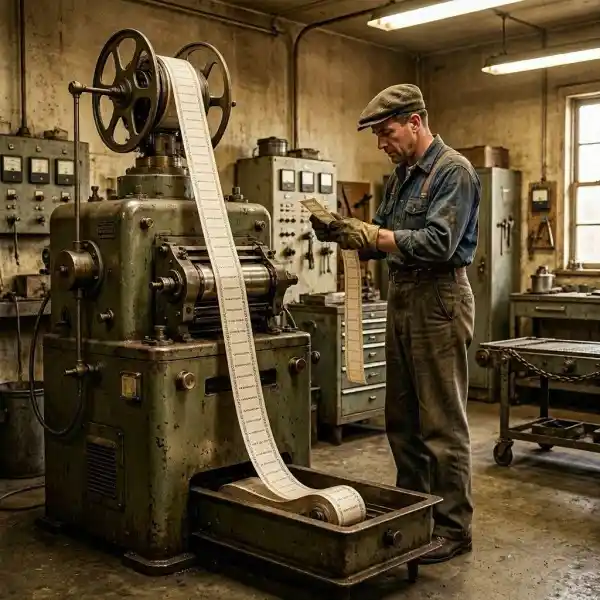
Punched tape became the standard in the 1950s. An operator typed a program on a special typewriter. The typewriter punched tiny holes into a paper tape. The tape went into the NC machine. A mechanical reader scanned the holes line by line. It turned the holes into electrical signals. The signals moved large motors. The motors moved the cutting tool. The machine cut metal automatically.
But paper tape had serious problems. It tore easily. Factory oil and dirt ruined it. So engineers switched to strong Mylar3 plastic tape. Mylar did not tear. Still, the process was slow. You could not fix a mistake on the tape. You had to punch a completely new tape. Factories kept libraries of tapes. A single complex part might need dozens of them. Dropping a box could destroy an entire process. I respect those early machinists. They had to be meticulous. That discipline still matters at Ranglink. Our quality system traces every job with the same care.
The Shift to Computer Numerical Control in the 1970s
Computers changed everything. They became smaller and cheaper. Engineers placed a small computer inside the NC machine. This created Computer Numerical Control, or CNC. The extra “C” was a huge step forward. Now the program lived in memory. You did not need physical tape anymore. You could edit the program on a screen. You could fix mistakes fast. This cut setup times dramatically.
CNC also allowed on‑the‑fly calculations. The controller could interpolate curves. It could maintain constant surface speed. It could compensate for tool wear automatically. This improved accuracy and surface finish. Machines could store multiple programs. Switching between jobs became quick. A shop could machine a pump housing in the morning and a bracket in the afternoon. Flexibility was born.
The Important G‑Code Standard
CNC machines needed a common language. Engineers created G‑code4. It is still the main language for CNC machining today. G‑code tells the machine where to move. It tells the machine how fast to move. It tells the machine when to turn on coolant. G‑code uses simple letters and numbers. The letter X controls left and right. The letter Y controls forward and backward. The letter Z controls up and down. Every modern CNC machine understands G‑code. It is a simple but powerful language. A person can read it. A computer can execute it. This standard connects different machines and shops together.
Personal Computers and CNC Software in the 1980s
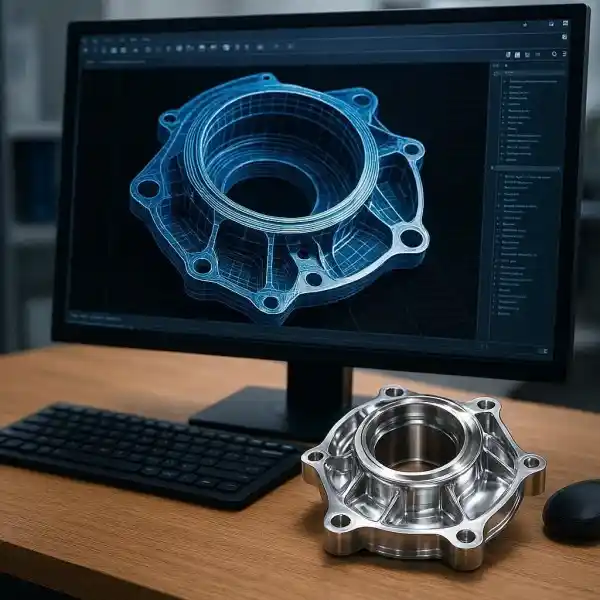
Personal computers arrived in the 1980s. Engineers wrote powerful software for them. The first type is CAD, or Computer‑Aided Design5. An engineer draws a precise 3D model on the screen. The second type is CAM, or Computer‑Aided Manufacturing. CAM software takes the CAD model and automatically generates G‑code. The PC sends the code to the CNC machine. This digital thread made the whole process fast and easy to learn. Small shops could now afford a PC and a small CNC machine. CNC machining was no longer only for giant factories. Small businesses could access high‑quality CNC machining services too. At Ranglink, we serve both startups and large enterprises with our CNC machining services.
Adding More Axes: From 3‑Axis to 4‑Axis
Early CNC machines moved in three directions. We call them 3‑axis machines. A 3‑axis mill moves the tool left and right (X), forward and backward (Y), and up and down (Z). It is great for flat parts and simple pockets. Many of our jobs at Ranglink still run on rigid 3‑axis machines. They are cost‑effective and reliable.
But complex parts need more access. A 3‑axis tool cannot reach the side of a part. The worker had to stop the machine, unclamp the part, turn it by hand, and clamp it again. This took time and introduced small alignment errors. So engineers added a fourth axis. A 4‑axis machine has a rotary table. The table spins the part while the tool cuts. This allows machining on multiple sides in one setup. It was a big improvement for efficiency and accuracy.
The Power of 5‑Axis CNC Machining
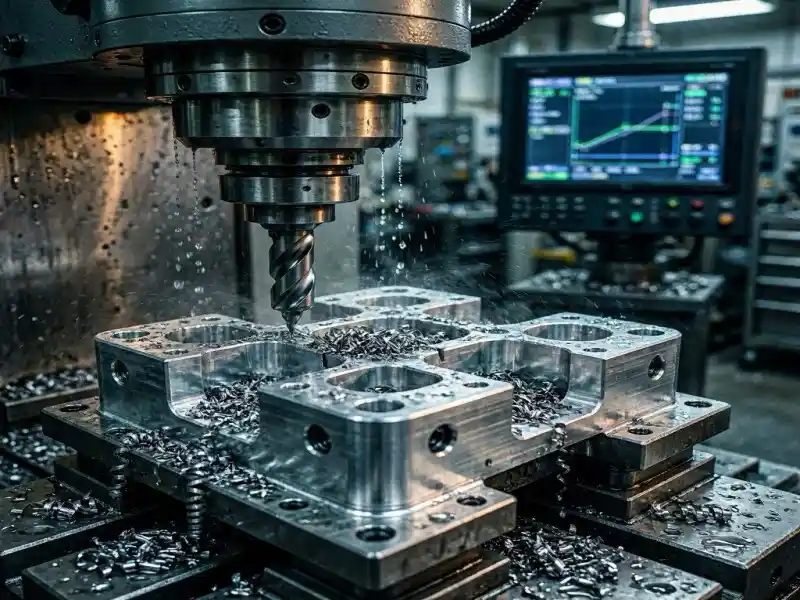
Engineers did not stop at four axes. They built the 5‑axis CNC machine. It moves the tool along three linear axes and also tilts and rotates the part or the tool along two additional rotary axes. The cutting tool can reach almost every side of the part in a single setup. This eliminates manual repositioning. The result is higher accuracy, shorter lead times, and better surface finish.
5‑axis machining is essential for aerospace. Airplanes need complex structural parts with perfect integrity. It is vital for medical devices. Doctors need custom implants and surgical tools with smooth surfaces. A 5‑axis machine can cut hard metals like titanium6 easily. The surface looks like a mirror. At Ranglink, our 5‑axis capability lets us produce impellers, housings, and other high‑value components for global clients. We combine this advanced hardware with over 16 years of manufacturing experience.
Modern CNC: Simulation, Connectivity, and Intelligence
Modern CNC goes beyond hardware. CAM systems now offer full machine simulation. You can watch a digital twin cut the part before any metal is touched. This catches collisions and optimizes toolpaths. We use this at Ranglink to give accurate quotes and avoid surprises. Machines are also networked. They report spindle load and production data to the cloud. You can monitor your job from your phone. This transparency builds trust with procurement teams.
Looking ahead, Artificial Intelligence7 will make CNC machines even smarter. AI can listen for strange noises. It can predict tool wear before it causes a problem. Robots will load raw material and unload finished parts. Factories will run unattended through the night. We call this lights‑out manufacturing. It will make parts faster and more affordable. But the core idea will remain the same. A computer program will always guide the cutting tool with absolute precision.
Why History Matters for Your Sourcing Decisions
I share this history because it helps you choose a supplier. A shop that understands the journey from tape to 5‑axis has deep roots. They respect machine rigidity. They understand thermal stability. They know how to troubleshoot problems. At Ranglink, our 16‑year story is built on this progression. We started with 3‑axis machines. We grew into complex 5‑axis work. Every lesson we learned goes into the parts we make for you. When you send us a STEP file, we review it with the same care a craftsman once gave to reading a punched tape—line by line.
Conclusion
The story of CNC machining is a journey from simple punched holes to powerful 5‑axis systems. These machines build our modern world. They make safe airplanes, reliable cars, and life‑saving medical tools. Ranglink is proud to be part of this industry. We use the best technology available to provide exceptional CNC machining services to customers everywhere.
Now it is time to focus on your parts. Do not wait any longer. Visit ranglink.com today. Let us build great things together.
- Wikipedia article detailing the life and inventions of John T. Parsons, the pioneer of numerical control.
- Official website of the Massachusetts Institute of Technology (MIT).
- Wikipedia article on BoPET (Mylar), a strong polyester film used for early numerical control tapes.
- Wikipedia page explaining G-code, the widely used computer numerical control programming language.
- Wikipedia reference for Computer-Aided Design (CAD) technology.
- Wikipedia overview of Titanium and its physical properties.
- Wikipedia page about Artificial Intelligence and its modern industrial applications.