
Are you unsure if your part design is actually “machinable”? Many engineers design great products, but they don’t know how their parts are made or why suppliers reject certain drawings.
Machined parts are components created by removing material from a solid block using CNC machines. Unlike cast or forged parts, machined parts achieve tighter tolerances and smoother surface finishes. They are used in everything from medical implants to aerospace brackets.
I am Ella Lee, and I have spent over 20 years in the CNC machining industry. At Ranglink, we make thousands of machined parts every month for customers all over the world. I want to help you understand the basics so you can design better parts and find the right supplier.
What Are the Common Types of Machined Parts?
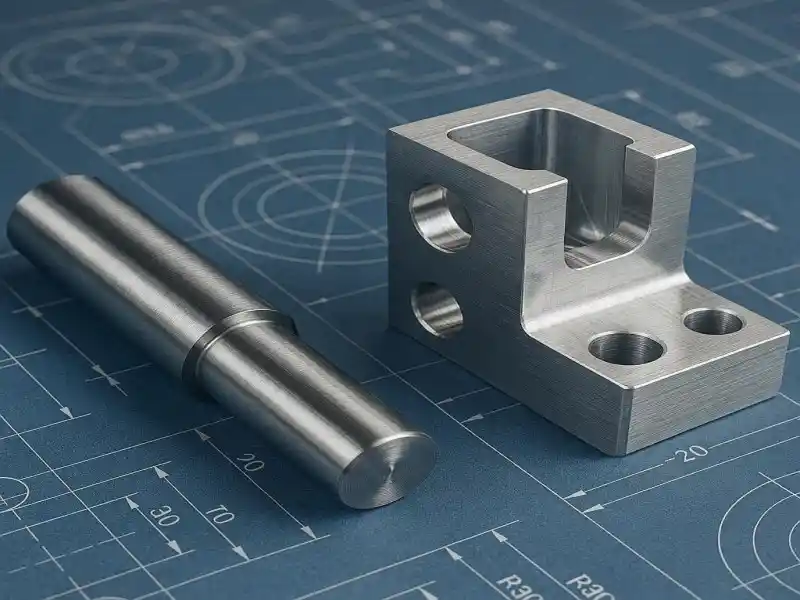
Do you know if your part is a “turned” part or a “milled” part? Sending an RFQ with the wrong process name can lead to bad quotes and confused suppliers.
Machined parts are usually categorized by the process that makes them. Turned parts are round and made on a lathe. Milled parts have flat faces, slots, and pockets. Drilled parts are defined by precise holes. Many complex parts combine multiple processes.
When I look at a drawing, I first check the main shape. If the part is mostly round, it is likely a turned part. Shafts, pins, and bushings are classic examples. We use CNC lathes¹ to spin the workpiece while a stationary tool cuts the profile. If the part is blocky with pockets and angled faces, it is a milled part. Housings, brackets, and engine mounts fall into this group. We use CNC milling machines² with rotating tools to carve these shapes from a solid block.
Some parts need both processes. A roller with a keyway, for example, starts on a lathe to get the round body, then goes to a mill for the flat slot. At Ranglink, our shop has over 100 machines including lathes, mills, and 5-axis³ centers, so we can handle these mixed-process parts without sending them to different factories.
Common Part Types and Where They Are Used
| Part Type | Process | Typical Application |
|---|---|---|
| Shafts & Pins | Turning | Motors, gearboxes, hinges |
| Bushings & Sleeves | Turning | Bearings, wear guides |
| Housings & Enclosures | Milling | Electronics, sensors, pumps |
| Brackets & Mounts | Milling | Automation, automotive, aerospace |
| Threaded Fasteners | Turning/Milling | Assembly, fluid fittings |
| Custom Fixtures | Milling | Production lines, testing rigs |
Which Materials Are Used for Machined Parts?
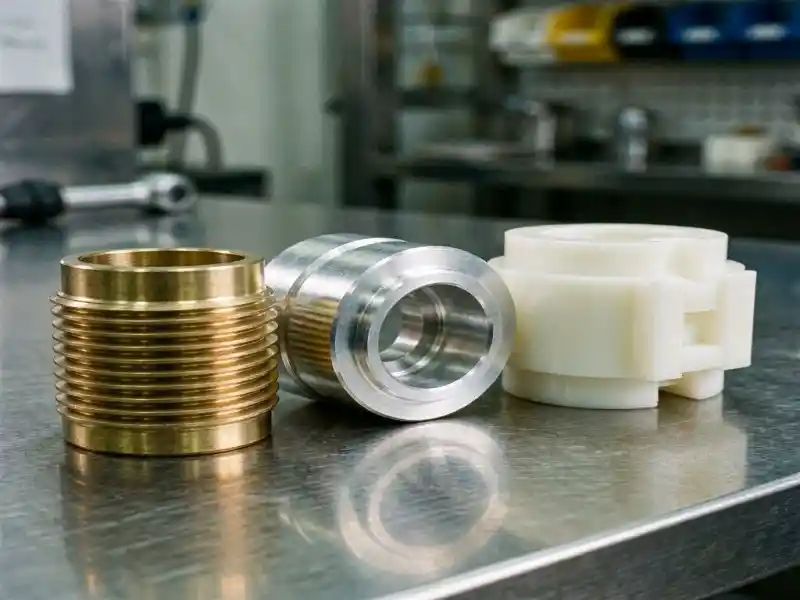
Do you pick materials based only on strength? Many first-time buyers miss the fact that machinability and availability matter just as much as mechanical properties for your bottom line.
The most common machined part materials are aluminum (6061, 7075), stainless steel (303, 304), carbon steel (45, 4140), brass (C360), and engineering plastics like POM and PEEK. Each material offers a different balance of strength, weight, corrosion resistance, and cost.
In my experience, 6061 aluminum is the workhorse. It machines fast, welds well, and takes anodizing⁴ beautifully. About 60% of the parts we make at Ranglink are from 6061. If you need more strength, 7075 is roughly twice as strong, but it costs more and cannot be welded. For stainless steel, I always ask: does your part need welding? If not, use 303 instead of 304. 303 contains sulfur⁵, which makes it much easier to cut. Your tools last longer, and your parts cost less.
Plastics are often overlooked. POM machines like butter and is extremely stable. PEEK can handle 250°C but costs a lot. If you want to explore which material is right for your specific part, check our complete list of CNC machining materials.
What Tolerances and Surface Finishes Are Achievable?
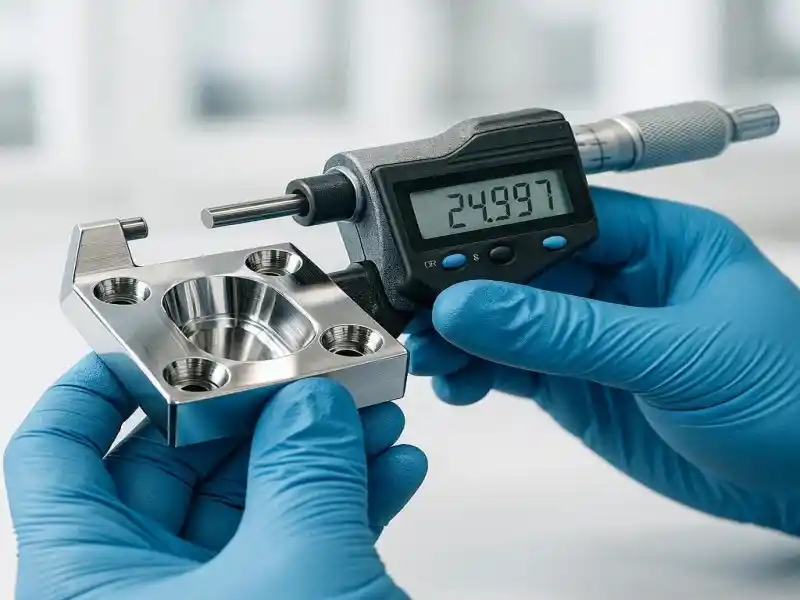
Are you over-tolerancing your parts? Many designers add tight numbers to every dimension, not realizing this can double or triple their production costs for no functional reason.
Standard CNC machining tolerances are ±0.05mm for metals and ±0.1mm for plastics. Precision work can reach ±0.005mm. Tight tolerances should only be applied to mating surfaces and critical features. Relaxing non-critical dimensions speeds up machining and lowers your cost.
I often see drawings where every hole has a ±0.02mm tolerance. When I call the engineer to ask why, the answer is usually “just to be safe.” This safety adds cost. At Ranglink, we can hit ±0.005mm on our 5-axis machines, but we only recommend it when absolutely necessary. For most structural parts, ±0.1mm works perfectly.
Surface finish⁶ is another area where knowledge saves money. A standard machined finish is usually Ra 3.2, which is smooth enough for most applications. If you need a mirror finish, we can polish down to Ra 0.4 or lower. Post-processes like anodizing, bead blasting⁷, or powder coating can also improve appearance and corrosion resistance. I always suggest asking your supplier what finish they recommend for your material and application.
Where Are Machined Parts Used?
Do you wonder which industries rely most on CNC machined parts? Knowing this helps you understand if your supplier has relevant experience with your type of components.
Machined parts are essential in aerospace, medical devices, automotive, industrial automation, and consumer electronics. Each industry has unique requirements for material certification, traceability, and quality documentation that a good supplier must understand.
In aerospace, every part needs full traceability⁸. We provide material certs, inspection reports, and process documentation with every shipment. In medical devices, surface finish and cleanliness are critical. We machine surgical tool components that must be completely burr⁹-free and smooth to the touch. For automation and robotics, the focus is on precision and repeatability. End-effector parts and custom fixtures must hold tight tolerances over thousands of cycles.
Consumer electronics often need beautiful cosmetic finishes. We machine aluminum housings that get anodized in custom colors. Each industry has its own rhythm and requirements. A good machining partner knows the difference.
Conclusion
Machined parts are the backbone of modern manufacturing. They range from simple bushings to complex 5-axis aerospace brackets. Understanding the types, materials, tolerances, and applications helps you design better products and choose the right supplier.
Need a reliable partner for your machined parts?
Send your drawing to Ranglink today. I will personally review it and provide a free quote with DFM feedback within 24 hours.
- Overview of lathe machine tools and their history in manufacturing.
- Detailed explanation of the milling machining process and equipment.
- Information on multi-axis machining and 5-axis CNC capabilities.
- Technical explanation of the anodizing surface treatment process for metals.
- Chemical properties of sulfur and its use in free-machining steel alloys.
- Engineering standards and measurements for surface finish and roughness.
- Guide to abrasive blasting processes including bead blasting for metal finishes.
- Definition of traceability in supply chain and manufacturing quality control.
- Explanation of burrs in machining and the importance of deburring.