
Struggling with inconsistent part quality or delayed shipments? Many buyers find that low-cost CNC shops lack the precision needed for complex builds, leading to wasted budgets and failed assemblies.
CNC machining is a subtractive manufacturing process that uses computerized controls to operate and move machine tools. It removes layers of material from a stock piece—called a workpiece—to create a custom-designed part with high precision, speed, and repeatability across various metals and plastics.
Most people think you just toss a drawing into a computer and the part pops out perfectly. I have spent 20 years on the shop floor at Ranglink, and I have seen how the same digital file can result in two totally different parts depending on who runs the machine. A machine list on a website does not guarantee a good result. You need a partner who understands that machines decide the floor, but people decide the ceiling of quality. Let me explain the real world of CNC so you can find a supplier who actually delivers.
What is CNC machining in simple terms?
Finding it hard to explain CNC costs to your team? When technical jargon gets in the way of clear communication, it is easy to make poor purchasing decisions that hurt your project timeline.
CNC stands for Computer Numerical Control. In simple terms, it is like a high-tech “robot” carver. You give a computer a digital 3D model, and the computer tells a sharp cutting tool exactly where to move to shave away material until the final shape remains.
When I talk to new clients, I often use the analogy of a sculptor. A traditional machinist is like a sculptor using a hammer and chisel by hand. CNC machining is like having a robot sculptor that never gets tired and follows a map down to the micron. At Ranglink, we use this technology to turn raw blocks of aluminum, steel, or plastic into complex parts for automation equipment. Our CNC machining services are designed to handle these complexities with high efficiency.
But here is my insight: the machine only sets the baseline. I have seen shops with brand-new five-axis machines produce scrap because they did not understand material stress. It is not just about “cutting.” It is about managing heat, vibration, and tool wear. You need to know that CNC is a blend of high-end software and “old school” metal-working knowledge. If a shop cannot explain their process or point out risks in your design, they probably do not have the control you need for a long-term partnership.
| Feature | Manual Machining | CNC Machining |
|---|---|---|
| Precision | Depends on operator’s hand | Controlled by software (Micron level) |
| Speed | Slow for complex shapes | Very fast for batch production |
| Repeatability | Hard to replicate exactly | Identical parts every time |
| Complexity | Limited to simple geometry | Can handle very complex curves |
How does CNC machining work?
Are you tired of “black box” manufacturing where you send a drawing and pray for the best? Lack of process transparency often leads to hidden defects that only surface during your final assembly.
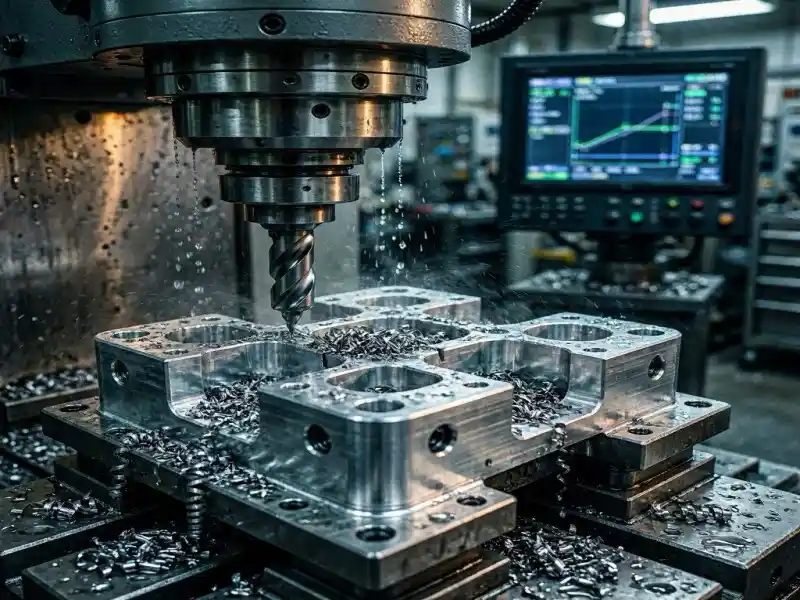
The CNC process follows a strict sequence: Designing a CAD model, converting that model into a CNC program (G-code), setting up the machine with tools and material, and finally, executing the automated cutting operation to create the part.
The journey from a digital file to a physical part is more intense than it looks. First, we take your CAD file. My team at Ranglink does not just hit “start.” We analyze the geometry to see if it is actually “makeable.” We look for sharp internal corners that a round tool cannot reach. Then, we use CAM software1 to create a toolpath. This path is translated into G-code2—the language the machine speaks.
The setup phase is where the real quality is won or lost. This is where we choose the fixtures to hold the part steady. If the part vibrates even a little bit, the surface finish will look like waves. We then select the cutting tools. A smart programmer will run the machine in a way that minimizes heat. If the metal gets too hot, it expands, and your tolerances go out the window. This is why our CNC machining process includes a thorough review of every drawing before the first chip is cut.
The Step-by-Step Breakdown
- CAD Design: You provide the 3D “blueprint” of the part.
- CAM Programming: We decide which tools to use and the order of operations.
- G-Code Conversion: The software writes the specific directions for the machine hardware.
- Machine Setup: We load the raw material and the cutting bits into the holder.
- The Cut: The machine removes material layer by layer following the G-code.
- Inspection: We measure the part against your specs to ensure every dimension is correct.
What skills do you need for CNC machining?
Worried that your supplier’s staff lacks the expertise to handle your tight tolerances? If the people behind the machines do not understand the “why” behind the “how,” your project risks high failure rates.
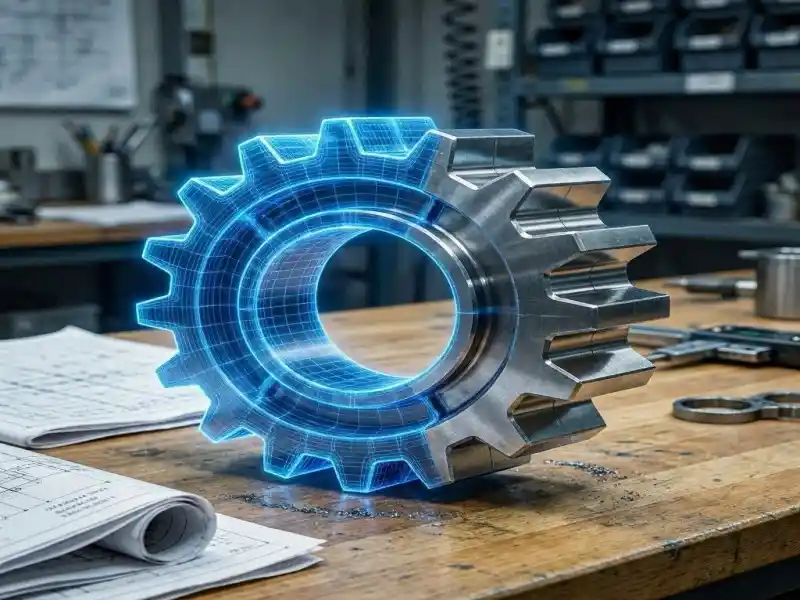
CNC machining requires a mix of digital and physical skills, including proficiency in CAD/CAM software, deep knowledge of metallurgy, the ability to read complex blueprints, and “shop floor” intuition to troubleshoot tool wear and machine vibrations in real-time.
In my 20 years in manufacturing, I have learned that a good technician is part programmer and part craftsman. They need to understand how different materials react. For example, stainless steel3 “work hardens” if you cut it too slowly, making it nearly impossible to finish. If the operator does not know this, your parts will be late because they broke ten drills trying to finish one hole.
You should look for a team that has deep experience. At Ranglink, our 60+ technicians have seen almost every problem imaginable. They know how to listen to the machine. A slight change in the “hum” of a spindle tells an experienced pro that a tool is about to fail. This proactive skill prevents the machine from ruinous errors that cause batch-wide defects. We also focus heavily on G-code optimization. This makes the machining faster, which saves you money, and smoother, which gives you a better finish. When you use our CNC machining, you are paying for this collective intelligence, not just the machine time.
Core Competencies in a Reliable Shop
- Blueprint Literacy: Deep understanding of GD&T4 (Geometric Dimensioning and Tolerancing) symbols.
- Material Science: Knowing how different alloys like Aluminum 6061 vs. 7075 behave under heat.
- Problem Solving: Adjusting the “feed and speed” on the fly when the raw material is inconsistent.
- Precision Measurement: Using micrometers and CMM machines5 to verify that “0.01mm” is exactly that.
Conclusion
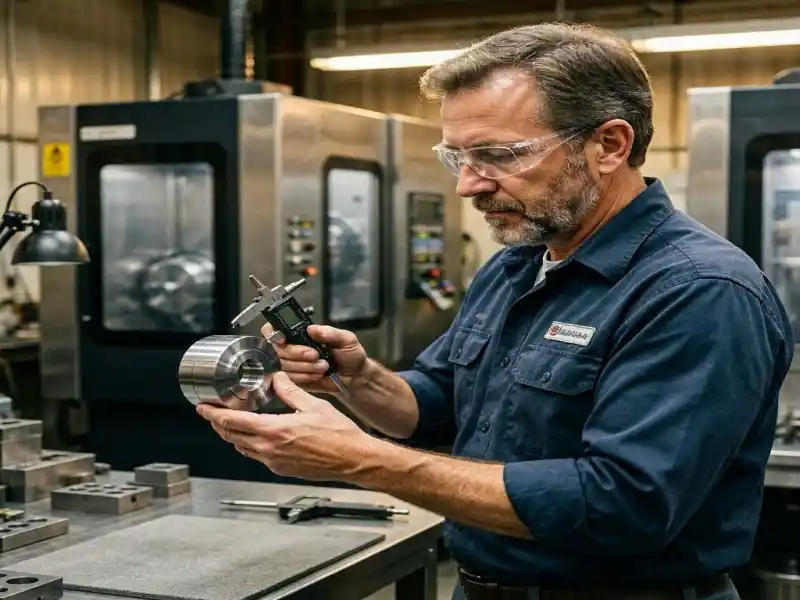
CNC machining is a high-precision process driven by both software and human expertise. At Ranglink, we combine advanced machines with 20 years of experience to deliver reliable parts every time.
Ready to start your next project with a partner who understands precision?
Contact us today for a quick quotation and technical review:
Email: info@ranglink.com
WhatsApp: Message us on WhatsApp
- Wikipedia page detailing the concept and application of Computer-aided manufacturing (CAM).
- Wikipedia page explaining G-code, the most widely used computer numerical control programming language.
- Wikipedia article about the properties and machining characteristics of stainless steel.
- Wikipedia page explaining Geometric Dimensioning and Tolerancing (GD&T) standards.
- Wikipedia page describing the function and operation of Coordinate-measuring machines (CMM).