
Are you struggling with electronic enclosure designs that are too complex for sheet metal or facing weeks of delay waiting for injection molds? These bottlenecks often stall critical hardware development cycles.
CNC machining for the electronics industry provides the precision and speed needed for high-performance components. It is the go-to process for manufacturing EMI-shielded enclosures, high-density heat sinks, and complex structural parts, offering tighter tolerances and better thermal management than traditional methods like sheet metal or plastic molding.
I have worked with many engineers who feel stuck between the limitations of simple folding and the massive costs of hard tooling. It is a common pain point in the electronics world. You need parts that work, you need them fast, and they must meet strict thermal or electrical specs. At Ranglink, I focus on bridging that gap by treating every prototype like a production piece. Let us dive into how this process actually solves your daily design challenges.
What electronic parts are manufactured using CNC machining?
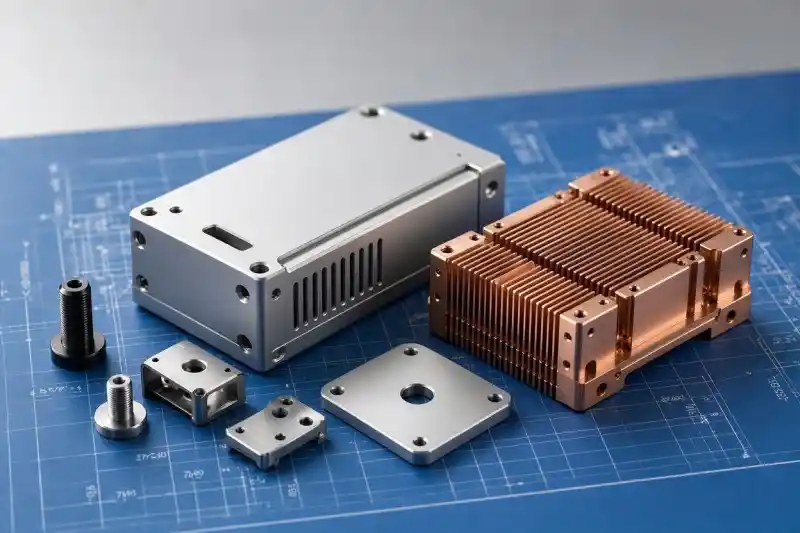
Does your design fall into the category of shielding, cooling, or structural support? Identifying the primary function is the first step because it dictates our entire machining logic and material choice.
Electronic CNC parts mainly fall into three categories: enclosures, thermal management components, and structural parts. Common examples include device housings, high-density heat sinks, cold plates, EMI shielding covers, PCB mounting plates, connector shells, and waveguide components used in telecommunications and aerospace applications.
When I take an order at Ranglink, I always ask: Is this part for EMI shielding¹, heat dissipation, or structural support? This answer changes everything. For example, a heat sink² is perhaps the most challenging part of electronic CNC work. I have machined CPU heat sinks where the fins are only 0.3mm thick with 0.5mm gaps. If the fins are 30mm high, the tool becomes long and thin, leading to vibration or breakage. I use high-speed spindles³ and specialized slim tools to handle this. If the material is copper, the difficulty doubles because copper is “sticky” and clogs the tools easily.
Another critical part is the EMI shielding cover. These are often thin and complex. I once made a shield for a communication module with a 0.5mm wall thickness and dozens of tiny openings. If the part warps during machining, it will not sit flat on the PCB⁴, and the shielding fails. I use vacuum fixtures and light cutting passes to ensure flatness.
| Part Category | Common Components | Key Requirements |
|---|---|---|
| Enclosures | Control boxes, panels, handheld housings | Aesthetics, EMI shielding, sealing |
| Thermal | Heat sinks, liquid cold plates⁵, vapor chambers | Surface area, thermal conductivity, fin density |
| Structural | PCB mounts, connector brackets, sensor frames | Flatness, hole alignment, thread strength |
Why choose CNC machining for electronic enclosures and heat sinks?
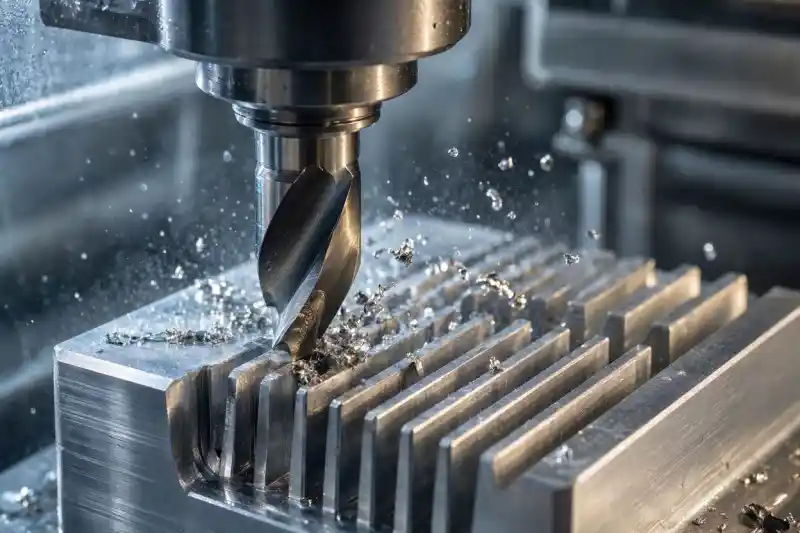
Why should you pay for CNC machining when sheet metal is cheaper or injection molding is faster for high volumes? The choice usually comes down to complexity, performance, and the cost of time.
CNC machining is chosen over sheet metal for complex geometries and superior EMI shielding, and over injection molding for better thermal conductivity and zero tooling costs. It allows for integrated features like internal cooling channels and precise sealing grooves that other methods simply cannot replicate.
For enclosures, the choice between CNC and sheet metal⁶ depends on shape and volume. Sheet metal is great for simple boxes. But if your design has curved surfaces, irregular cooling holes, or EMI gasket grooves, sheet metal fails. A CNC-machined housing is carved from a solid block. This makes it rigid and provides a seamless shield against interference. I found that for 1 to 50 pieces, CNC is usually more cost-effective.
For heat sinks, the comparison with injection molding⁷ is simple: performance. Plastic heat sinks use conductive polymers that have a fraction of the conductivity of aluminum. If you need a liquid-cooled plate with complex internal paths, CNC is your only option. We machine two halves and then bond or weld them. This ensures the internal flow is exactly as designed. Plus, you save the 6-10 weeks usually spent waiting for a mold.
The Shielding Advantage
Sheet metal enclosures have seams at the bends and welds. These seams can leak electromagnetic interference. I helped a medical device client who failed their EMI test with a sheet metal box. We switched to a one-piece CNC aluminum enclosure, and their shielding performance improved by 20dB instantly.
Hidden Costs of Tooling
Injection molds cost thousands and take months to build. If your design changes during the prototype⁸ phase, that mold is trash. CNC has no tooling cost. We take your CAD file and have a part ready in 3 to 7 days. This flexibility is a lifesaver for engineers in fast-moving markets.
What are the best materials for electronic CNC parts?
Which material will give you the best balance of weight, thermal performance, and cost? Choosing the wrong grade can lead to manufacturing delays or functional failure.
Aluminum 6061 is the standard for most electronic enclosures due to its ease of machining and anodizing. Copper is the top choice for high-end thermal management, while stainless steel is used for ruggedized shielding. Engineering plastics like POM or PEEK provide essential insulation and weight savings.
Aluminum is the workhorse of our shop. I usually suggest 6061⁹ for most panels and mounts because it takes color well during anodizing¹⁰ and is very affordable. If you need high-strength connectors, 7075 is better, though it is harder to weld and doesn’t look as good after anodizing. Interestingly, 6061 actually has better thermal conductivity¹¹ than 7075, making it a better choice for heat sinks.
Copper¹² is the king of cooling. Its thermal conductivity is double that of aluminum. However, it is a nightmare to machine. It is soft and gummy, so it sticks to the cutting edges. I use very sharp carbide tools and lots of coolant to get a mirror finish on copper cold plates. Since copper oxidizes fast, I always recommend nickel plating for long-term protection.
| Material | Best For… | Pro Tip |
|---|---|---|
| AL 6061 | Standard housings, heat sinks | Best all-around for cost and finishing. |
| AL 7075 | High-stress structural parts | Stronger, but harder to anodize perfectly. |
| Copper | High-power CPU/GPU cooling | Requires anti-oxidation treatment like plating. |
| Stainless 304 | Outdoor/Rugged enclosures | Excellent for corrosion resistance and shielding. |
| PEEK¹³/POM | Insulating spacers, internal gears | Use specialized tools to avoid melting the plastic. |
How does CNC machining accelerate electronics hardware development?
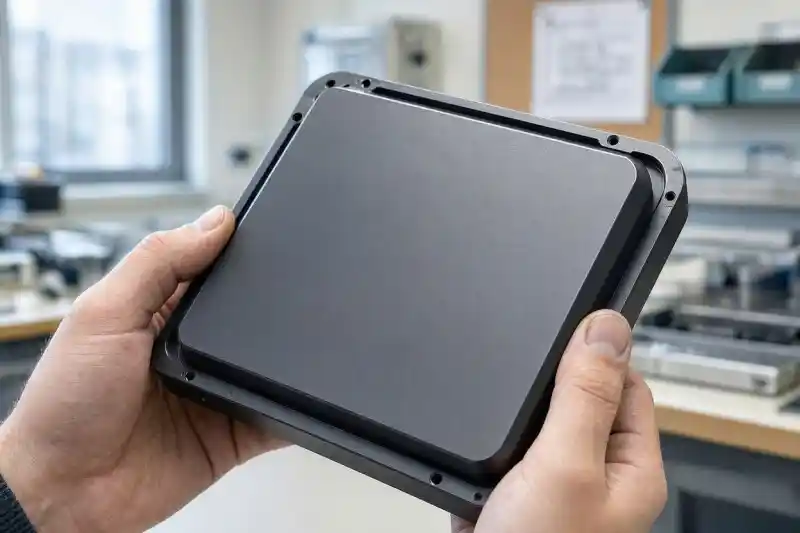
How do you get from a concept on your screen to a working unit in a customer’s hand without losing months to the manufacturing process? Speed and feedback are the two main drivers.
CNC machining accelerates development by delivering functional prototypes in days, allowing for real-world thermal and EMI testing. It identifies Design for Manufacturing (DFM) issues early, preventing expensive mold modifications and providing a seamless transition from prototype to small-batch production.
The biggest pain point I see is the “wait time.” If you wait for a die-cast mold, your project stalls for two months. With CNC, we turn CAD files into metal in less than a week. This allows you to assemble, test, and find flaws immediately. I have seen clients save their entire product launch because they caught a design error on a CNC prototype that would have cost $50,000 to fix in a plastic mold.
Testing is another factor. You cannot fully simulate heat or EMI; you have to measure it. A 3D-printed¹⁴ part doesn’t have the thermal properties of aluminum. By using a CNC-machined prototype made from the actual production material, your test data is 100% accurate. You know exactly how hot that chip will get because the heat sink is the real thing.
Finally, the transition is smooth. At Ranglink, we help you scale from a single prototype to 500 units easily. We use the same programs and fixtures. This consistency ensures that the quality you saw in the first week is exactly what you get when you ship your first batch of products. It removes the risk of moving from one manufacturing process to another.
Conclusion
CNC machining is the fastest path to high-performance electronic hardware, offering unmatched precision for cooling and shielding while eliminating the delays of traditional tooling and molding.
Ready to start your next project?
Whether you need high-precision batch production or expert advice on the best machining path, I am here to help.
Contact me today for a fast quote:
Email: info@ranglink.com
WhatsApp: Message us on WhatsApp
- Explanation of electromagnetic shielding and its importance in electronics.
- Overview of heat sinks and thermal management systems in devices.
- Technical definition of spindles in precision machine tools.
- Information on Printed Circuit Boards (PCBs) and electronic assembly.
- Definition of cold plates used for liquid cooling in high-power electronics.
- Overview of sheet metal forming and fabrication processes.
- Explanation of the injection molding process for mass-producing plastics.
- Definition and stages of product prototyping in engineering.
- Properties and common industrial applications of 6061 aluminum alloy.
- Technical guide to anodizing metal surfaces for protection and aesthetics.
- The science behind thermal conductivity and heat transfer in materials.
- Properties of copper, known for exceptional electrical and thermal conductivity.
- Details on PEEK, a high-performance engineering plastic used for insulation.
- Comprehensive guide to 3D printing and additive manufacturing technologies.