
Are your CNC part costs spiraling out of control? Over-specifying tolerances is the most common reason project budgets break, causing unnecessary delays and manufacturing friction for even the most experienced engineers.
CNC machining tolerances define the allowable deviation from a base dimension. Standard tolerances are typically ±0.1mm for metals and ±0.2mm for plastics. While CNC machines can achieve ±0.005mm, tighter requirements exponentially increase costs due to slower speeds, specialized tooling, and higher scrap rates.
I have seen many brilliant designs fail to reach production because of a simple misunderstanding of precision. It is painful to tell an engineer their part is too expensive to make just because of a few decimal places.
What is the standard tolerance for CNC machining?
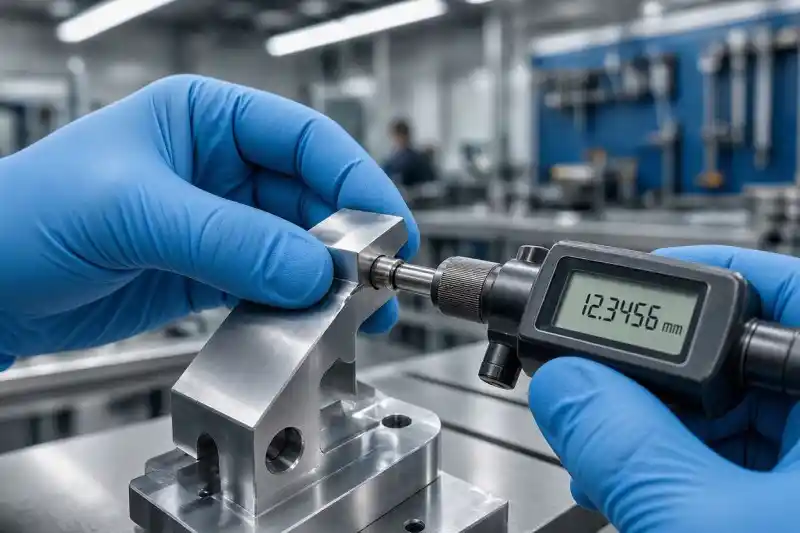
Standard tolerances are not a single fixed number but a range based on common industry capabilities. Most machine shops use a default “standard” for dimensions that are not specifically marked on a drawing to keep production fast and affordable.
Standard CNC machining tolerance is usually ±0.1mm (±0.004”) for metal parts and ±0.2mm (±0.008”) for plastic parts. These values represent the precision achievable under normal operating speeds, using standard cutting tools, and without the need for specialized inspection environments.
In my 20 years at Ranglink, I often see customers assume every dimension is ±0.01mm by default. This is a big mistake. Standard tolerance is our “comfortable” capability. If you label an entire drawing with tight tolerances, the price will double immediately. For example, a 500mm steel part is much harder to keep tight than a 20mm aluminum block because of heat expansion¹. I once helped a client drop their bracket price from $180 to $75 simply by relaxing non-critical dimensions to ±0.1mm while keeping only the mounting holes tight.
| Feature Type | Standard Tolerance (Metal) | Standard Tolerance (Plastic) |
|---|---|---|
| Linear Dimensions (<100mm) | ±0.1 mm | ±0.2 mm |
| Hole Diameters | ±0.05 mm | ±0.1 mm |
| Angularity | ±0.5 Degrees | ±1.0 Degree |
| Surface Roughness (Ra) | 3.2 μm | 6.3 μm |
How tight of a tolerance can a CNC machine hold?
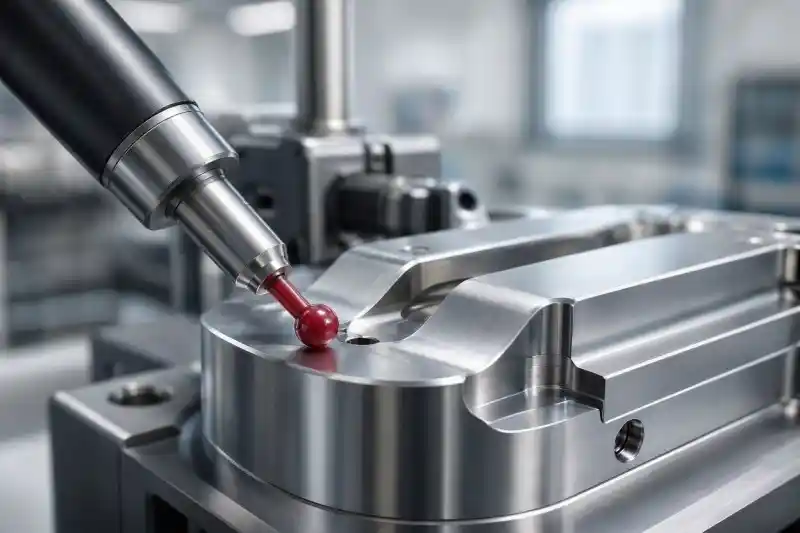
Achieving extreme precision is possible, but it requires moving from a standard workshop environment into a highly controlled scientific one. The machine tool is rarely the only limit; physical laws like thermal expansion become the real enemy.
A high-quality CNC machine can hold tolerances as tight as ±0.005mm (0.0002”), and specialized ultra-precision setups can reach ±0.002mm. However, these levels require climate-controlled rooms, vibration-proof foundations, and CMM (Coordinate Measuring Machine) inspection to verify the results.
I remember a project involving a titanium² thin-walled shell with a ±0.005mm requirement. If we finished it in one go, the heat from the tool would expand the metal. By the time it cooled down on the customer’s desk, it would be undersized by 0.01mm. At Ranglink, we let such parts rest for 4 hours in a 20°C room before the final pass. We don’t just fight the machine; we fight the temperature. Pushing for ±0.002mm is not just a machining task; it is a laboratory process that involves significantly higher scrap³ risks.
| Precision Level | Typical Tolerance | Requirements | Cost Impact |
|---|---|---|---|
| Standard | ±0.1 mm | Standard CNC | Base Cost |
| High Precision | ±0.01 mm | Skilled operator, good tools | 2x – 3x |
| Ultra Precision | ±0.005 mm | Constant temp, CMM check | 5x – 10x |
| Extreme | < ±0.002 mm | Specialized lab environment | Exponential |
How do different materials affect CNC machining tolerances?
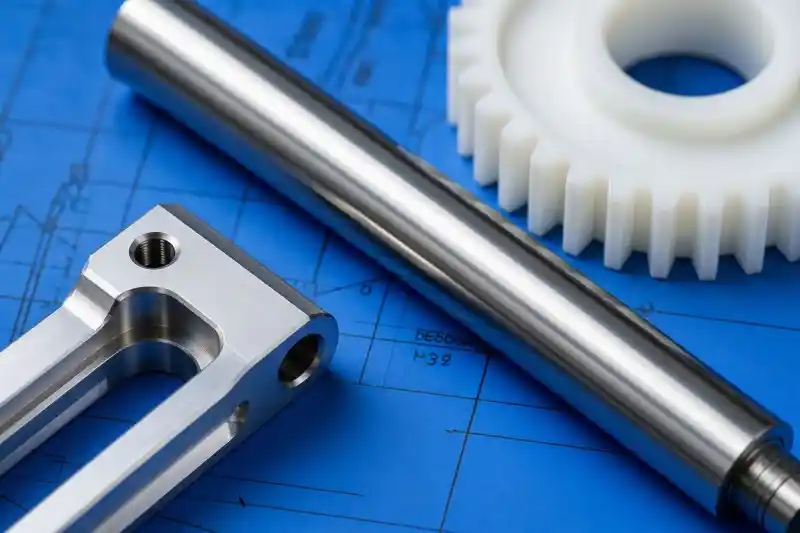
Every material reacts differently to the heat and pressure of a cutting tool. Choosing the wrong material for a tight-tolerance design is a recipe for frustration and failed inspections.
Materials with high thermal expansion, like Aluminum, or high internal stress, like certain Steels, are harder to hold to tight tolerances. Plastics are the most challenging, often expanding 5 to 10 times more than metals and reacting to humidity levels.
Aluminum is easy to cut but grows quickly when it gets warm. Steel is more stable but hides internal stresses⁴; if you remove too much material from one side, the part might warp like a banana. I once shipped a batch of Nylon⁵ gears that passed inspection in our dry winter facility, only to have them fail at the customer’s site in a humid region because the material absorbed water and swelled. Now, we let Nylon parts sit for 48 hours before final measurements. Even with Stainless Steel⁶, switching from 304 to 303 can make a huge difference in how stable the dimensions remain during a long production run.
| Material | Machinability | Stability | Tolerance Notes |
|---|---|---|---|
| Aluminum 6061 | Excellent | Moderate | High thermal expansion; watch the heat. |
| Stainless 303 | Good | High | Better for precision than 304. |
| Titanium Ti-6Al-4V | Poor | High | Heat stays at tool tip; tools wear fast. |
| POM (Delrin) | Excellent | High | Best plastic for holding tight tolerances. |
| Nylon | Fair | Low | Absorbs moisture; dimensions will shift. |
Why do tight tolerances dramatically increase CNC machining costs?
If you ask for a tighter tolerance, you are essentially asking the machinist⁷ to work slower and throw more parts in the trash. Every micron⁸ you shave off adds a layer of complexity to the manufacturing process.
Tight tolerances increase costs because they require slower feed rates, more frequent tool changes to ensure sharpness, and specialized work-holding fixtures. Additionally, the risk of “scrap” parts increases, and the cost of inspection rises due to the need for advanced metrology equipment.
Think of it this way: a tool that can cut at standard speed for four hours might only stay “precise” enough for a tight tolerance for 30 minutes. We have to swap tools more often, and the cost of those tools goes into your quote. I recently quoted a bracket where the price was $50 at ±0.1mm. When the client asked for ±0.005mm everywhere, the price jumped to over $350. By sitting down and identifying that only two holes actually needed that precision, we got the price back down to $75. It is about paying for the precision you need, not the precision you can dream of.
Conclusion
Standard tolerances save money, while tight ones ensure function. Always label only critical mating surfaces with tight tolerances and use standard ±0.1mm for the rest to keep costs low.
Ready to start your next project?
Whether you need high-precision batch production or expert advice on the best machining path, I am here to help.
Contact me today for a fast quote:
Email: info@ranglink.com
WhatsApp: Message us on WhatsApp
- Scientific principles of how materials expand or contract with temperature changes.
- Properties and industrial applications of titanium metals.
- Industrial definition of scrap and manufacturing waste material.
- Explanation of residual and internal stresses in manufactured materials.
- Information on Nylon polymers and their moisture absorption properties.
- Overview of stainless steel alloys and their physical stability.
- Overview of the machinist profession and precision metalworking.
- Definition of the micrometre (micron) unit of length used in precision measurement.