
Are you struggling with the aluminum 6061 vs 7075 decision for your next design? Picking the wrong alloy can lead to wasted budget, failed welds, or even dangerous structural cracks later on.
The primary difference is that 6061 is a versatile, cost-effective all-rounder, while 7075 is a high-strength specialty alloy. Use 6061 for housings, brackets, and welded parts. Choose 7075 only when you need extreme strength-to-weight ratios for aerospace or high-performance racing components where cost is a secondary concern.
I have spent over 20 years on the shop floor at Ranglink, and I see engineers face this dilemma every single week. It is easy to look at a data sheet and pick the strongest material, but that choice often creates a nightmare for the person actually making the part.
What is the best aluminum for CNC milling?
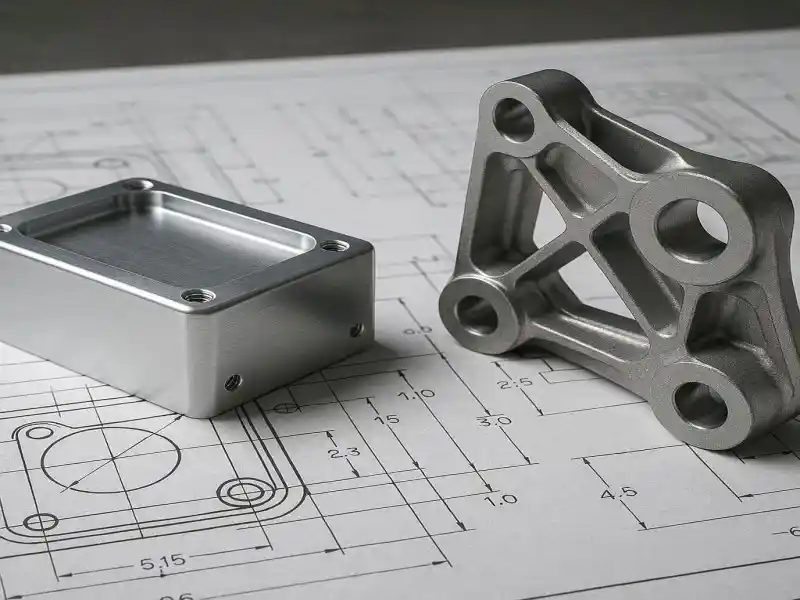
Choosing the “best” aluminum is a trap because the perfect material does not exist; there is only the one that fits your specific application. In my daily work, I always ask customers to tell me what the part actually does before I give advice. 6061¹ is our “bread and butter” at Ranglink because it is easy to weld, easy to machine, and takes an anodized finish² beautifully. 7075³ is a specialist that offers strength close to steel, but it comes with higher costs and many technical limitations.
The simplest way to decide is to look at your assembly process. If your part needs to be welded, 7075 is usually out of the question because it has terrible weldability and the joints tend to crack. If you just need a standard bracket or an electronic enclosure, 6061 is more than enough. The “average” nature of 6061 is actually its biggest strength. Because it is so common, every CNC shop has it in stock. This means your lead times are shorter and your prices stay low.
Breaking Down Suitability by Application
To help you understand the practical differences, I have broken down how these two alloys perform across different categories we handle at Ranglink.
| Feature | Aluminum 6061-T6 | Aluminum 7075-T6 |
|---|---|---|
| Machinability | Excellent and predictable | Good, but harder on tools |
| Weldability | High; standard methods work | Very Poor; prone to cracking |
| Anodizing | Clean, bright finish | Can look dull or yellowish |
| Availability | Immediate; always in stock | Often requires special order |
| Best Use Case | General consumer products | Aerospace⁴/High-stress parts |
I often tell my clients that 6061 is the safe bet for 90% of projects. If you choose 6061, you are working with a mature supply chain. If you choose 7075, you might wait an extra week just for the raw material to arrive at our facility.
How much stronger is 7075 than 6061 aluminum?
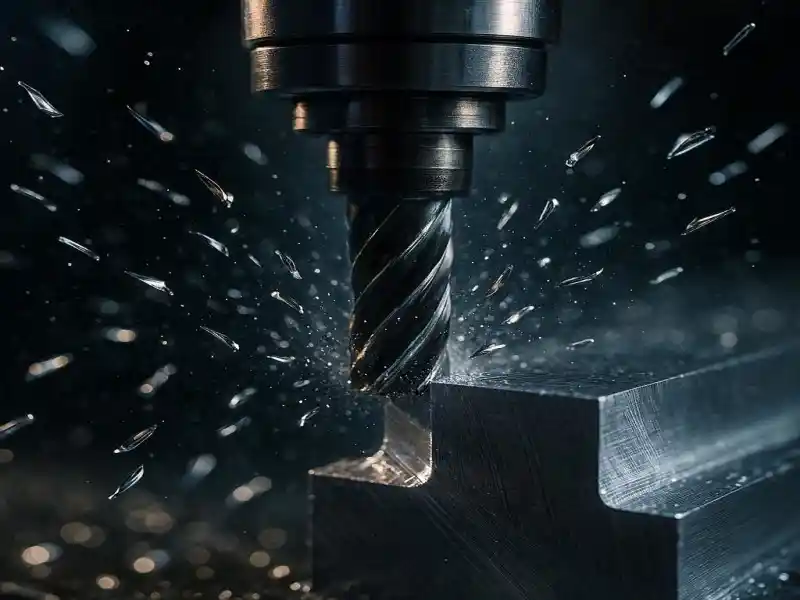
7075 is roughly twice as strong as 6061, but you must be careful not to let these numbers blind you to other mechanical risks. The tensile strength⁵ of 7075-T6 is about 570 MPa, while 6061-T6 sits around 310 MPa. This sounds like a massive win for 7075, but there is a major trade-off in terms of ductility. 7075 is much more brittle. While 6061 might bend under a heavy load, 7075 is more likely to snap or fracture⁶ without warning.
High hardness also does not mean high wear resistance in the way most engineers think. In my experience, even the “hardest” aluminum is still soft compared to steel. If your part suffers from heavy friction, switching from 6061 to 7075 won’t solve the problem for long. You would be better off using a steel insert or a hard-coat anodize. Also, keep in mind that 7075 has lower thermal and electrical conductivity than 6061. If you are designing a heat sink or a conductive connector, 6061 is actually the superior choice for performance.
Comparing Mechanical Performance Values
When I look at a drawing from an engineer , I check if the strength is actually required for the load or if it is just a “safety margin” that adds unnecessary cost.
| Property | 6061-T6 | 7075-T6 | Impact on Design |
|---|---|---|---|
| Tensile Strength | 310 MPa | 570 MPa | 7075 handles much higher loads |
| Yield Strength⁷ | 270 MPa | 503 MPa | 7075 resists permanent deformation |
| Elongation at Break | 12-17% | 7-11% | 6061 is tougher and less brittle |
| Thermal Conductivity⁸ | 167 W/m-K | 130 W/m-K | 6061 is better for cooling parts |
I have seen parts fail because the designer ignored the elongation stats. In high-vibration environments, the “weaker” 6061 can sometimes last longer because it absorbs energy better than the rigid 7075.
What are the disadvantages of 7075 aluminum?
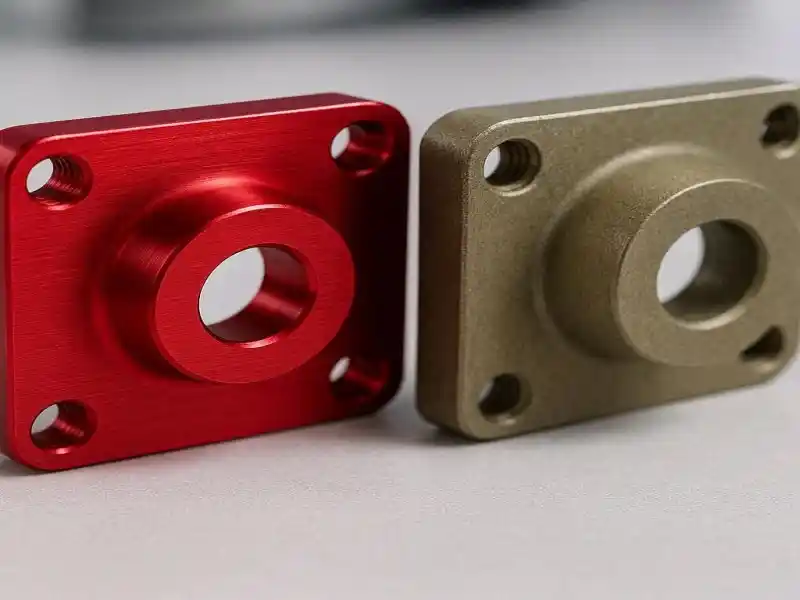
The biggest weakness of 7075 is its poor resistance to corrosion compared to 6061. Because 7075 contains high levels of zinc⁹, it is very susceptible to stress corrosion cracking, especially in humid or marine environments. I once had a client use 7075 for an outdoor marine bracket without any surface treatment. After one year, the part was covered in white powder and tiny cracks had formed around the bolt holes. 6061 would have survived that environment much better.
Another hidden problem is internal stress. When we machine 7075, especially thin-walled or long parts, the material likes to “move.” If we remove a lot of material from one side, the part can warp as internal stresses are released. At Ranglink, we often have to add extra steps like artificial aging or cryogenic treatment¹⁰ to “calm” the material down before final precision machining. This makes the parts more expensive and takes more time. Finally, the cosmetic look of 7075 is usually worse. If you want a clear, bright silver finish, 7075 often comes out looking yellowish or muddy.
Technical Challenges in the Shop
At Ranglink, we manage these disadvantages by adjusting our manufacturing process, but these steps always add to your final invoice.
- Stress Management: We perform rough machining, then let the part sit or treat it, then do finish passes. This doubles the setup time.
- Surface Treatment: We recommend hard-coat anodizing or specific primers for 7075 to prevent the corrosion mentioned above.
- Tool Wear: 7075 is harder on our CNC bits. We have to run the machines slower or swap tools more often, which increases the “per hour” cost of the job.
- Welding Issues: We almost always reject drawings that ask for 7075 to be welded. It is technically possible with very specific fillers and heat treats, but the risk of failure is too high for most precision parts.
When should you choose 6061 over 7075 (and vice versa)?
You should choose 6061 for about 90% of your projects, including frames, enclosures, heat sinks, and consumer goods. It is the best choice when you are sensitive to cost or need a fast turnaround. I always suggest 6061 for prototypes. Even if your final part needs to be 7075, doing your first few iterations in 6061 will save you a lot of money while you are still testing the fit and function of the design.
Choose 7075 only when weight is your absolute enemy and strength is your only priority. This applies to high-end drone parts, racing bicycle components, or aerospace structural members. Before you commit to 7075, I always ask: “Can we achieve this strength by slightly changing the geometry of a 6061 part?” Often, adding a small rib or increasing a wall thickness by 1mm allows you to use 6061, saving you 30-50% on material costs.
Decision Strategy for Design Engineers
I developed this simple logic for our clients to help them make the right call during the design phase.
| Use 6061 If… | Use 7075 If… |
|---|---|
| Budget is a major concern | Performance is more important than cost |
| The part will be used outdoors or at sea | The part stays in a controlled environment |
| You need the parts in less than a week | You have a flexible timeline for material |
| The part needs a beautiful color finish | Strength-to-weight ratio is the #1 metric |
| You are in the first stages of prototyping¹¹ | The design is frozen and validated |
My best advice is to talk to us early. We can look at your SolidWorks model and tell you if 7075 is going to cause warping issues or if 6061 is strong enough for your load cases.
Conclusion
Choose 6061 for cost, speed, and versatility. Reserve 7075 for extreme strength needs in aerospace. At Ranglink, we help you pick the right alloy to ensure your design succeeds.
Ready to start your next project?
Whether you need high-precision batch production or expert advice on the best machining path, I am here to help.
Contact me today for a fast quote:
Email: info@ranglink.com
WhatsApp: Message us on WhatsApp
- Overview of the properties and applications of 6061 aluminum alloy.
- Technical explanation of the anodizing surface treatment process.
- Information on 7075 aluminum alloy, known for its high strength.
- Details on the aerospace industry and its rigorous material standards.
- Definition of ultimate tensile strength in materials science.
- Engineering definition of material fracture and failure mechanics.
- Explanation of yield strength and permanent deformation point.
- The science behind thermal conductivity and heat transfer.
- Properties of zinc and its role as an alloying element.
- Overview of cryogenic treatments used to relieve stress in metals.
- Definition and stages of product prototyping in engineering.