
Are you struggling to choose a supplier? I want to share how understanding onshore vs. offshore CNC machining can save your budget, prevent missed deadlines, and guarantee perfect parts.
Offshore CNC machining offers significant savings for batch production, often 40-60% lower than onshore prices. However, success depends on calculating the Total Cost of Ownership, including shipping and duties. Local shops are better for rapid prototyping, while offshore partners excel in scaling production with stable, high-volume capacity.
Many engineers feel stuck between high local prices and the fear of overseas quality issues. I want to show you how to look past the surface price.
Is offshore CNC machining really cheaper?
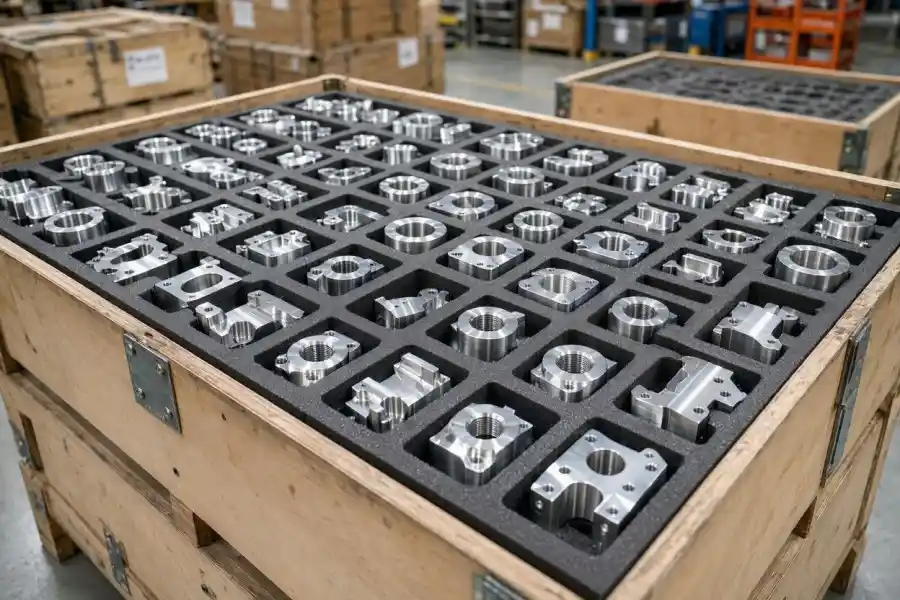
Are you tired of “cheap” quotes that end up costing more than expected? Most people look at the unit price but forget the hidden fees that eat up their budget fast.
Offshore machining is cheaper only when the “landed cost” beats the local price. This usually happens at quantities over 50 pieces. For a single prototype, local shops often win because international shipping and communication time costs more than the raw savings on the machining labor itself.
Understanding Total Cost of Ownership (TCO)
When I talk to clients, I tell them “cheap” is a dangerous word. Let’s look at the math. A local shop might quote $200 for a part. An overseas supplier quotes $80. It looks like a steal. But then you add $30 for air freight¹, $15 for customs, and $10 for port fees. Your “landed cost²” is now $145. You saved $55, but you waited three extra weeks. You must decide if that $55 is worth the wait.
The real magic happens with the “Scale Effect.” For one piece, overseas is a headache. For 100 pieces, the shipping cost per part drops to almost nothing. At Ranglink, I manage this by offering DDP (Delivered Duty Paid³) quotes. I take on the risk of shipping and customs so you only see one final price.
| Cost Component | Onshore (Local) | Offshore (e.g., China) |
|---|---|---|
| Unit Labor Cost | High | Low |
| Shipping Fee | Minimal | Moderate to High |
| Customs & Duties | $0 | 5% – 15% typical |
| Communication | Fast/Easy | Requires Process Management |
| Best Value For | 1-5 pieces | 50+ pieces |
What are the risks of offshore manufacturing for custom parts?
Does the idea of sending a complex design to a factory 10,000 miles away make you lose sleep? The biggest fear for engineers is losing control over the quality of their parts.
The main risks are “invisibility” of progress, fake inspection data, and communication gaps. You can mitigate these by requiring photo updates at key milestones and insisting on signed QC reports. Choosing a supplier with ISO certification and strong English skills removes 90% of these common offshore headaches.
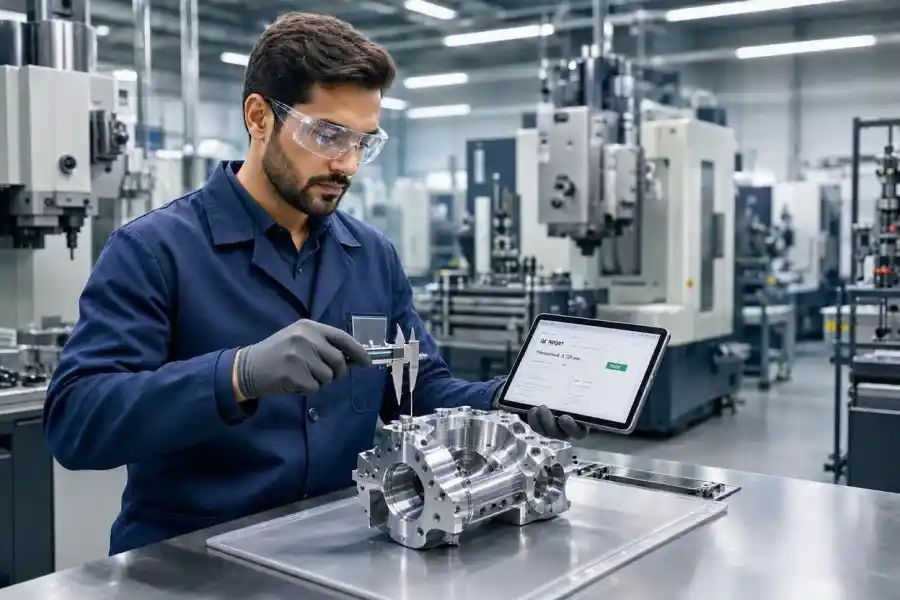
Breaking Down the Visibility Gap
In my 20 years of experience, the biggest risk is not the tech; it is the fact that you cannot see the shop floor. I suggest a “visual milestone” rule. Ask your supplier to send a photo when the material arrives, a video when the first part is clamped, and a scan of the report before shipping. You do not need an update every ten minutes, but you need proof of life for your project.
Another big risk is “paper quality.” I have seen parts arrive with perfect reports but the actual dimensions are out of spec. Always do a random check on one or two pieces with your own tools. If your data does not match theirs, blacklist that shop. Also, keep all design changes in writing. Never rely on a video call for a tolerance⁴ change. If it is not in a PDF or an email, it did not happen.
Risk Mitigation Strategies
| Risk Type | The Danger | The Solution |
|---|---|---|
| Technical | Wrong tolerances or finish | Demand DFM⁵ feedback before start |
| Integrity | Faked QC reports | Request signed reports + random audits |
| Communication | Misunderstood changes | All changes must be marked on drawings |
| Logistics | Goods stuck in customs | Use DDP terms to shift risk to supplier |
How do lead times compare between local and overseas CNC shops?
Are you worried that “offshore” always means “slow”? People often think local shops are faster, but that is not always true if the shop is backed up with big orders.
Local lead times are usually 1-2 weeks from order to finished part. Overseas lead times are often 2-3 weeks because they include production, international shipping, and customs. However, offshore shops often have more stable capacity and better on-time delivery rates for small-to-medium batches.
The Lead Time Components
In a local shop, you are mostly waiting for a slot in their schedule. In an overseas shop, production is usually very fast—maybe only 5 days—but the “tail” is long. Shipping and customs add 7 to 10 days. To get a real sense of time, do not just ask for a delivery date. Ask for a schedule. How many days for material? How many for machining? How many for surface treatment⁶?
At Ranglink, our on-time delivery rate is 98.7%. Why? Because we have a massive pool of machines and we do not push small orders aside for “VIPs.” If you are in a rush, we have “Express Paths.” We use DHL or UPS for 3-4 day delivery to the US or Europe. We also keep common materials like 6061 Aluminum⁷ and 304 Stainless⁸ in stock to skip the procurement phase.
How to choose the right manufacturing strategy for your project?
Should you stay local or go global? The answer depends on where your product is in its lifecycle and how much you need to protect your “secret sauce.”
Choose local suppliers for the prototyping phase where designs change daily. Switch to offshore manufacturing for stable production runs of 50+ units to maximize profit. Use a hybrid strategy: keep a local shop for emergencies and an offshore partner for your main supply chain capacity.
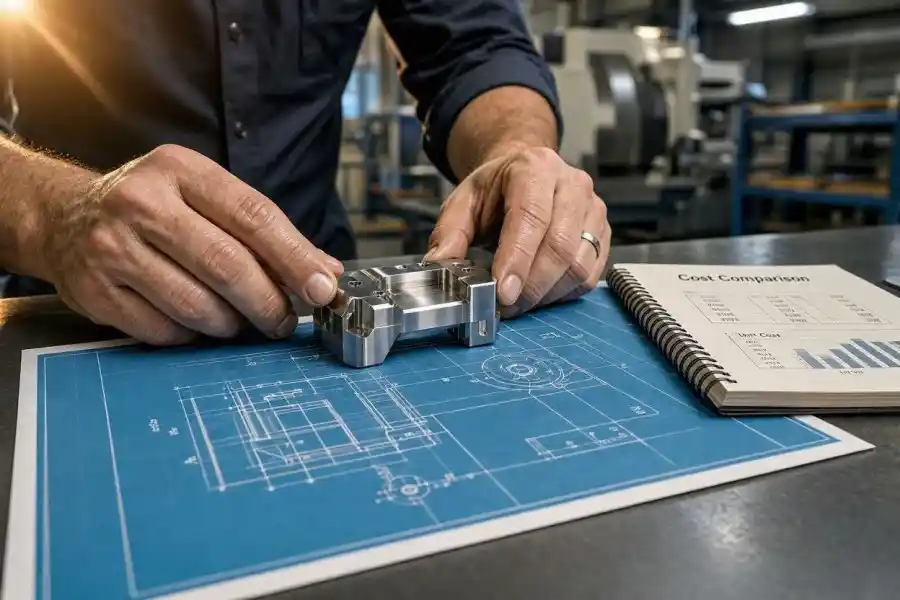
My Practical Decision Framework
I always tell my clients to look at their project phase first. If you are in the “Design Validation” stage, stay local. You need speed to fail fast and fix things. Once the design is locked and you need 100 units, moving offshore will save you enough money to fund your next project.
Second, look at your materials. If you need rare alloys⁹, a large offshore hub often has better access to specialty stock than a small local shop. Finally, consider your IP¹⁰. If the part is a standard bracket, send it overseas. If it contains a patented engine valve, keep it close to home.
Strategy Selection Guide
| Project Stage | Preferred Source | Why? |
|---|---|---|
| Prototyping | Onshore | Iteration speed is more important than cost. |
| Small Batch (10-50) | Comparison | Check the total landed cost vs. local price. |
| Mass Production (50+) | Offshore | High savings and stable, scalable capacity. |
| Secret/IP Sensitive | Onshore | Maximum security for your design files. |
Conclusion
Choose offshore machining for volume and cost savings, but use local shops for fast prototyping. Smart engineers treat overseas suppliers as a capacity extension to balance risk and profit.
Ready to start your next project?
Whether you need high-precision batch production or expert advice on the best machining path, I am here to help.
Contact me today for a fast quote:
Email: info@ranglink.com
WhatsApp: Message us on WhatsApp
- Overview of air freight and global cargo transportation.
- Explanation of landed cost and its impact on international trade.
- Definition of Delivered Duty Paid (DDP) in international shipping.
- Engineering guide to tolerances and manufacturing specifications.
- Principles of Design for Manufacturability (DFM) in product engineering.
- Information on surface finishing and treatment processes for metals.
- Properties and common industrial applications of 6061 aluminum.
- Material data and specifications for 304 stainless steel.
- Overview of metal alloys and their material properties.
- Definition and importance of Intellectual Property (IP) protection.