
Finding a shop that understands the life-or-death stakes of flight is hard. Many machine shops promise precision but fail when faced with high-stakes aerospace traceability and complex geometric tolerances.
Aerospace CNC machining is the process of using computer-controlled tools to create high-precision parts for aircraft and spacecraft. It requires tight tolerances, specialized materials like titanium and high-strength aluminum, and strict adherence to quality standards like AS9100 or ISO 9001 to ensure safety.
You need more than just a vendor; you need a partner who treats your blueprints like a flight manual. Stick with me as I break down how we handle these critical components at Ranglink.
What parts are manufactured using aerospace CNC machining?
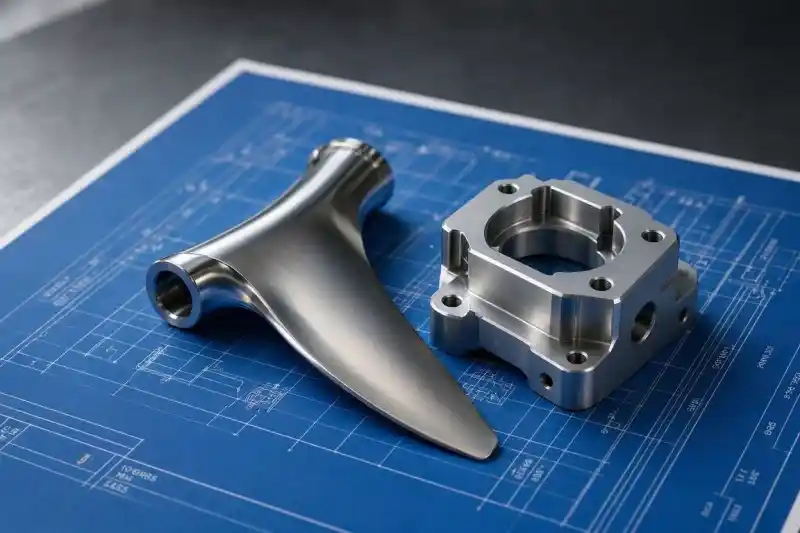
The aerospace world is divided into two strict categories: flight-critical parts and non-critical parts, and we treat them very differently. Flight-critical parts are things like engine mounts or landing gear linkages where failure is not an option.
Key aerospace components include engine mounts, fuel manifolds, sensor housings, and landing gear parts. Additionally, ground support equipment (GSE) like test stands and custom jigs require the same level of CNC precision to support aircraft maintenance and pre-flight testing.
Understanding the Tiered Approach to Parts
In my 20 years at Ranglink, the first question I ask during a design review is: “Where does this part live?” If it is an engine component or part of the flight control system¹, our quality protocol shifts into high gear. Critical parts require a First Article Inspection² (FAI) and a paper trail for every single gram of material. Non-critical parts, like cabin interior brackets or wire harness³ mounts, still need high precision but don’t carry the same catastrophic risk.
The Hard Truth About Thin-Walled Structures
Thin-walled parts are the “nightmare” of aerospace machining. We often see aluminum or titanium structures with walls as thin as 0.5mm. At this thickness, cutting heat and force make the metal warp instantly. I remember a project involving a titanium sensor housing with a 0.8mm wall. We had to rough machine it, perform stress relief⁴, and use specialized wax filling to support the walls during final finishing. Most standard shops won’t touch this level of complexity because they lack the specific fixture experience.
Common Aerospace Components Table
| Category | Example Parts | Key Challenges |
|---|---|---|
| Engine & Propulsion | Turbine blades⁵, fuel nozzles, manifolds | High heat, exotic alloys, tight tolerances |
| Structural | Wing Spars, bulkheads, fuselage ribs | Large scale, thin walls, weight reduction |
| Actuation & Hydraulics | Valve bodies, pistons, actuator housings | Internal finishes, pressure testing, GD&T |
| Avionics & Sensors | Heat sinks, EMI shields, sensor housings | Surface conductivity, complex geometries |
What are the best materials for aerospace CNC machining?
Choosing the wrong material can lead to structural failure or massive budget overruns. While 6061 aluminum is great for prototypes, the aerospace industry relies on high-strength alloys that can handle extreme stress and temperature.
The best materials for aerospace CNC machining are 7075-T6 aluminum for its strength-to-weight ratio, Ti-6Al-4V titanium for its heat resistance, and 17-4PH stainless steel for its durability. For extreme engine environments, Inconel 718 is the standard despite being very difficult to machine.
Aluminum: The Backbone of Flight
While 6061 is common for ground equipment, 7075-T6⁶ is the real workhorse for structural flight parts. I often suggest 7050-T7451 to customers because it offers better stress-corrosion resistance than 7075, especially in thicker sections. If your design is a load-bearing structure, these high-zinc alloys are your best bet. We keep 7075-T6 in stock to ensure we can start these critical projects as soon as the design is finalized.
The Challenge of Titanium and Superalloys
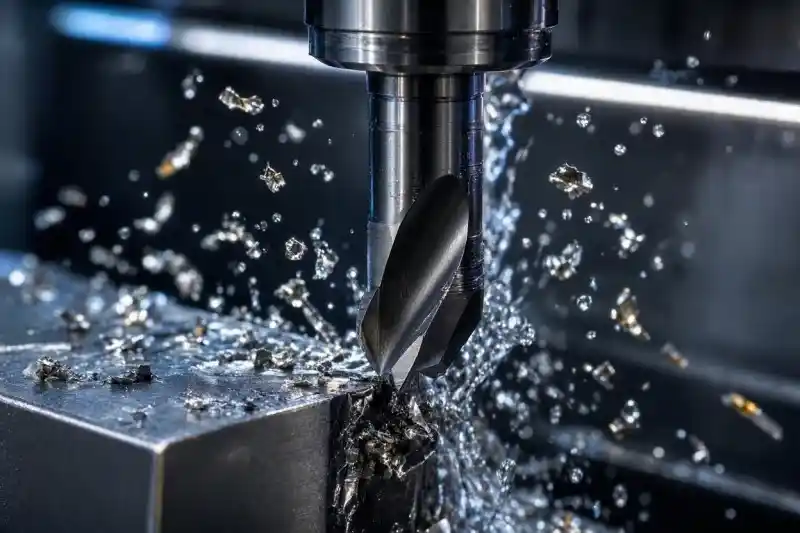
Titanium (Ti-6Al-4V) is a designer’s dream but a machinist’s challenge. It has very low thermal conductivity⁷, meaning all the heat stays on the tool tip. At Ranglink, we have to slow down cutting speeds to 20% of what we use for aluminum and use high-pressure coolant. It’s even tougher with Inconel 718⁸. These materials are reserved for engine and exhaust parts where temperatures exceed 600°C. If a part doesn’t get that hot, I’ll always suggest a high-strength aluminum to save on cost and lead time.
Material Selection Comparison
| Material | Primary Benefit | Common Application | Machinability |
|---|---|---|---|
| Aluminum 7075-T6 | High strength, lightweight | Wing spars, frames | Excellent |
| Titanium Gr. 5⁹ | Corrosion & heat resistance | Engine parts, fasteners | Difficult |
| Stainless 17-4PH | Hardness, durability | Gears, shafts, pins | Moderate |
| Inconel 718 | Extreme heat stability | Turbine discs, exhaust | Very Difficult |
What quality standards and tolerances are required for aerospace?
Precision isn’t just a goal in aerospace; it is a legal requirement. A missed tolerance of 0.01mm can mean a part won’t fit during a $100 million assembly process or, worse, it could fail mid-flight.
Aerospace quality standards center on AS9100 and ISO 9001 certifications, requiring full material traceability (MTRs) and First Article Inspection (FAI) per AS9102. Tolerances typically range from ±0.005mm for critical bores to ±0.05mm for general structural features.
The Importance of Traceability and FAI
In our shop, a First Article Inspection isn’t just a quick check. We measure every single dimension on the drawing using our CMM¹⁰ and generate a report with the tool ID, the measured value, and the operator’s signature. This matches the AS9102 standard. We also track the “Heat Number” of the raw material. If a part fails three years from now, we must be able to tell which batch of metal it came from and who machined it. This level of accountability is standard for every aerospace job we take.
Precision vs. Cost
I often see engineering drawings where every dimension is marked with a ±0.01mm tolerance¹¹. This can triple the cost of the part without adding functional value. In reality, only the bearing seats or mounting holes need that level of precision. I make it a point to help our customers identify “Critical to Quality” (CTQ) features during the quoting stage. By loosening tolerances on non-critical edges, we keep the price down while ensuring the part performs exactly as intended in the assembly.
Critical Quality Requirements
- AS9102 FAI: Complete dimensional validation of the first part produced.
- NDT (Non-Destructive Testing): Using X-ray or Dye Penetrant to find hidden cracks.
- Surface Integrity: Ensuring no “grinding burns” or stress fractures during the machining process.
- GD&T¹²: Using Geometric Dimensioning and Tolerancing to ensure parts fit in 3D space.

How to choose a reliable aerospace CNC machining supplier?
Picking a supplier based on the lowest price is a gamble that rarely pays off in aerospace. You need a shop that acts like an extension of your own engineering team and understands the risks.
To choose a reliable aerospace supplier, verify their experience with flight-critical parts, check for ISO 9001 or AS9100 certifications, and evaluate their inspection equipment. A trustworthy partner should provide DFM feedback and show clear processes for material traceability and risk management.
Verify Technical Depth
When I talk to new clients, I encourage them to ask deep technical questions. Don’t just ask if they have CNC machines. Ask how they handle stress relief in thin-walled parts or what their strategy is for machining Inconel. A shop that only says “we have good machines” doesn’t have the experience you need. They should talk about custom fixtures, specialized coatings for tools, and specific ways they prevent part deformation. Their ability to explain the “how” is the best proof of their capability.
Trust but Verify with a Trial Run
The best way to judge a shop is to give them a “medium-difficulty” part. Choose something with a thin wall or a tight-tolerance bore and ask for a small batch. This tests their entire system: how they communicate, how they handle the FAI report, and if the surface finish meets your standards. One physical part is worth more than a dozen sales presentations. At Ranglink, we welcome these trial orders because it is the fastest way to prove we can handle the most complex aerospace requirements.
Supplier Evaluation Checklist
| Step | Action Item | What to Look For |
|---|---|---|
| 1 | Certifications | ISO 9001 at minimum; AS9100 preferred for flight parts. |
| 2 | Equipment | Do they have 5-axis CNC and a CMM large enough for your parts? |
| 3 | NDA & Security | Are they willing to sign NDAs and protect your IP¹³? |
| 4 | DFM Feedback | Do they suggest ways to make the part cheaper or easier to make? |
| 5 | Traceability | Do they provide Material Test Reports (MTR)¹⁴ with every shipment? |
At Ranglink, we hold ISO 9001 certification. For flight-critical parts that require AS9100, we work with our customers to confirm whether our ISO 9001-based quality system meets their specific requirements, or we can support through a qualified partner.”
Conclusion
Aerospace CNC machining requires high-strength materials, extreme precision, and total traceability. At Ranglink, we combine 20 years of experience with strict quality control to turn your complex designs into reality.
Ready to start your next project?
Whether you need high-precision batch production or expert advice on the best machining path, I am here to help.
Contact me today for a fast quote:
Email: info@ranglink.com
WhatsApp: Message us on WhatsApp
- Overview of aircraft flight control systems and their critical components.
- Explanation of First Article Inspection (FAI) in manufacturing quality control.
- Information on wire harnesses and their structural integration in engineering.
- Details on heat treating and stress relief processes for metals.
- Engineering definition and function of turbine blades in propulsion systems.
- Properties and aerospace applications of 7075 aluminum alloy.
- The science behind thermal conductivity and heat transfer in materials.
- Technical guide to Inconel superalloys used in extreme temperature environments.
- Properties and common industrial applications of Titanium Grade 5.
- Overview of Coordinate Measuring Machines (CMM) for precise dimensional inspection.
- Engineering guide to tolerances and manufacturing specifications.
- Principles of Geometric Dimensioning and Tolerancing (GD&T).
- Definition and importance of Intellectual Property (IP) protection in business.
- Explanation of Mill Test Reports (MTR) for verifying metal properties.