
Finding a reliable CNC shop takes more than comparing quotes. You need to ask the right CNC machining supplier evaluation questions to avoid delays, high costs, and parts that don’t fit your design. This guide gives you the exact questions to uncover a shop’s real capabilities before you commit.
To hire the right CNC shop, you must ask about equipment maintenance logs, specific material stock, detailed quality control steps, and real-world Design for Manufacturing (DFM) examples. A top-tier shop like Ranglink provides transparency in these areas to ensure your complex designs become high-quality physical parts.
Choosing a partner is about more than just comparing quotes. You need a team that acts like your internal department to catch errors before they happen. If a shop avoids these tough questions, they might not be the right fit for your engineering standards.
What should you ask about a CNC shop’s equipment and capabilities?
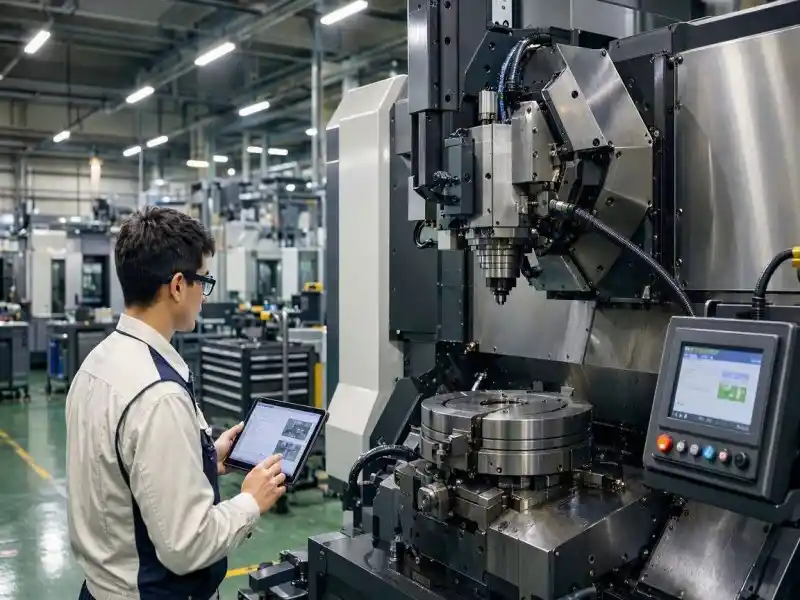
Asking “what machines do you have” is too simple. Old or poorly maintained machines produce parts with bad tolerances, leading to assembly issues and wasted budget on your end.
Ask for the equipment maintenance logs and a list of commonly stocked materials. A shop that maintains its machines and keeps raw stock like 6061 aluminum or 303 stainless steel on hand proves they have a stable workflow and a professional management system.
In my 20 years at Ranglink, I have seen how machine health changes everything. A 5-axis machine¹ that hasn’t been calibrated² in six months is less accurate than a well-kept 3-axis machine. I always tell my clients to ask when the machines were last serviced. If a shop says it is “inconvenient” to show logs, that is a red flag. You should also look for a dedicated programming team. At some small shops, if the owner is away, the machines stop. We have over 60 technicians to ensure work never stops.
Deep Dive into Capability Verification
| Question to Ask | Why it matters for your design | What a good answer looks like |
|---|---|---|
| When was the last calibration? | Ensures the precision you defined in SolidWorks³ is actually met. | “We calibrate every 6 months and have a weekly maintenance log.” |
| What materials do you stock? | Proves they are a real factory, not a middleman, and ensures faster lead times. | Specific sizes of 6061, 7075, or Stainless Steel are ready in the warehouse. |
| How many machines per operator? | Shows the level of automation and process stability. | One operator handles 3-5 stable, automated machines. |
| Any new equipment in 3 years? | Modern machines handle complex geometries and 5-axis work better. | “We replaced three old units with new high-speed CNC centers last year.” |
How do you evaluate a CNC supplier’s quality control process?
Many shops claim they do quality control, but they only check the first and last parts. This means hundreds of parts in the middle could be out of tolerance without anyone knowing.
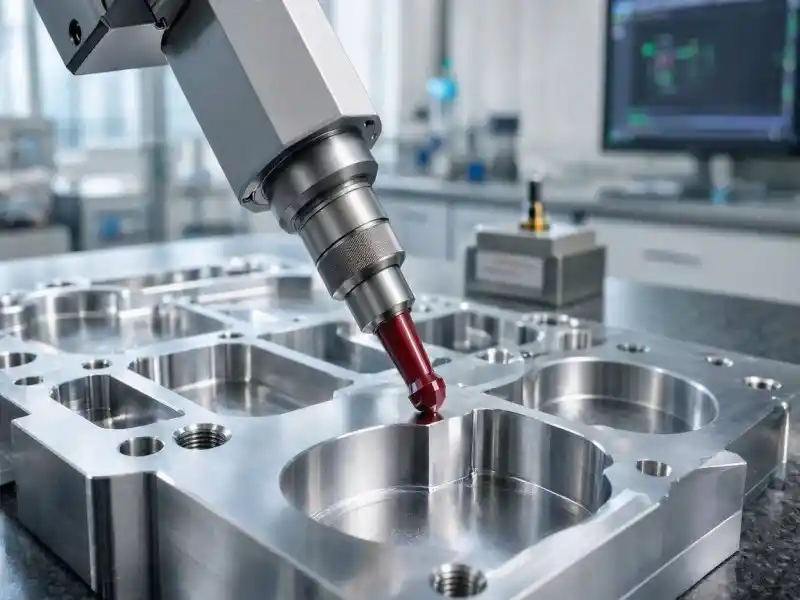
Ask if they provide an independent inspection report for every single part or just a batch sample. You must also verify if their measuring tools, like CMMs or micrometers, have current calibration certificates to ensure the data is actually accurate.
I once worked with a client who received a batch of warped aluminum parts from another vendor. The vendor didn’t check the raw material. At Ranglink, we ask for Material Test Reports⁴ (MTR) for every batch. We even use spectrometers⁵ to double-check the metal grade. If a part is out of spec, a good shop won’t hide it. We provide an 8D report⁶ to analyze the root cause. This honesty saves you from discovering errors during your final assembly.
Analyzing the Quality Management System
Measuring parts is only half the battle. You need to know how the shop manages the measurement tools and the people using them. If the sales person signs the QC report instead of a dedicated engineer, the process is not independent.
- Calibration Records: A CMM that hasn’t been calibrated in five years is useless. Ask for the calibration plan for their manual gauges and digital tools.
- Material Integrity: Ask if they perform incoming material inspections. Using recycled or low-grade aluminum causes internal stress⁷, making parts warp after machining.
- Non-Conformance Handling: Ask what happens if a part is wrong. A professional shop will notify you immediately to discuss “use-as-is” concessions or a full remake with a corrective action plan.
Does the CNC vendor provide Design for Manufacturing (DFM) support?
Some shops follow your drawing blindly, even if there is an obvious error. This leads to parts that are impossible to make or far too expensive due to unnecessary complexity.
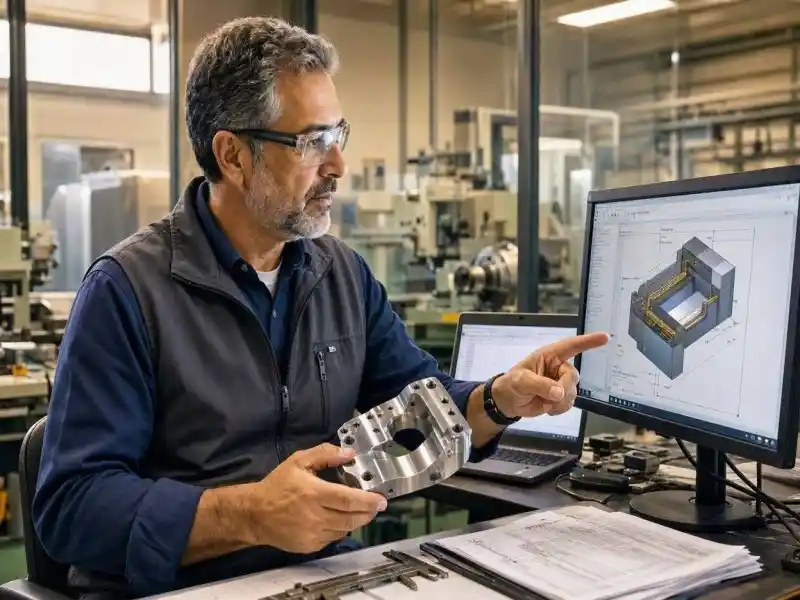
Test the vendor by sending a drawing with a small intentional error, like an impossible internal square corner. A shop that catches this and offers a DFM suggestion is a partner that will save you time and money.
I love it when clients challenge us with “impossible” parts. I recently told a designer to change a fillet radius⁸ which extended tool life by 40%. That saved him a lot of money. If a shop gives you a quote without asking a single question, they probably didn’t look closely at your design. You want a partner who tells you that a 0.5mm wall is risky before they start cutting metal. This proactive communication is what separates a “vendor” from a “partner.”
How to Spot True DFM Expertise
To see if they really understand manufacturing, ask them about the most difficult part they ever made. If they can describe a specific technical challenge, like controlling heat deformation on a thin-walled aerospace⁹ part, they have the depth you need.
| DFM Indicator | Low-Level Shop | High-Level Partner (Like Ranglink) |
|---|---|---|
| Response to errors | Machines the part exactly as drawn, even if it fails. | Points out errors during the quoting stage. |
| Cost Savings | Only cares about the per-part price. | Suggests design changes to reduce setups or material waste. |
| Technical Limit | Can only do simple 3-axis milling. | Can handle thin walls, deep cavities, and complex 5-axis surfaces. |
| Communication | Sends a price and a date. | Sends a marked-up PDF with suggestions for better manufacturability. |
How do you verify lead times and production scalability?
Late parts can kill a product launch. Many shops over-promise their capacity to get the order, then go silent when they can’t deliver on time because they are overbooked.
Ask for their current capacity utilization and their historical On-Time Delivery (OTD) rate. A healthy shop usually runs at 70-85% capacity; if they claim to be “always empty” or “always 100% full,” both are bad signs for your schedule.
In my experience, honesty about lead times is the best policy. If a client asks to triple an order suddenly, I won’t just say “no problem.” I explain that we might need to add a night shift or move the delivery by a few days. You should also ask if they outsource¹⁰ work. Some shops take your order and send it to a cheaper, lower-quality shop without telling you. We keep our production in-house at Ranglink to maintain control. For long-term partners, we even “lock in” monthly machine time to guarantee they never face a delay.
Metrics for Production Reliability
Don’t settle for “we are fast.” Ask for data. A shop that tracks its own performance is a shop that cares about your deadlines.
- OTD Data: Ask, “What was your average delay compared to your promise last month?” If they have the data ready, they are professional.
- Scalability Test: Ask how the lead time changes if the order size doubles. This tests their resource flexibility and supply chain¹¹ strength.
- Capacity Reservation: Ask if they offer dedicated machine windows for recurring orders. This is the best way to ensure your small-batch prototypes don’t get pushed aside by bigger clients.
- Subcontracting Policy: Ask clearly, “Will my parts be made in this building?” You need to know who is actually responsible for your quality.
Conclusion
Choose a CNC partner who values maintenance, proactive DFM, and honest communication. Asking these specific questions ensures your complex designs are manufactured accurately, on time, and within budget.
Ready to start your next project?
Whether you need high-precision batch production or expert advice on the best machining path, I am here to help.
Contact me today for a fast quote:
Email: info@ranglink.com
WhatsApp: Message us on WhatsApp
- Overview of multiaxis machining and 5-axis CNC capabilities.
- Explanation of instrument calibration for ensuring accuracy.
- Information on SolidWorks, a widely used solid modeling CAD program.
- Explanation of Mill Test Reports (MTR) for verifying metal properties.
- Scientific definition and uses of optical spectrometers in material analysis.
- Guide to the Eight Disciplines (8D) methodology for problem solving.
- Explanation of internal and residual stresses in materials.
- Engineering definition of a fillet used to reduce stress concentration.
- Details on the aerospace industry and its rigorous standards.
- Business definition and implications of outsourcing production.
- Definition and management of industrial supply chains.