
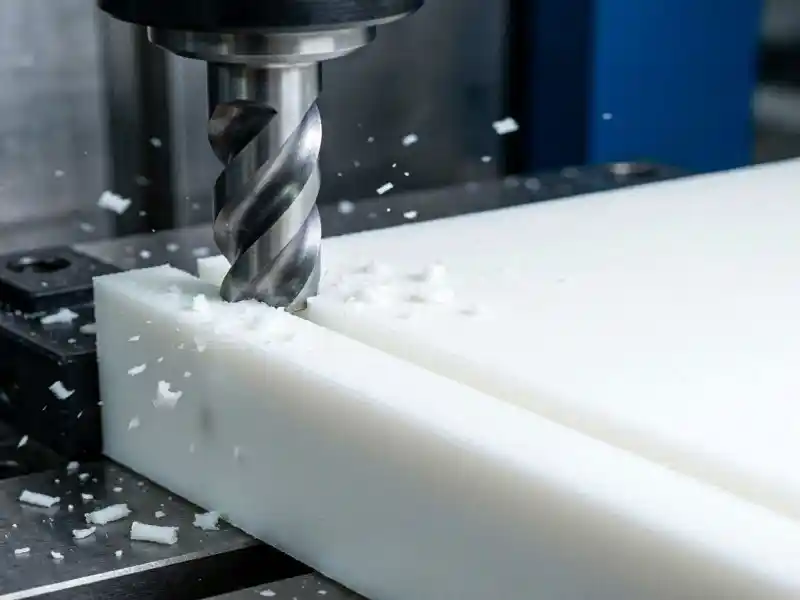
Can plastic be CNC machined ?Are you worried that plastic is too soft or will melt during the cutting process? Many buyers fear their parts will warp or stick to the tools, making CNC seem impossible.
Yes, plastic can be CNC machined to very high tolerances. By using engineering-grade materials, sharp tools, and specific cooling methods, CNC machines produce plastic parts with better precision and surface finish than 3D printing or injection molding. Success depends on managing heat and material internal stress.
I often hear people say plastic is “too easy” compared to metal. In reality, it is just different. Metal struggles with hardness, but plastic struggles with heat. If heat builds up, the material softens, sticks to the cutter, and the dimensions go wrong. I always tell my team: you have to “serve” the plastic correctly. We use high speeds but low feeds1 to keep the part cool. If you treat it like aluminum, you will end up with a melted mess instead of a precision part.
What plastics can be CNC machined?
Are you picking a plastic based on a name alone without checking its manufacturing grade? Choosing the wrong grade of a common material like Nylon or ABS can lead to parts that warp or crack the moment they leave the machine.
Most engineering plastics like POM, ABS, PC, Nylon, PEEK, and Acrylic are excellent for CNC machining. However, you must use “machining grade” extruded or cast stocks. These materials undergo stress-relief processes to ensure they remain dimensionally stable and do not deform after the cutting tool removes surface material.
I learned this lesson the hard way years ago. A customer insisted on providing his own black Nylon plate to save costs. As soon as we started milling, the parts began to curl like banana peels. It turned out the material was low-quality recycled injection molding scrap, full of internal stress2. When the tool broke the surface skin, that stress released like a coiled spring. Now, at Ranglink, we only use certified extruded or cast plates. I always ask suppliers: “Is this stress-relieved?” It matters more than the material type itself.
Common CNC Plastics and Their Traits
| Material Name | Common Brand | Key Advantage | Best Use Case |
|---|---|---|---|
| POM3 (Acetal) | Delrin | Excellent stability, low friction | Gears, bearings, valves |
| PC (Polycarbonate) | Lexan | High impact strength, clear | Guards, light covers, medical |
| PEEK4 | Victrex | High temp and chemical resistance | Aerospace, oil & gas parts |
| ABS | N/A | Tough, easy to glue/paint | Prototypes, enclosures |
| Nylon (PA6) | N/A | Wear resistant, strong | Bushings, wear strips |
When you order, do not just look at the price. Cheap plastic often contains “regrind” or recycled bits. These impurities can nick our diamond tools or cause the part to crack later. For high-precision jobs, I always recommend cast materials over extruded ones because they usually have even lower internal stress.
What is the easiest plastic to CNC?
Do you need a functional part fast and want to avoid the headache of warped dimensions? Some plastics behave like a dream under a cutter, while others are a constant battle to keep straight and clean.
POM, also known as Delrin or Acetal, is the easiest plastic to CNC machine. It is often called the “Aluminum of plastics” because it produces crisp, short chips that do not wrap around the tool. It is very stable, does not absorb much moisture, and holds tight tolerances easily.
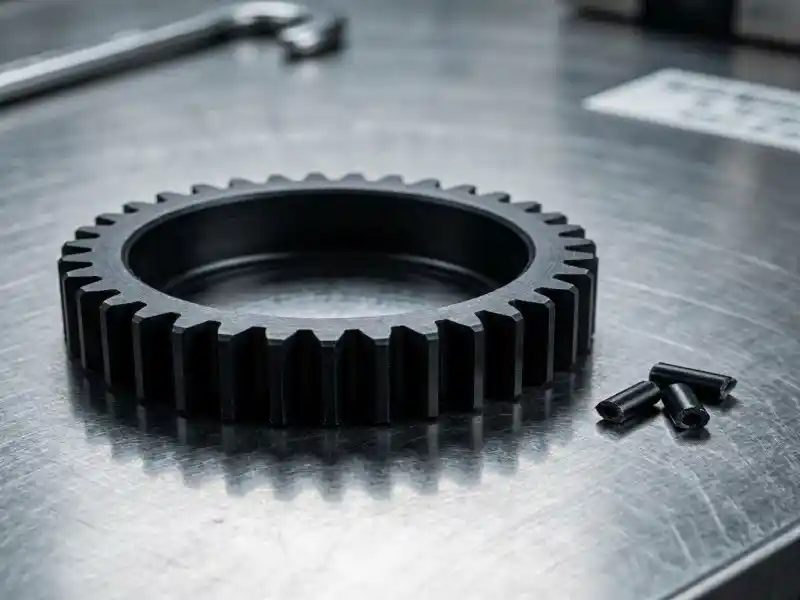
From my experience on the shop floor, POM is our favorite. It does not need fancy cooling; we can often cut it dry. We have produced thousands of POM gears and valve bodies where customers were shocked at the surface finish. It looks like it was polished, but it came straight off the machine. In contrast, many people think ABS is the easiest. While common, ABS gets gummy. It gets hot, the corners melt, and the surface gets “fuzzy.” Nylon is even trickier because it breathes. It absorbs moisture from the air. A hole we drill today might be smaller tomorrow if it rains and the humidity5 goes up. If you need a part that just works, choose POM.
Why POM Wins the “Easy” Category
- Chip Control: Unlike Nylon, which creates long “bird nests” of hair, POM chips snap off cleanly. This keeps the machine running without stops.
- No Burrs: POM leaves very clean edges. We spend less time hand-deburring, which lowers the cost for the customer.
- Low Thermal Expansion: It doesn’t grow or shrink as much as PE or PP when the room temperature changes.
- Zero Moisture Absorption: You don’t have to worry about the part swelling after it leaves our climate-controlled shop.
What are the three unsafe plastics?
Are you accidentally asking your supplier to run materials that could ruin their machines or harm their workers? Some plastics are “unsafe” because they release toxins, damage equipment, or destroy themselves during the process.
The three most “unsafe” plastics for CNC are PVC, Glass-Filled Nylon (PA66+GF), and PTFE (Teflon). PVC releases corrosive gases that eat machine parts; Glass-Filled plastics create toxic dust and destroy tools; and PTFE can release poisonous fumes if it gets too hot during high-speed cutting.
At Ranglink, we are very careful about these. First, let’s talk about PVC. We generally refuse to machine it. When you cut PVC, the heat releases Hydrogen Chloride6 gas. This gas turns into acid when it hits moisture. It will rust our expensive machine spindles and rails in a matter of days. It is also terrible for the operator to breathe. Second, be careful with Polycarbonate (PC) and cooling fluids. If we use the wrong oil-based coolant, the PC will literally shatter into a “spiderweb” of cracks. We only use pure water or specialized PC-safe coolants to avoid this invisible killer.
Detailed Risks of Unsafe Plastics
| Material | The Danger | Impact on Your Project |
|---|---|---|
| PVC | Corrosive HCl gas | Damages the factory’s machines; high rejection rate. |
| PA66 + GF | Glass fiber dust | Harmful to lungs; creates a very rough surface finish. |
| PTFE | Toxic fumes at 260°C | Requires strict speed limits; parts can be “slippery” and hard to clamp. |
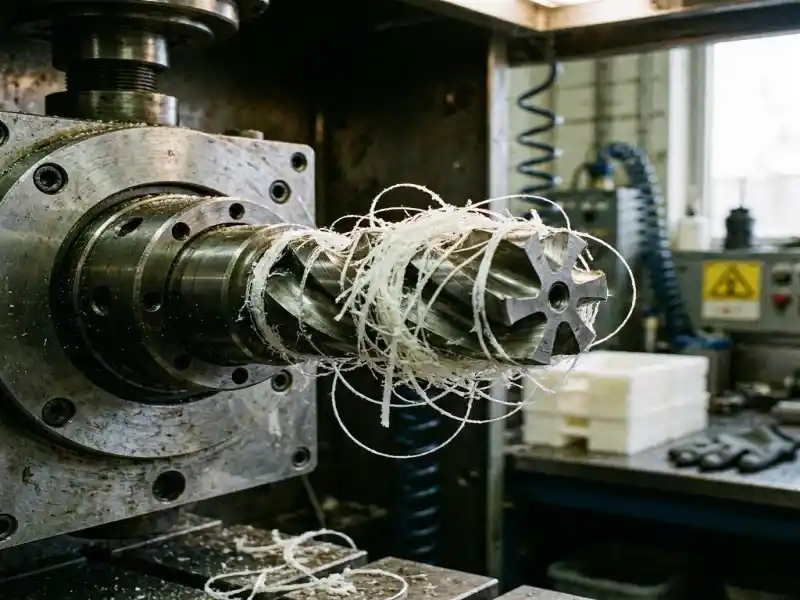
For glass-filled materials, the “safety” issue is about the tools. A standard carbide end mill7 that lasts 100 hours on ABS might only last 10 minutes on glass-filled Nylon. The glass fibers act like sandpaper. If you absolutely need these materials, we have to use diamond-coated tools and heavy vacuum systems. This adds cost, so I always ask my clients if a standard high-strength plastic like PEEK or POM could do the job instead.
Conclusion
Plastic CNC machining is highly effective if you choose the right grade and manage heat. Use POM for ease, avoid PVC for safety, and always verify stress-relief certificates.
Ready to Bring Your Prototype to Life?
Don’t let the wrong material or manufacturing process delay your project. At Ranglink, we specialize in turning your 3D CAD models into functional, production-grade physical parts that behave exactly like the final product.
Whether you need a single CNC-machined test part or a small batch of vacuum-casted prototypes, our engineering team is here to help you get it right the first time.
Send us your STEP or IGES files today for a free, professional review and quote:
- ✉️ Email: rang@ranglink.com
- 💬 WhatsApp: +86 17338532394
Partner with Ranglink — Let’s build something that works.
- Wikipedia article explaining machining speeds and feeds.
- Wikipedia article on residual or internal stress in materials.
- Wikipedia article detailing Polyoxymethylene (POM) polymer.
- Wikipedia article on Polyether ether ketone (PEEK) properties.
- Wikipedia article explaining atmospheric humidity.
- Wikipedia article on the properties and dangers of hydrogen chloride.
- Wikipedia article defining end mills used in industrial machining.