
Are your aerospace parts failing inspection despite using expensive machines? High precision is easy to claim but hard to maintain when heat causes metal dimensions to shift during the production process.
CNC machining for aerospace can achieve tolerances as tight as ±0.002mm. However, true accuracy depends on thermal stability. High-end machines offer 1-micron resolution, but environmental control and material temperature management are the real factors that determine if a part meets strict flight-safety standards.
I have seen many batches of parts rejected by high-end clients. Most people think the machine tool is the main problem. It usually is not. Let me explain why precision in aerospace is about more than just the equipment.
How accurate is CNC machining?
Do you trust the digital readout on a machine? Even the best CNC can produce scrap if you ignore how materials react to friction and high-speed cutting forces during the process.
Standard CNC machining typically holds tolerances of ±0.01mm. High-precision aerospace CNC setups can reach ±0.002mm or ±0.005mm. This accuracy relies on rigid machine construction, high-quality spindles, and advanced feedback systems that compensate for tool wear and thermal expansion in real-time.
I want to tell you a truth that might feel uncomfortable. The machine is rarely the bottleneck for accuracy. The real enemy is heat. In my 20 years at Ranglink, I have seen this many times. Aerospace parts use a lot of Titanium and Inconel. These materials do not conduct heat well. When we cut them, the heat stays in the cutting zone. The temperature can go over 800°C. This makes your part “grow” while we work on it. After the tool stops, the part cools down and shrinks.
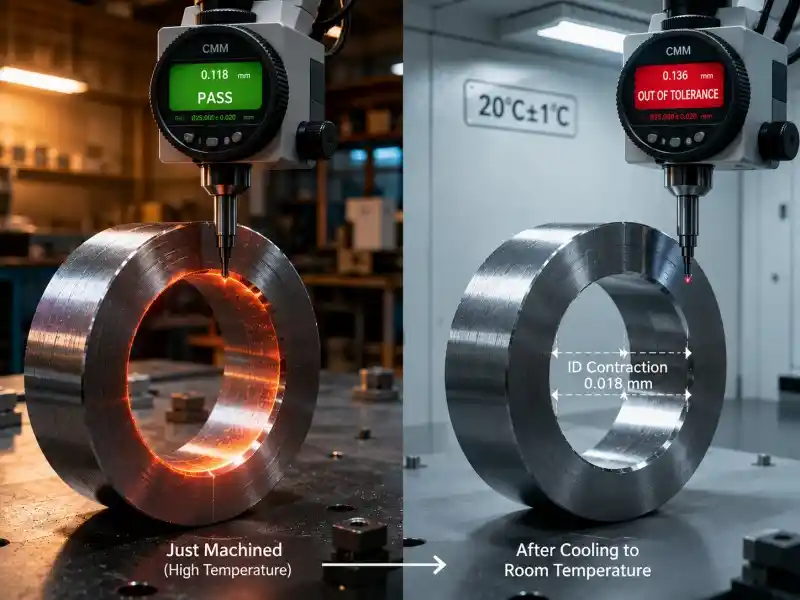
I once analyzed a batch of Inconel 718 seal rings. The supplier used top-tier machines and the program was perfect. But they measured the parts right after taking them off the machine. The parts were still warm. The measurement said they were “good.” When they reached the assembly line and cooled to room temperature, the inside diameter was 0.018mm too small. The whole batch was scrap. I have heard similar stories from other shops. One precision machining company reported losing 43 out of 50 Inconel 718 turbine housings at final inspection—a $340,000 loss—not because of bad machines, but because their thermal management protocol failed to account for a 6°F shop temperature swing between morning and afternoon shifts[reference:0][reference:1]. At Ranglink, we have a strict rule. Every aerospace part must sit in our 20°C±1°C room for at least 4 hours before we measure it. This ensures the reading is real and not a “hot” lie. If a shop does not have a constant temperature room, their precision is just a guess.
| Material Type | Thermal Conductivity | Machining Difficulty | Expansion Risk |
|---|---|---|---|
| Aluminum 6061 | High | Low | Moderate |
| Stainless Steel 304 | Medium | Medium | High |
| Titanium Ti-6Al-4V | Low | Very High | Extreme |
| Inconel 718 | Very Low | Extreme | Extreme |
What are the tolerances for aerospace manufacturing?
Is your current supplier struggling with tight tolerances? Missing a dimension by a few microns can lead to engine failure or structural issues, making strict tolerance adherence a life-or-death matter.
Aerospace tolerances usually range from ±0.005mm to ±0.05mm depending on the part’s function. Critical engine components and landing gear parts often require “tight” tolerances of ±0.002mm, while secondary structural brackets might allow for slightly wider “loose” tolerances of ±0.1mm.
When we talk about aerospace, we are talking about safety. I tell my team that every micron matters because someone’s life depends on it. We categorize tolerances based on how the part fits into the airplane. A simple bracket for a seat might have a loose tolerance. But a fuel injector or a turbine blade must be exact. If these parts are off by even 0.01mm, they will not fit. Worse, they will vibrate and fail under stress.
You should know that tighter tolerances cost more money. It takes more time to stabilize the part. It requires more frequent tool changes. We use our 100+ advanced machines to hit these targets. We also use our ISO9001 quality system to track every step. The ISO 9001 standard mandates rigorous quality control protocols, including real-time monitoring of cutting parameters and documented inspection checkpoints verified by coordinate measuring machines. These measures are essential for maintaining dimensional accuracy on complex geometries like aerospace turbine blades[reference:2].
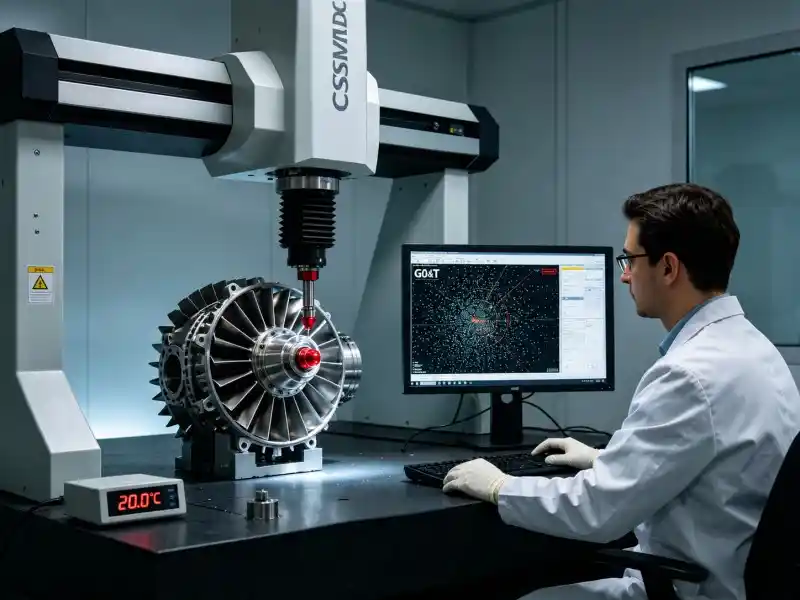
I often suggest that we look at the “Geometric Dimensioning and Tolerancing” (GD&T). It is not just about the size of a hole. It is about how round it is and where it sits compared to other features. GD&T is a symbolic language used by engineers to convey precise design intent to manufacturers, defining four critical properties: form, location, orientation, and size. ASME’s Y14.5 standard is considered the authoritative guideline for the design language of geometric dimensioning and tolerancing[reference:3]. This deep understanding of geometry is what makes a part “aerospace grade.” Many shops can hit a diameter, but few can hit the true position or the perpendicularity required for flight hardware.
| Feature Type | Typical Aerospace Tolerance | Common Measurement Tool |
|---|---|---|
| Critical Bore Diameter | ±0.005mm | Air Gauge / CMM |
| General Milled Pocket | ±0.05mm | Digital Caliper / CMM |
| Surface Flatness | 0.01mm | Surface Plate / Dial Indicator |
| Hole Position (GD&T) | 0.02mm | CMM (Coordinate Measuring Machine) |
Which CNC machine is best suited for high precision aerospace components?
Are you paying for 5-axis capability you do not need, or are you missing the precision you do? Choosing the wrong machine for aerospace alloys leads to poor surface finishes and broken tools.
The best machines for aerospace are 5-axis CNC machining centers from brands like DMG Mori, Mazak, or Makino. These machines offer superior rigidity and thermal compensation, which are essential for maintaining micron-level accuracy when cutting tough materials like Titanium and Inconel.
At Ranglink, we have over 100 machines including lathes, mills, and machining centers. For aerospace, we prefer 5-axis machines. Why? Because every time we move a part to a new fixture, we introduce a small error. With 5-axis machining, we can finish almost the whole part in one setup. This keeps all the features perfectly aligned with each other. It is the best way to ensure “true position” accuracy. It saves time and removes the human error factor during repositioning.
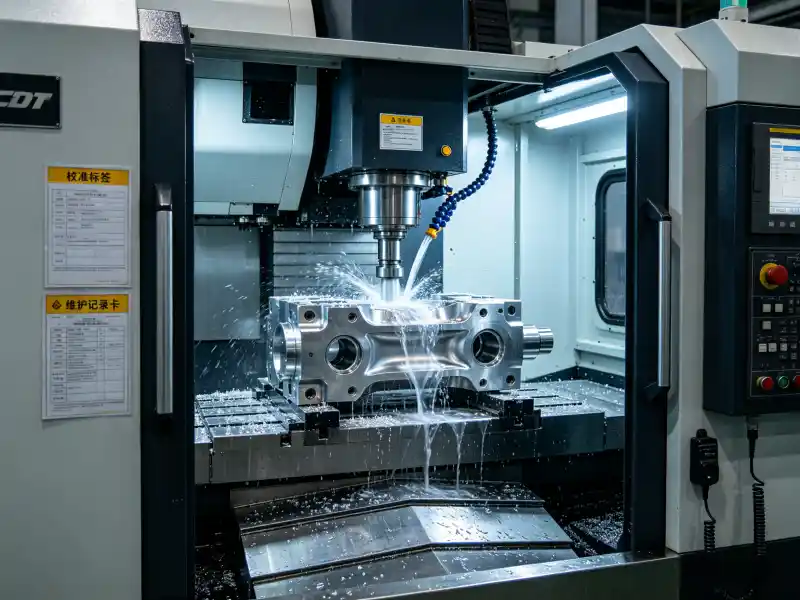
I also focus on the “rigidity” of the machine. Aerospace alloys are very hard. If the machine is not heavy and strong, it will shake. This shaking creates “chatter” marks on the surface. A part with chatter marks is a failed part in the aerospace world. It creates stress points where cracks can start. We use machines with high-torque spindles and heavy castings to soak up these vibrations. The latest generation of 5-axis simultaneous machining centers, for example, incorporates improved cooling measures and directly driven ball screws to achieve positioning accuracy of 5 µm, meeting the highest quality requirements in aerospace production[reference:4]. When you audit a factory, do not just look at the brand names. Look at how they maintain their machines. A dirty, vibrating machine cannot make a precision part. I always tell my clients to ask about the maintenance logs and the calibration schedule of the CMM. That is where the truth lives. If the machine is not calibrated every year, the precision is just an illusion.
| Machine Feature | Benefit for Aerospace | Why it matters for your project |
|---|---|---|
| 5-Axis Movement | Single-setup processing | Higher accuracy, lower risk of human error. |
| Thermal Compensation | Adjusts for heat changes | Consistent quality from morning to night. |
| High Rigidity | Reduces vibration | Perfect surface finish and longer tool life. |
| Probing Systems | In-process inspection | Catches errors before the part leaves the machine. |
Conclusion
Accuracy in aerospace machining requires stable temperatures and strict inspection protocols. At Ranglink, we ensure every part rests in a controlled environment before final measurement for guaranteed precision and safety.
References & Further Reading
- Thermal instability can cause catastrophic scrap rates in superalloy machining. DGFlex Precision documented a case where 43 of 50 Inconel 718 housings were lost due to thermal management failure. Read the full case study →
- ISO 9001 provides the quality management framework essential for precision CNC machining, mandating real-time process monitoring and documented inspection protocols. Learn more about ISO standards in CNC machining →
- Geometric Dimensioning and Tolerancing (GD&T) is the universal symbolic language for defining precise design intent on aerospace engineering drawings, governed by the ASME Y14.5 standard. Explore the ASME GD&T standard →
- DMG MORI’s latest generation 5-axis machining centers achieve 5 µm positioning accuracy through optimized cooling measures and directly driven ball screws. See DMG MORI precision specifications →
- Temperature-controlled inspection environments are critical for aerospace component quality assurance. Under AS9100 standards, leading shops maintain inspection rooms at 20°C ±1°C to ensure measurement accuracy. Read about CMM temperature control →