
Are you struggling with parts that are too expensive or fail in the field? Choosing the wrong material can ruin your design, delay your timeline, and waste your entire project budget.
To choose the right material for your CNC project, you must balance mechanical properties like strength and hardness with environmental needs and cost. Common choices include Aluminum 6061 for general use, 303 Stainless Steel for easy machining, and plastics like POM for insulation. Always prioritize machinability to keep costs low.
Many engineers spend weeks perfecting a 3D model¹ only to have the machine shop tell them it is impossible to make. This usually happens because the material choice does not match the part geometry or the manufacturing process.
I have seen countless projects stall because a designer chose a “high-performance” metal that was actually overkill and impossible to machine efficiently. If you want to stop the cycle of constant revisions and high quotes, you need to understand how materials behave on the shop floor. I will share what we have learned over 20 years at Ranglink to help you make smarter choices.
What are the most used materials in CNC machining?
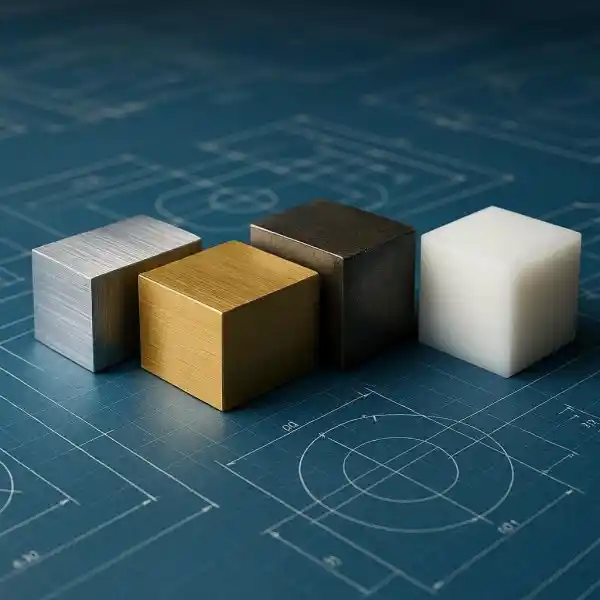
Does your design really need that expensive alloy², or are you over-engineering a simple part? Using the wrong “standard” material can lead to poor surface finishes, broken tools, and parts that rust in weeks.
The most common CNC materials are Aluminum (6061, 7075), Stainless Steel (303, 304), Brass (C360), and Plastics (POM, PEEK). Aluminum 6061 is the industry standard for general parts, while 303 Stainless is preferred for high-volume machining due to its superior chip-breaking abilities compared to 304.
At Ranglink, Aluminum is our “daily bread.” More than 60% of our work involves 6061. However, I always tell my clients that 6061 is an all-rounder, not a miracle cure. If you need high strength, move to 7075. If you need corrosion resistance³ for marine environments, use 5052 instead—6061 corrodes quickly in salt air. A common mistake I see is a drawing that just says “Aluminum.” I once had a client send a 6061 part for a salt-water application, and it didn’t last six months.
Stainless steel⁴ is another area where people lose money. Unless you need to weld the part, 303 is much better than 304. It contains sulfur⁵, which makes chips break cleanly. This extends tool life by 30% and gives a better finish. Brass is the “forgotten king” of precision. For small, complex parts like connectors, brass machines three times faster than steel and holds tolerances⁶ of ±0.01mm easily. Finally, do not view plastics as “cheap.” Materials like POM (Acetal) are great for gears, and PEEK can handle 250°C. If you need insulation or self-lubrication, plastic is often better than metal. You can explore all these options on our materials page.
| Material Category | Common Grade | Key Advantage | Best Use Case |
|---|---|---|---|
| Aluminum | 6061-T6 | Best versatility and cost | Brackets, frames, housings |
| Aluminum | 7075-T6 | Strength like steel | Aerospace, high-stress parts |
| Stainless Steel | 303 | Excellent machinability | Shafts, gears, fasteners |
| Stainless Steel | 304 | High corrosion resistance | Food grade, medical, welding |
| Copper/Brass | C360 Brass | Fast machining, conductive | Sensors, connectors, bushings |
| Plastics | POM (Acetal) | Dimensional stability | Low-friction gears, bearings |
What is the best material for CNC fixtures?
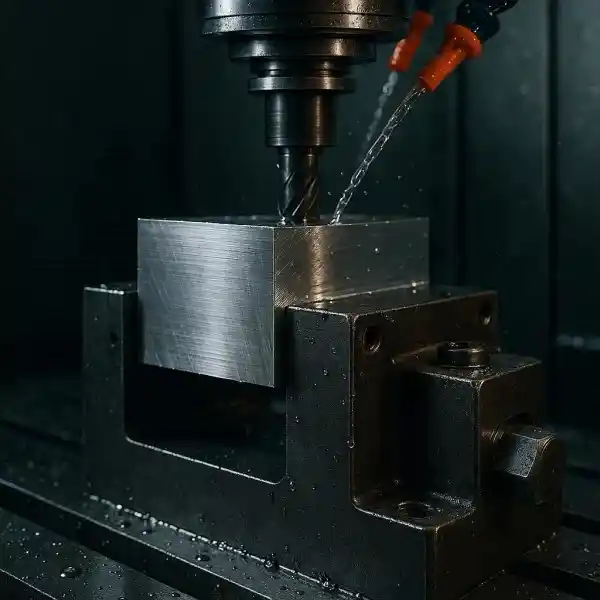
Is your fixture losing its accuracy after just a few uses? Choosing a material that is too soft or full of internal stress⁷ will cause your parts to fail inspection even if the machine is perfect.
The best fixture material depends on production volume and the workpiece material. Aluminum 6061 is best for prototypes, 7075 offers a lightweight high-strength alternative, and 4140 steel is the gold standard for high-volume, heavy-duty production where wear resistance is critical for maintaining long-term precision.
I have been making fixtures for 20 years, and there is no single “best” material. You must look at the job. If you are only making 50 aluminum parts, a 6061 fixture is perfect. It is cheap, fast to make, and light for operators to handle. But never use an aluminum fixture for stainless steel parts. The hard steel will wear down the aluminum contact points, and you will lose your positioning accuracy.
For high-end work, like 5-axis machining⁸ where weight matters but strength is needed, we use 7075 aluminum. It is as strong as mild steel but weighs a third as much. For mass production or heavy cutting, 4140 chromoly steel⁹ is my first choice. We heat-treat it to HRC 40-45 so the locking force stays consistent over thousands of cycles. The biggest secret is stress relief. Whether using aluminum or steel, we always rough machine, perform stress-relief aging, and then finish to size. If you skip this, your fixture might measure fine today but warp by 0.02mm next month.
Deep Dive into Fixture Selection
When I help clients design a fixture, I look at three main factors:
- Workpiece Hardness: The fixture must be hard enough to resist wear from the workpiece, especially at contact points. For high-wear areas, use hardened steel inserts.
- Cycle Count: For a “one-off,” 6061 is fine. For 10,000+ cycles, 4140 steel is the only way to ensure the pins don’t wobble.
- Environment: Will it be submerged in coolant? If using steel, it needs a black oxide finish or plating to prevent rust.
How to choose the best material for my project?
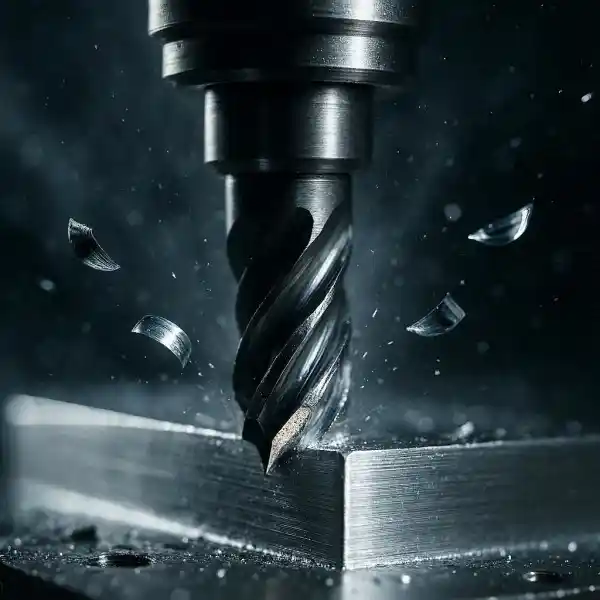
Are you choosing materials based on a handbook or based on how they actually perform in a machine? Picking the strongest material often leads to a hidden cost trap that can sink your project’s profitability.
To choose the best material, evaluate the operating environment, mechanical loads, and post-processing needs first. Then, prioritize machinability to reduce costs. A material that is 5% more expensive but 30% easier to cut will always result in a cheaper finished part.
I always ask my clients three questions before we start: Where is this used? What forces does it take? Does it need welding or anodizing¹⁰? These questions filter out 80% of bad choices. The “best” material is the one that is “good enough” for the job and easy to buy. I see many designers choose ultra-hard steel for parts that don’t need it. This triples the machining cost and makes the part brittle. Unless you are building a race car or a jet, you don’t always need the top-tier specs.
Machinability is a hidden cost. For example, Titanium¹¹ costs 10 times more than Aluminum, but it also machines 5 times slower. The final price might be 30 times higher. On the other hand, 303 stainless costs 5% more than 304 as a raw material, but because it is so much easier to cut, the total part cost is lower. I also suggest using different materials for different stages. Use 6061 to test your fit and function. Once the design is locked, switch to 7075 for the final production. If you are ever unsure, just ask us at Ranglink. We know which materials cut smoothly and which ones will cause headaches.
Practical Selection Steps
- Step 1: Environmental Check. If it touches chemicals or salt air, look at 5052 Aluminum or 316 Stainless.
- Step 2: Load Analysis. Is it a steady weight or a sudden impact? Impact needs toughness (like 4140), while steady weight needs stiffness.
- Step 3: Cost vs. Speed. Look at the “Machinability Rating.” Anything under 50% will be expensive to make.
- Step 4: Surface Finish. If it needs to look beautiful, some alloys (like 6061) anodize much better than others (like 2024).
Conclusion
Right material choice balances performance, machinability, and cost. Focus on 6061 for prototypes, 303 for steel parts, and always consult your machinist to avoid hidden manufacturing costs and delays.
Ready to start your next project?
Whether you need high-precision batch production or expert advice on the best machining path, I am here to help.
Contact me today for a fast quote:
Email: info@ranglink.com
WhatsApp: Message us on WhatsApp
- Overview of 3D modeling and its applications in engineering and design.
- Explanation of metal alloys and their properties in metallurgy.
- Scientific definition of corrosion and how materials resist it.
- Information on stainless steel, its grades, and uses.
- Chemical properties of sulfur, often added to improve machinability in steel.
- Guide to engineering tolerances and precision in manufacturing.
- Explanation of internal and residual stresses in materials.
- Detailed look at multiaxis machining including 5-axis CNC technologies.
- Technical data on 41xx family of chromoly steels used for high-strength applications.
- Process of anodizing to increase corrosion resistance and surface hardness.
- Properties, uses, and characteristics of titanium metals.