
Struggling with high quotes or “unmanufacturable” feedback on your metal part designs? Choosing the wrong material can ruin your budget and project timeline. Understanding the best metals for CNC machining helps you avoid these costly mistakes before the machines even start spinning.
Most CNC machining projects use aluminum (6061/7075), stainless steel (303/304), brass (C360), and titanium (Grade 5). The best metal depends on your specific needs for strength, weight, corrosion resistance, and cost-effectiveness. Aluminum is the overall leader for versatility, while brass offers the highest machinability.
Finding the right balance between design intent and manufacturing reality is hard. At Ranglink, I have seen many engineers struggle with this, so I want to share my shop-floor experience to help you choose wisely.
What metals can be CNC machined?
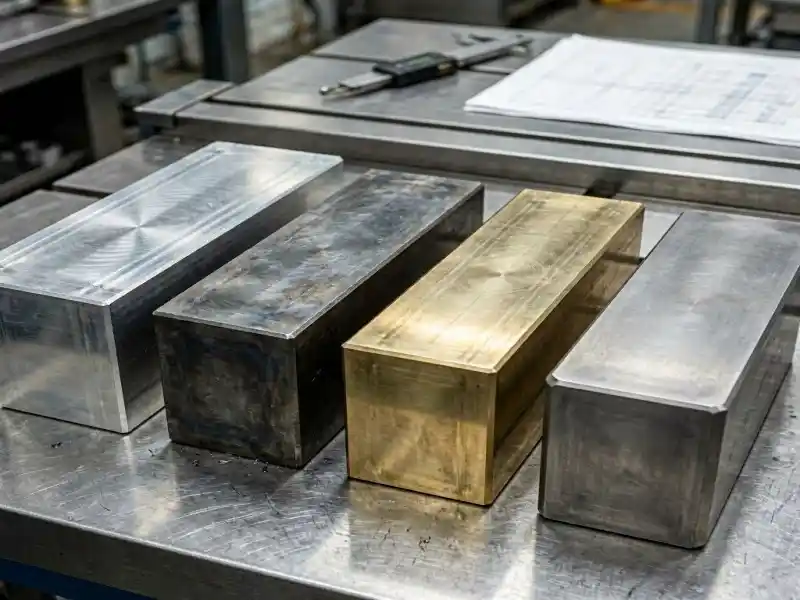
Are you tired of suppliers giving you long lists of materials but never having them in stock? This delay can push your product launch back by weeks while you wait for a special order.
Almost any metal can be CNC machined, but common choices include aluminum, stainless steel, carbon steel, brass, and titanium. At Ranglink, we prioritize 6061 and 7075 aluminum, brass, 303/304 stainless, and 45 steel because they offer the best balance of availability and performance.
In my 20 years at Ranglink, I have learned that “machinable” does not mean “efficient.” Many suppliers claim they can do anything, but if they do not stock the material, your costs will skyrocket. I always check our inventory first. If a client asks for a rare alloy, I usually ask, “Do you really need this exact grade?” Often, a design is over-engineered. Switching to a stocked material like 6061 aluminum¹ can save you 30% in costs and a full week of waiting.
I also suggest looking at plastics like POM² or PEEK³ as “metal” alternatives. They are fast to machine, light, and do not rust. I often mention this during quoting to see if the client can benefit from a simpler material choice.
Common CNC Metals and Their Typical Uses
| Metal Category | Common Grades | Key Advantage | Best Application |
|---|---|---|---|
| Aluminum | 6061, 7075 | Strength-to-weight | Aerospace, Enclosures |
| Steel | 45 (C1045), 4140 | High Durability | Gears, Axles, Tools |
| Stainless Steel | 303, 304, 316 | Corrosion Resistance | Medical, Marine, Food |
| Copper/Brass | C360, C110 | Conductivity | Electronics, Plumbing |
| Exotic Alloys | Titanium, Inconel⁴ | Extreme Heat/Strength | Medical Implants, Jets |
What is the easiest metal to CNC machine?
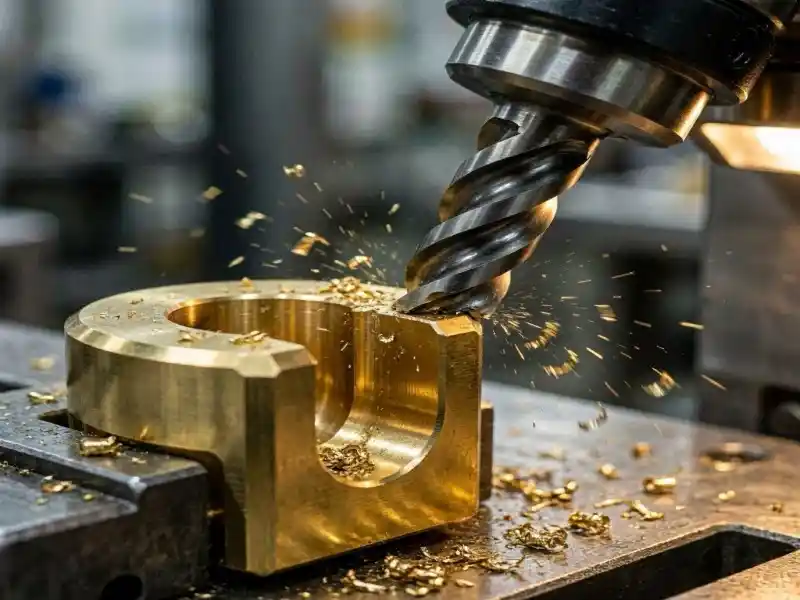
Do you find that your precision parts often come back with poor surface finishes or inconsistent dimensions? Many people think “soft” means “easy,” but that is a common mistake that leads to bad parts.
Free-cutting brass (C360) is the easiest metal to CNC machine. Unlike aluminum, which can be gummy, brass chips break into tiny pieces, causing minimal tool wear and allowing for incredibly high speeds and stable tolerances of ±0.01mm or better.
Many new designers think aluminum is the easiest because it is soft. However, I have seen that soft aluminum like 1060 can be a nightmare because it sticks to the cutting tool. We call this “built-up edge⁵,” and it ruins the finish. For me, “easy” means the material chips well and stays dimensionally stable. This is why I love brass for electronic connectors.
When I work on a high-precision project, I always look at the chip formation⁶. Brass produces small, dry chips that fall away easily. This means I can run the machine all night without worrying about a “bird’s nest” of metal wire tangling the tool. This stability is why brass parts often look like jewelry right off the machine.
Factors Defining “Easy” Machinability
- Chip Breaking: Materials that produce small, brittle chips (like C360 brass) are easier than stringy materials.
- Thermal Conductivity: Aluminum dissipates heat quickly, protecting the tool, whereas titanium traps heat at the cutting edge.
- Chemical Stability: Some metals react with the tool coating, causing premature failure.
- Hardness vs. Work Hardening: Some stainless steels are not hard but “work-harden⁷” instantly if the tool rubs, making them very difficult to cut.
Aluminum vs. Steel vs. Brass vs. Titanium: How to choose?
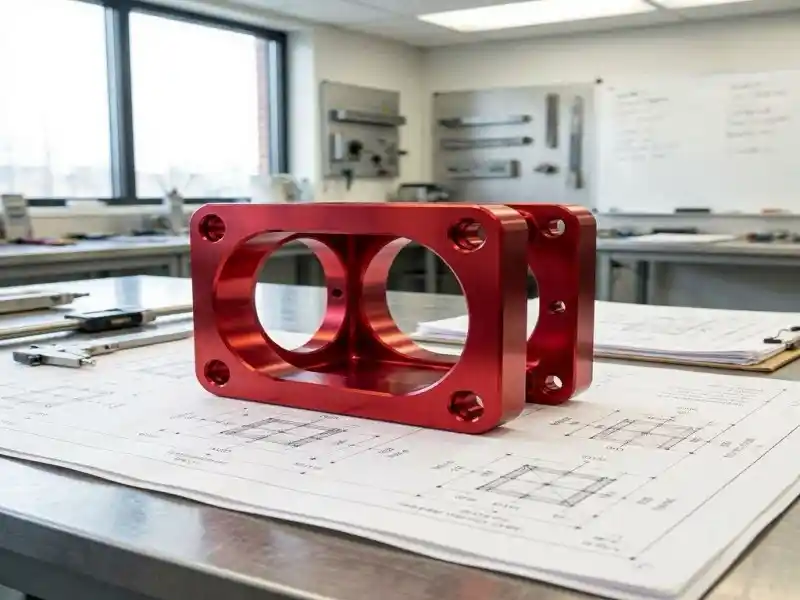
Are you choosing your material based only on the data sheet performance? You might be ignoring the “hidden supply chain” costs that can make your final product too expensive for the market.
To choose the right metal, look at the post-processing chain. Aluminum is best for consumer goods due to easy anodizing. Steel is for structural strength but requires heat treatment. Brass is ideal for precision without extra processing. Titanium is reserved for extreme environments where weight and strength are critical.
I have seen many engineers choose titanium because they want the “best” material. But then they realize that finding a local shop that can do high-quality micro-arc oxidation for titanium is nearly impossible. The lead time doubles, and the cost triples. If you are making a consumer product, I usually suggest aluminum. The anodizing⁸ supply chain is very mature. You get many color choices, low costs, and fast delivery.
Steel has a hidden cost too: heat treatment⁹. If you specify “HRC 50,” we have to account for the slight warping that happens during quenching. I have to leave extra material for grinding, which adds many hours to the job. If the part does not need that extreme hardness, brass or a pre-hardened steel can save a lot of trouble because they do not require extra steps after machining.
Material Comparison Table
| Feature | Aluminum | Steel | Brass | Titanium |
|---|---|---|---|---|
| Machining Speed | Very High | Medium | Excellent | Low |
| Material Cost | Low | Low to Medium | Medium | Very High |
| Surface Finish | Good (Anodized) | Variable | Excellent | Difficult |
| Weight | Light | Heavy | Heavy | Light |
| Corrosion | Moderate | Low (unless SS) | High | Excellent |
What is the best steel for CNC machining?
Are you confused by the hundreds of steel grades available? Picking the wrong one can lead to parts that are either too brittle to use or too difficult to machine.
There is no single “best” steel, only the right one for your goal. For structural shafts, 4140 alloy steel is best. For molds or precision gauges, S136 is ideal. For general parts, 45 carbon steel (C1045) is the most cost-effective and easiest to weld.
In my shop, I see a lot of drawings for 304 stainless steel¹⁰. If the part does not need welding, I always ask if we can switch to 303 stainless. Many buyers do not know that 303 contains sulfur, which makes it much easier to cut. It breaks chips better, the tools last 30% longer, and the surface looks much cleaner. This small change makes the part cheaper and faster to produce for you.
When I make fixtures for our own factory, I use 45 steel. It is cheap and does the job well. But if I am making a high-end mold, I go for S136¹¹. It stays very stable after heat treatment, and I can polish it to a mirror finish. You must match the steel to the specific mechanical function of the part, not just pick the strongest one.
Top Steel Choices for Different Needs
- 4140 Alloy Steel: My favorite for gears and high-stress parts. It has great toughness.
- 303 Stainless Steel: The best choice for fast machining of rust-resistant parts.
- D2 Tool Steel¹²: Use this if you need extreme wear resistance and high hardness.
- 45 Steel (C1045): The “workhorse” for simple mechanical blocks and frames.
Which metals offer the best value for prototyping vs. production?
Are you overpaying for your prototypes by using production-grade materials? Or are you underestimating the total cost of mass production by only looking at the price per kilogram?
For prototyping, use the cheapest stocked material like 6061-T6 to verify fit and function. For mass production, focus on the “Material Removal Rate.” A cheaper raw metal that takes twice as long to machine will actually cost you much more in the long run.
When I help Alex with prototypes, I tell him: if the final part will be 7075 aluminum but you just need to check the assembly, let’s use 6061. It is cheaper and easier to get. Prototyping¹³ is about learning, not about buying expensive metal. This can cut your sample costs in half.
For mass production, the math changes. Raw titanium might cost 10 times more than aluminum. But if the machining takes 5 times longer and breaks 10 times more tools, the final price might be 20 times higher. I look at the “total cost of risk.” A material that is hard to machine increases the chance of scrapped parts. At Ranglink, I always calculate the material cost plus the machine time plus the risk cost to find the true value for our customers.
Prototyping vs. Production Strategy
| Phase | Priority | Recommended Action |
|---|---|---|
| Prototyping | Speed & Fit | Use 6061 Aluminum or POM plastic for nearly everything. |
| Functional Test | Material Properties | Use the actual spec, but simplify the geometry if possible. |
| Mass Production | Cycle Time | Choose “Free-Machining” grades (like 303 SS or C360 Brass). |
| Cost Savings | Volume | Negotiate based on standard stock sizes to reduce waste. |
Conclusion
Choose aluminum for value, brass for precision, and steel for strength. Always check for material availability and post-processing needs to avoid high costs and long delays in your projects.
Ready to start your next project?
Whether you need high-precision batch production or expert advice on the best machining path, I am here to help.
Contact me today for a fast quote:
Email: info@ranglink.com
WhatsApp: Message us on WhatsApp
- Overview of the properties and applications of 6061 aluminum alloy.
- Information on POM (Delrin), a high-performance engineering plastic.
- Properties of PEEK, an advanced medical and aerospace polymer.
- Technical guide to Inconel superalloys used in extreme environments.
- Explanation of the built-up edge phenomenon during machining.
- Industry article on how chip formation affects machining quality.
- Scientific definition of strain hardening in metals.
- Process guide on anodizing for aluminum surface protection.
- Overview of industrial heat treatment methods for metals.
- Material data and specifications for 304 stainless steel.
- Technical specifications for S136 premium mold steel.
- Information on D2 tool steel properties and uses.
- Definition and stages of product prototyping in engineering.