
A wrong tolerance on a shaft can stop your whole assembly line. I have seen it happen.
CNC turning is a machining process where a workpiece rotates while a stationary cutting tool removes material to create precise, round parts. It is ideal for shafts, pins, and threaded components.
You need to understand this if you source metal parts from China. Let me walk you through the basics.
What is CNC turning?
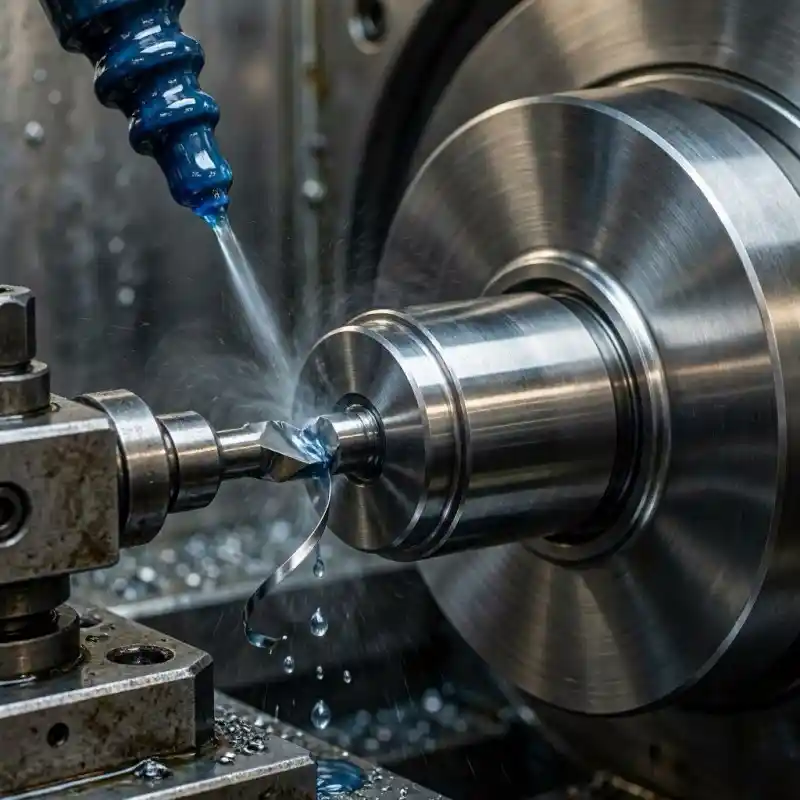
Are you paying too much for complex multi-axis work when a simpler process fits better? Many buyers miss this distinction.
CNC turning uses a lathe controlled by a computer to rotate the workpiece at high speed against a fixed tool. This creates symmetrical cylindrical parts with high accuracy and excellent surface finish.
In my years at Ranglink, I have seen many drawings land on my desk. The first thing I check is whether the part is mostly round. If it is round, turning is usually the first step. The workpiece spins fast. A tool on a turret moves in. It peels away metal like a knife peeling an apple. The computer controls the depth and the speed. This makes the process very repeatable. We use CNC turning for shafts, bushings³, and connectors. These parts need to be perfectly round. They also need a smooth surface finish⁴. Our CNC machining service covers both simple and complex turned parts.
Key Parameters in CNC Turning
The operator sets several values before the machine runs. Each value affects the final part quality. Spindle speed⁵ controls how fast the workpiece rotates. Feed rate⁶ controls how quickly the tool travels along the part. Depth of cut decides how much material is removed in one pass. The cutting tool material must match the workpiece material.
| Parameter | What It Does | Typical Range |
|---|---|---|
| Spindle Speed | Rotation speed of the workpiece | 500 – 5000 RPM |
| Feed Rate | Tool movement along the workpiece | 0.05 – 0.5 mm per revolution |
| Depth of Cut | Material thickness removed per pass | 0.1 – 6 mm |
| Tool Material | Carbide, CBN, or PCD insert | Depends on metal |
I train new operators to watch the chips. Continuous, curled chips mean the cut is right. Short, crumbly chips mean the feed is too low or the tool is dull. This simple observation saves us from bad parts. It is a skill that no manual teaches.
What is lathe machining?
Do you wonder if old-school manual lathes still have a place in modern factories? The answer might surprise you.
Lathe machining is the broader family of turning processes. It includes manual lathes operated by hand and CNC lathes run by computer programs. Both rotate the part against a tool to shape metal.
I keep one manual lathe⁷ at Ranglink. My young programmers sometimes ask why. I tell them that a manual lathe teaches you how metal behaves. You feel the vibration in the handwheel. You hear the cut. You learn how a sharp tool sounds different from a dull one. CNC lathes are fast. They are precise. But they cannot teach a technician the instinct of the old masters. A skilled hand on a manual lathe can fix a small problem in minutes. No programming. No setup. Just experience. However, for production, we rely on our CNC lathes. They hold tolerances of ±0.005 mm all day long. They never get tired. They never have a bad day.
Manual Lathe vs. CNC Lathe
A buyer needs to know when to use each type. Manual lathes work well for single repairs or very simple prototypes. CNC lathes work better for batch production and high accuracy. The table below lists the main differences.
| Feature | Manual Lathe | CNC Lathe |
|---|---|---|
| Control Method | Handwheels and levers | G-code and servo motors |
| Operator Skill | High manual dexterity | CAD/CAM programming skills |
| Batch Size | One-off repairs, prototypes | Medium to large production runs |
| Accuracy | Depends on the machinist | Consistent and repeatable |
| Setup Time | Fast for simple tasks | Longer programming, faster cutting |
I once had a client who needed a single replacement shaft for an old pump. Putting it on a CNC lathe would have cost him a fortune. We turned it on the manual lathe in under an hour. He saved money. He got his pump running the same day. This is why we keep both types of machines. The right tool for the right job.
What are turned parts?
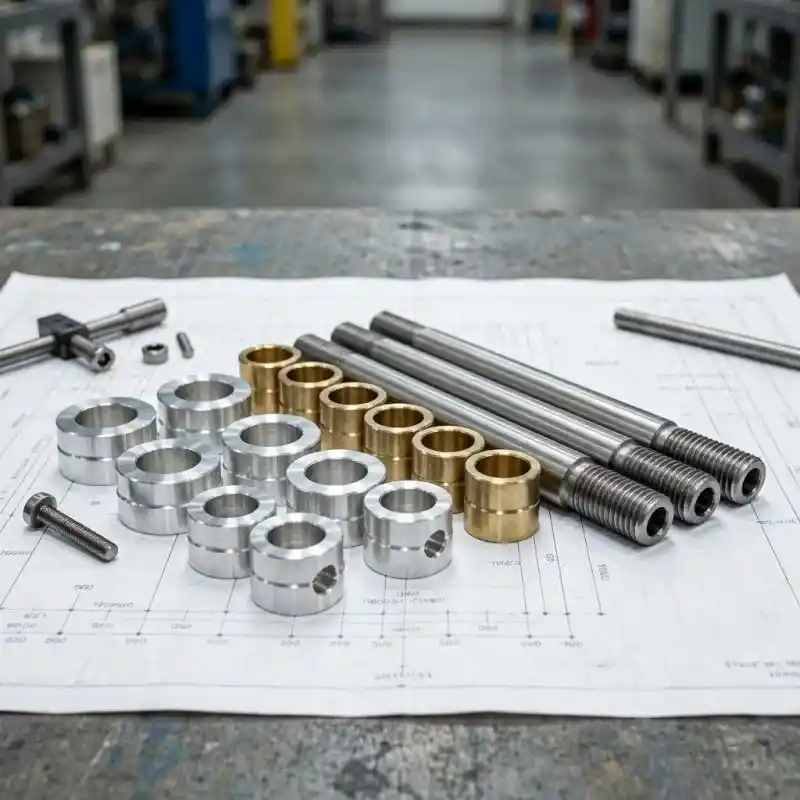
Are you confused about which parts actually come from a lathe? Knowing this helps you design better and quote faster.
Turned parts are components produced on a lathe. They typically have cylindrical, conical, or disk-like shapes. Common examples include shafts, pins, bushings, spacers, and threaded fasteners.
A turned part is usually symmetrical around a center axis. You can spot them easily. They have circular cross-sections. They often have grooves, threads, or stepped diameters. When I look at a drawing, I can tell in seconds if it is a turning job. The features follow a pattern. A main diameter. A shoulder. A thread at the end. Maybe a groove for a snap ring⁸ for a snap ring. These parts go into motors, pumps, gearboxes, and medical devices⁹. At Ranglink, we turn thousands of parts every month. Our CNC machining service delivers these components to customers all over the world.
Common Types of Turned Parts
Each type of turned part has a specific job. The shape determines where it is used. The table below shows the main groups.
| Part Type | Key Feature | Typical Application |
|---|---|---|
| Shafts | Long cylindrical body with keyways | Motors, gearboxes |
| Pins | Short cylindrical fasteners¹⁰ | Hinges, linkages |
| Bushings | Hollow cylinders with precise bore | Bearings, wear guides |
| Spacers | Short tubes for gap control | PCB mounting, assemblies |
| Threaded Parts | External or internal threads | Fasteners, fittings |
I remember a client who sent us a drawing of a bushing. The bore tolerance was very tight. We used a CNC lathe with a boring bar. We checked the bore with an air gauge. Every bushing was identical. The client was happy. He said he had struggled with other suppliers who could not hold the tolerance. The right process and the right inspection make the difference.
Conclusion
CNC turning creates precise round parts through controlled rotation. Understanding the process, the machines, and the typical parts helps you make better sourcing decisions.
- Detailed explanation of engineering tolerances and their importance in assembly.
- Overview of China as a global manufacturing and supply chain hub.
- Technical definition and uses of bushings in mechanical systems.
- Guide to surface texture and measurement in machining.
- Industry guide to understanding spindle speeds in metal cutting.
- Technical parameters for feed rates and cutting speeds in machining.
- Historical and technical background of the lathe machine.
- Information on circlips and snap rings for axial positioning.
- Regulatory and manufacturing standards for medical-grade components.
- Overview of mechanical hardware used to join objects together.