
High machining quotes can stall your project before it even starts. You need a clear understanding of where your money goes to keep your budget under control.
CNC machining costs are determined by material selection, machining time, setup fees, post-processing, inspection, and shipping. By optimizing design features like wall thickness and tolerances, you can significantly lower the final price without sacrificing quality.
Many engineers feel frustrated when a quote comes back much higher than expected. It feels like a black box where the factory just picks a number. I want to change that by showing you exactly how we calculate costs at Ranglink.
How are CNC machining costs calculated?
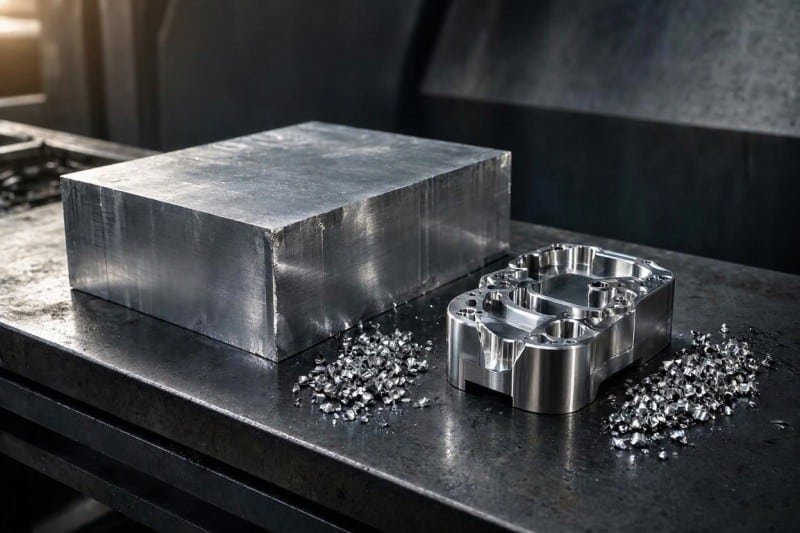
Do you feel like your machining quote is a mystery that you cannot solve? Understanding the specific components of a price allows you to see exactly where you can save money.
A professional quote is not a single price; it is a puzzle made of six parts. These include material costs, machine time, setup and tooling fees, post-processing, inspection, and logistics costs to ensure transparency.
At Ranglink, I break down every quote into these six categories. Many suppliers only give a total price, which hides where the waste is. I always tell my clients that material cost is not just about weight; it is about “utilization.” If a 200g part is cut from a 1kg aluminum block¹, you are paying for the full kilogram. I often suggest small design changes to fit more parts on one plate, which can cut material costs by 30%. Machine time is another big factor. It includes “cutting time” and “auxiliary time.” If a part needs five setups, the auxiliary time for fixing and tool changes might be longer than the actual cutting. Reducing setups is faster and cheaper than speeding up the drill.
Setup fees are the “invisible giant” for small orders. Programming² a machine and designing fixtures are one-time costs. If you order only one part, that $100 setup fee sits entirely on that one piece. If you order 100 parts, it adds only $1 to each. I recently quoted a mounting plate where the total was $145 for 10 pieces. When the client increased to 100 pieces, the price dropped to $115. The real value of bulk orders is not just a material discount; it is the dilution of these fixed setup costs across more units.
| Cost Component | Impact on Small Batch | Impact on Mass Production |
|---|---|---|
| Material | High (Low utilization) | Lower (Bulk discount) |
| Machine Time | Constant per unit | Constant (Efficiency gains) |
| Setup/Tooling | Very High | Negligible |
| Inspection | Fixed per batch | Lower per unit |
What are the biggest cost drivers in a CNC machining quote?
Are you overpaying for precision that your project does not actually need? Small changes in your drawing can lead to massive jumps in the final price from your supplier.
The biggest drivers of CNC machining costs are scrap rates, programming efficiency, tight tolerances, and surface finish requirements. Tightening a tolerance from ±0.1mm to ±0.01mm can often double the machining price due to difficulty.
Scrap rate is a cost that never appears on a quote but is always there. If a supplier has a 10% scrap rate, they build that into your price. I suggest asking suppliers about their internal scrap rates³ directly. Another factor is programming strategy. Two programmers can produce the same part with a 20% cost difference. One might use standard paths that take three hours, while another uses high-speed dynamic milling⁴ to finish in 90 minutes. You cannot see this on paper, but you will see it in the lead time and surface quality during your first order.
The trap of over-engineering tolerances
Tolerances are the biggest “price amplifiers” in the industry. I often see designers mark every dimension as ±0.01mm. This forces us to use slower processes and more frequent inspections. I once had a client with an aluminum housing quote of $180. After I learned the part stayed inside a machine, we relaxed non-critical tolerances⁵ and changed the surface finish. The price dropped to $75 immediately. The part functioned exactly the same, but the manufacturing was much simpler and faster.
| Tolerance Level | Cost Multiplier | Common Application |
|---|---|---|
| ±0.2 mm | 1.0x | General enclosures |
| ±0.05 mm | 1.5x | Standard mechanical fits |
| ±0.01 mm | 2.5x | Precision bearings/slides |
| < ±0.005 mm | 4.0x+ | High-end aerospace/medical |
How can Design for Manufacturing (DFM) reduce your CNC costs?
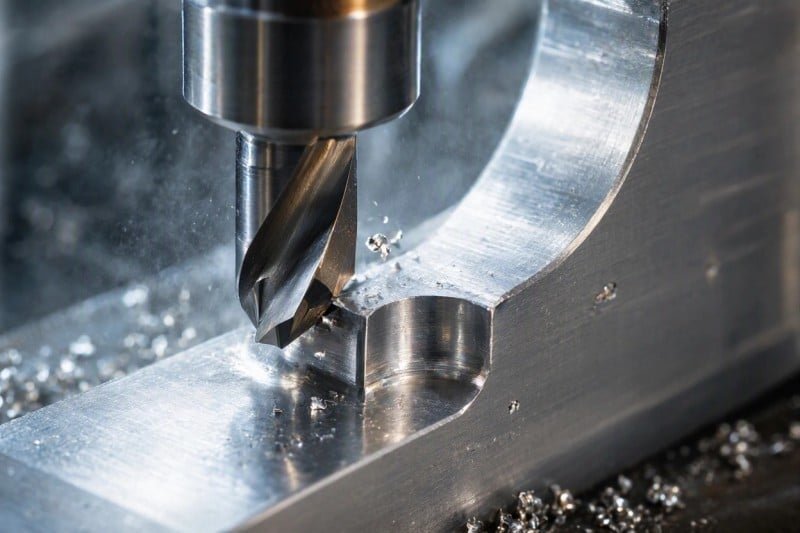
Is your design making the machinist’s life harder and your bill higher? Design for Manufacturing is not about “if” it can be made, but “how cheaply” it can be made.
DFM reduces costs by optimizing wall thickness, adding internal radii, layering tolerances, and reducing setup faces. Standardizing internal corners to match tool shapes allows for faster cutting and better surface finishes throughout the process.
When I review drawings at Ranglink, I look for five things: uniform wall thickness, internal corners, tolerance layers, hole depths, and clamping surfaces. If a part has one wall at 5mm and another at 1mm, it will warp during cooling due to internal stress⁷. Making wall thickness uniform ensures stability and lower scrap rates. Internal radii are also critical. Sharp corners force the tool to stop and turn, which breaks tools and slows down the machine. I recommend a minimum R2 for aluminum. If you need a sharp corner for assembly, I suggest a “bone-out” or relief cut instead of a sharp internal edge.
Reducing setups to save time
The most ignored cost-saving step is reducing the number of clamping faces. Every time a machinist has to flip a part, it takes 15 minutes of setup and alignment. If your design requires machining from six different sides, you are paying for six setups. If you can move features so they can be reached from only two directions, you cut the auxiliary labor time in half. I frequently advise my clients to change side holes into through-holes that can be machined from the top to save these costs.
How does order volume affect the unit price of CNC machined parts?
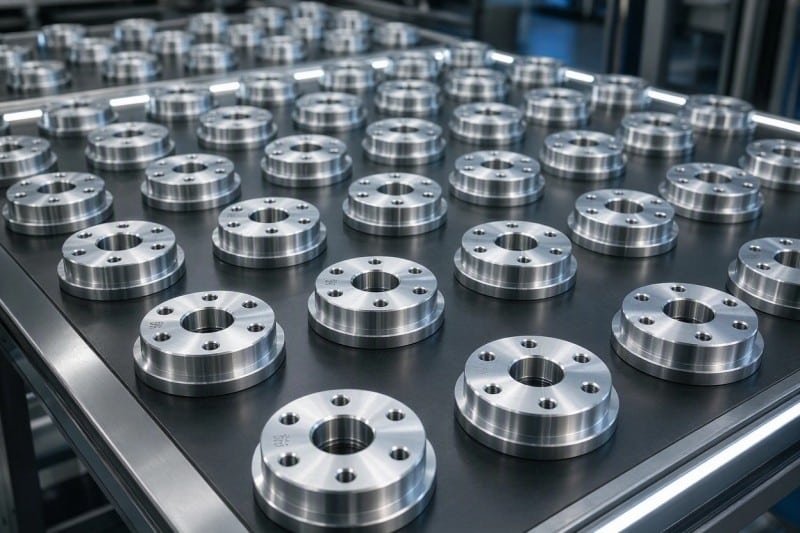
Why does the price per part drop so much when you order more? Understanding the “sweet spot” in order volume helps you decide when to prototype and when to produce.
Order volume reduces unit price in a “staircase” fashion rather than a straight line. The biggest drop occurs between 1 and 100 units as fixed setup and programming costs are spread across more parts.
The price drop is not infinite. From 1 to 10 units, you might see a 60% reduction in price. From 100 to 1,000 units, the drop might only be 30%. This happens because once setup costs are diluted, you are left with the “hard costs” of material and machine time, which do not change much. The “sweet spot” for CNC machining is usually between 10 and 100 pieces. In this range, CNC is more competitive than 3D printing⁸ for quality and cheaper than injection molding⁹ because you don’t need expensive molds.
The secret of repeat orders
Another way to save is through repeat business. For the first 100 parts, you pay for the programming and fixtures. For the second 100 parts, those costs are zero. At Ranglink, I have many clients who start with one prototype and move to monthly batches. Over time, their unit price drops significantly because we already have the process perfected. It is always more cost-effective to build a long-term partnership with one reliable shop than to chase the lowest quote from a new supplier every time.
Conclusion
Control your CNC costs by simplifying designs, relaxing non-critical tolerances, and increasing order volumes. Partner with Ranglink for expert DFM advice to turn complex blueprints into affordable, high-quality realities.
Ready to start your next project?
Whether you need high-precision batch production or expert advice on the best machining path, I am here to help.
Contact me today for a fast quote:
Email: info@ranglink.com
WhatsApp: Message us on WhatsApp
- Overview of aluminum’s properties and industrial applications.
- Explanation of Computer-Aided Manufacturing (CAM) used for programming CNC machines.
- Definition of scrap rates and waste material in manufacturing processes.
- Guide to high-speed machining and dynamic milling techniques.
- Information on engineering tolerances and their impact on precision parts.
- Principles of Design for Manufacturability (DFM) to optimize production costs.
- Scientific explanation of residual and internal stress in materials.
- Overview of 3D printing and additive manufacturing technologies.
- Detailed explanation of the injection molding process for high-volume plastic parts.