
Struggling with parts that fail inspection despite meeting dimensions? Milling¹ often hits a wall when tolerances tighten. One small error leads to costly scrap and missed deadlines for your project.
CNC grinding provides superior accuracy and surface quality compared to milling. It achieves sub-micron tolerances and mirror-like finishes. This process is essential for hardened materials where milling tools deflect or fail to produce the required geometric precision.
I know how frustrating it is to see a design rejected because the shop couldn’t hold a “tenths” tolerance. Let’s look at why grinding is the real solution for your high-stakes mechanical designs.
Why is CNC grinding necessary when milling can’t hold the tolerance?
Is your milling supplier struggling with tool deflection on hardened steel? Inconsistent dimensions can ruin your assembly. If your parts lack rigidity, milling often pushes the material instead of cutting it cleanly.
Grinding uses an abrasive wheel with thousands of cutting points to remove tiny amounts of material. This reduces cutting forces and heat buildup. It allows for extremely high precision on hard metals that would break or dull standard milling bits.
The Physics of Precision
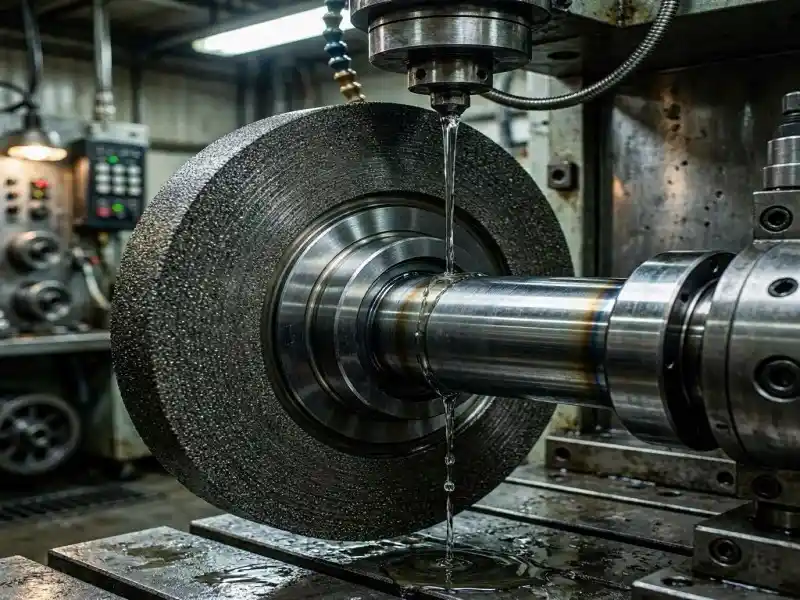
When I work on parts for automated equipment, I often see milling tools “chatter².” This happens because a milling cutter has a few large teeth. Each tooth takes a big bite, which creates vibration. In contrast, a grinding wheel has millions of tiny grains. Each grain takes a microscopic chip. This difference is why grinding stays stable while milling fluctuates.
| Feature | CNC Milling | CNC Grinding |
|---|---|---|
| Cutting Force | High (causes deflection) | Low (stable) |
| Heat Generation | Concentrated at edge | Distributed across wheel |
| Hardness Limit | Usually up to 45-50 HRC (hard milling with CBN³ can reach higher, but at greater cost) | Can exceed 65 HRC |
| Geometry Control | Good for roughing | Best for final sizing |
Beyond just hardness, it comes down to tool wear. A milling cutter loses its sharp edge quickly, changing the part size mid-run. A grinding wheel is “dressed” frequently to stay sharp and perfectly round. This self-sharpening nature ensures the first part and the hundredth part are identical.
Why choose grinding over milling for tight tolerances?
Are you tired of “tolerance stack-up⁴” ruining your prototypes? Milling is great for speed, but it often falls short on flatness and parallelism⁵. One slight tilt in the spindle can cause a part to be out of spec.
Grinding is chosen for tight tolerances because it offers better control over the “depth of cut.” We can remove as little as 0.001mm per pass. This level of control is nearly impossible with traditional milling tools.
Stability and Repeatability
In my 20 years at Ranglink, I have learned that precision is about repeatability. Milling machines are versatile, but they have more moving parts that can introduce “slop.” Grinding machines are built with massive, heavy bases to dampen every vibration. This stiffness is what allows us to hold a straight line over a long distance.
If your design requires a bore to be perfectly concentric⁶ to an outer diameter, grinding is the safest bet. We use specialized fixtures that rotate the part on its own axis. This removes the “run-out⁷” that often plagues milled parts. For a design engineer like Alex, this means less time worrying about fitment issues during the final assembly. We take the guesswork out of the process by using a method designed for finality, not just shaping.
What are the achievable tolerances for CNC precision grinding?
Does your project require accuracy that sounds impossible? Many shops claim they can hit 0.005mm, but they fail during mass production. You need to know the real limits of the machinery before you finalize your engineering drawings.
Standard CNC precision grinding easily achieves tolerances of +/- 0.002mm. In a controlled environment, we can reach +/- 0.001mm (1 micron). This applies to diameter, thickness, flatness, and complex cylindrical geometries across various metal types.
Breaking Down the “Micron” Barrier
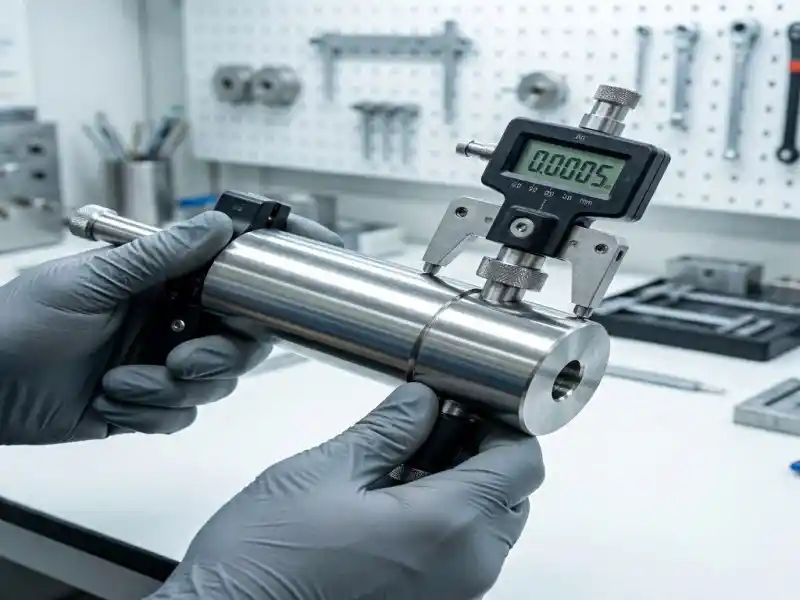
To hit 0.001mm, we have to look past the machine itself. At Ranglink, we treat precision as a holistic system. It involves the machine, the operator, and the environment. Here is a breakdown of what we can realistically achieve in our facility.
| Dimension Type | Standard Grinding | Ultra-Precision |
|---|---|---|
| Linear Tolerance | +/- 0.005mm | +/- 0.001mm |
| Surface Roughness⁸ | Ra 0.4 | Ra 0.05 (Mirror) |
| Roundness | 0.003mm | 0.0005mm |
| Flatness | 0.005mm | 0.001mm |
Achieving these numbers requires high-end equipment like our CNC grinders and lathes. But more importantly, it requires patience. We cannot rush a 1-micron part. The metal needs time to “settle” between passes. If we remove material too fast, internal stresses will cause the part to warp hours after it leaves the machine. We use multiple stages of grinding—rough, semi-finish, and spark-out—to ensure the metal stays stable and the dimensions stay true.
How to improve surface finish in grinding?
Is a rough surface causing friction or premature wear in your design? A poor finish can trap debris and lead to system failure. You need a surface that is not just smooth to the touch, but microscopically flat.
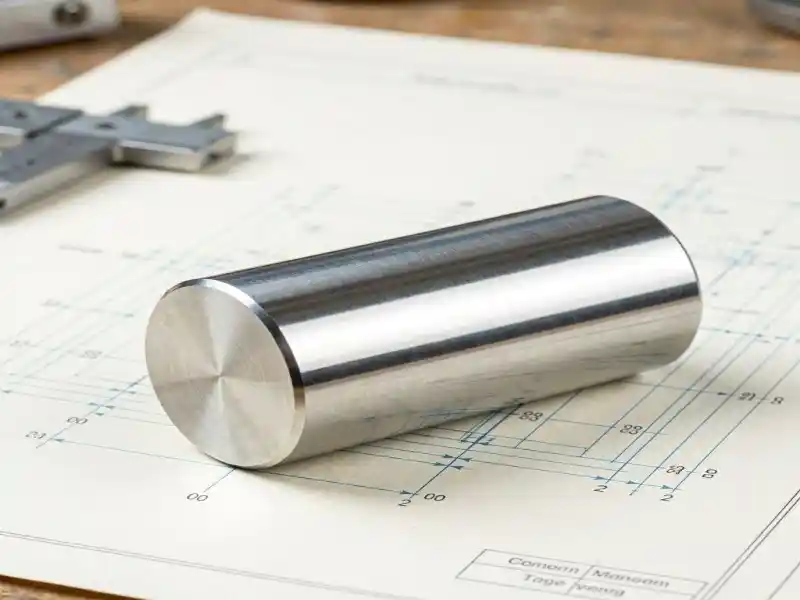
To improve surface finish, we adjust the wheel grit size, coolant flow, and “dwell” time. Using a finer grit wheel and slower feed rates creates a polished effect. Proper dressing of the wheel is also vital to keep it clean.
The Art of the Spark-Out
One technique I always insist on is the “spark-out” pass. This is when the grinding wheel continues to move over the part without any further depth of cut. It simply cleans up the microscopic peaks left by previous passes. It is the difference between a “good” part and a “perfect” part.
We also pay close attention to the coolant⁹. If the coolant is dirty, it carries tiny metal chips back into the grinding zone. This causes “scratches” that ruin the Ra value. We use high-pressure filtration systems to keep our oil and water mixtures pure. For engineers like Alex, this means your parts will have the low friction coefficients required for high-speed automated equipment. A better finish also means better corrosion resistance, as there are fewer “valleys” for moisture to hide in.
What precautions ensure high-precision grinding without scrap?
Have you ever had a part pass dimensional inspection but break during a fatigue test¹⁰? This is a nightmare for any designer. It usually means the part was “burned” during grinding, creating invisible cracks beneath the surface.
We prevent scrap by maintaining constant temperature and humidity in the workshop. We also use acid pickling or eddy current testing to detect “grinding burns.” These steps ensure the material’s structural integrity remains intact after the process.
The Invisible Killer: Grinding Burns
I have seen many suppliers deliver parts where the dimensions are perfect, but the parts fail instantly in the field. This is often due to “grinding burn.” If the wheel is dull or the coolant fails, the surface gets too hot. This changes the molecular structure of the steel. It becomes brittle. To prevent this, we use a strict “No-Burn” protocol.
- Temperature Control: In our 3,000-square-meter shop, we keep the environment stable. If the room temperature changes by 2 degrees, a 100mm steel part can expand by over 0.002mm. That is enough to fail a high-precision job.
- Detection: For critical aerospace or medical parts, we perform acid pickling¹¹. This reveals heat-affected zones that the naked eye cannot see.
- Eddy Current Testing: This non-destructive method¹² checks for surface cracks and hardness variations. It is our way of proving the part is as strong as your CAD model¹³ intended.
We don’t just measure the part; we validate the process. This rigorous approach is why we have survived 20 years in this industry. We understand that for a Senior Design Engineer, a “cheap” part that breaks is the most expensive part of all.
Conclusion
For hardened steel parts, CNC grinding remains the most reliable path to sub-micron accuracy and structural integrity. By controlling heat and environment, we turn your complex designs into reliable, high-precision realities.
Ready to start your next project?
Whether you need high-precision batch production or expert advice on the best machining path, I am here to help.
Contact me today for a fast quote:
Email: info@ranglink.com
WhatsApp: Message us on WhatsApp
- Detailed overview of the milling machining process.
- Explanation of chatter and vibration phenomena in machining.
- Information on Cubic Boron Nitride (CBN) used for cutting hard materials.
- Guide to tolerance stack-up and mechanical tolerance analysis.
- Overview of Geometric Dimensioning and Tolerancing (GD&T) including parallelism.
- Technical definition of concentricity in geometric measurement.
- Explanation of run-out inaccuracy in rotating mechanical systems.
- Standardized measurements and impacts of surface roughness.
- The role of cutting fluids and coolants in metalworking.
- Overview of material fatigue and structural testing methods.
- Explanation of the acid pickling process for metal surface treatment.
- Comprehensive guide to non-destructive testing and inspection methods.
- Information on Computer-Aided Design (CAD) software tools.