
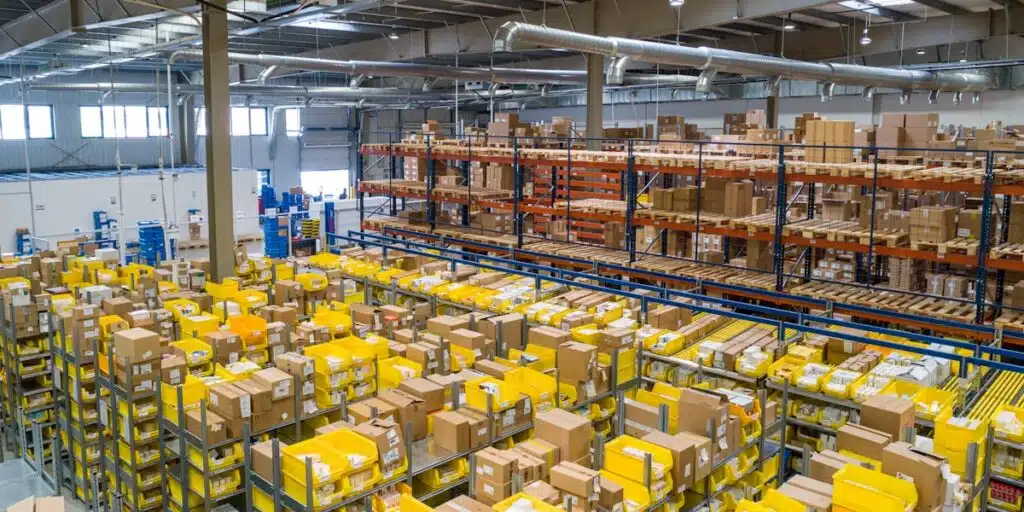
Figure 1: The journey from factory floor to European warehouse adds multiple cost layers beyond the initial unit price.
For decades, the equation seemed simple: China manufacturing offered lower unit prices, and European buyers sourced accordingly. But in 2026, that equation has fundamentally changed. China manufacturing real cost is no longer just about the price per piece—it encompasses shipping volatility, regulatory compliance, quality assurance, inventory carrying costs, and supply chain resilience. European procurement professionals are now asking a more sophisticated question: “What is the true total landed cost of sourcing from China?” Understanding the full China manufacturing real cost has become essential for making informed sourcing decisions that protect margins and ensure supply chain stability. This recalculation of China manufacturing real cost is driven by multiple factors that go far beyond the initial invoice.
The Traditional View: Unit Price vs. Total Landed Cost
Why Unit Price Alone Is Misleading
When European buyers compare quotes from Chinese suppliers against local alternatives, the initial unit price difference can be striking. According to industry data, CNC machining hourly rates in China range from $30-90, while German shops charge $70-160 per hour—an apparent 2-3x difference. However, this comparison ignores the complete cost picture. The true China manufacturing real cost includes many hidden elements.
The total landed cost (TCO) framework includes:
| Cost Component | What It Includes | Typical Impact |
|---|---|---|
| Unit Price | Manufacturing cost per piece | Baseline |
| Shipping & Logistics | Ocean/air freight, insurance, inland transport | +10-30% |
| Customs & Duties | Import tariffs, VAT, customs brokerage | +5-25% |
| Quality Costs | Inspection, rework, returns | +3-15% |
| Inventory Carrying | Safety stock, warehousing, financing | +2-8% |
| Supplier Management | Communication, audits, travel | +1-5% |
As one sourcing guide notes, “total landed cost—which includes shipping, duties, VAT, insurance, and potential rework—often narrows the raw price advantage” when comparing China versus European suppliers. Thus, evaluating China manufacturing real cost requires a holistic view.
Hidden Costs That Impact China Manufacturing Real Cost
1. Logistics Volatility and Transit Times
The gap between manufacturing cost and delivered cost has widened significantly. Ocean freight from China to Europe typically takes 25-45 days, with air freight at 3-7 days but at substantially higher cost. This transit time creates several hidden expenses that add to China manufacturing real cost:
- Working capital tied up in inventory for 1-2 months during transit
- Safety stock requirements to buffer against shipping delays
- Forecast uncertainty due to long lead times
For CNC machined components, where design changes or urgent requirements may arise, these extended lead times can force buyers to choose between expensive air freight or production delays, both increasing the overall China manufacturing real cost.
2. Material Price Volatility
Raw material costs have shown significant fluctuation. In early 2026, aluminum ingot prices increased by 8.3% in a single month, while electrolytic copper rose 6.4%. When sourcing from China, buyers face questions about how these fluctuations are handled:
- Does the supplier pass through material increases immediately?
- Are material surcharges transparently calculated?
- How does the supplier manage price volatility risk?
According to the National Bureau of Statistics of China, the nonferrous metals and cables purchasing price index surged 21.3% year-over-year as of February 2026. This volatility directly impacts the China manufacturing real cost equation, making it harder to predict final expenses.
3. Quality and Rework Costs
The true cost of quality issues extends far beyond the rejected parts themselves. When non-conforming components are discovered after arrival in Europe:
- Expedited replacement costs (air freight)
- Production downtime at the assembly line
- Expediting and follow-up management time
- Potential customer penalties for late delivery
A detailed CNC machining cost analysis reveals that “quality control expenses” can add 15-25% to projects with tight tolerances, as more inspections and verification are required. These factors significantly elevate China manufacturing real cost.
4. Compliance and Certification Costs
European regulations continue to evolve, with implications for imported manufactured goods. Buyers must verify that Chinese suppliers can provide:
- CE certification documentation
- REACH and RoHS compliance evidence
- Material traceability records
- ISO 9001 or IATF 16949 certification
As one industry source notes, “EU manufacturers generally excel in high-end, small-batch, highly regulated products where compliance with EU/UN-ECE rules and traceability are critical.” While Chinese suppliers can meet these requirements, the verification process adds cost and complexity, contributing to China manufacturing real cost.
Beyond Cost: Supply Chain Resilience
The Reliability Factor
Recent years have taught European manufacturers an expensive lesson: the cheapest supplier is worthless if they cannot deliver consistently. Supply chain disruptions—from port congestion to geopolitical tensions—have elevated reliability to a strategic priority. When evaluating China manufacturing real cost, resilience must be factored in.
A comparison of sourcing approaches reveals:
| Factor | Traditional China Sourcing | Resilient China Partnership |
|---|---|---|
| Relationship | Transactional, price-driven | Strategic, capability-driven |
| Communication | Reactive, limited | Proactive, transparent |
| Quality | Inspect-at-receipt | Built-in, documented |
| Lead Time | Fixed, inflexible | Flexible with buffer planning |
The “Second Source” Strategy
Many European manufacturers now maintain dual sourcing strategies—keeping critical production closer to home while using Chinese partners for non-core components or overflow capacity. This approach balances cost optimization with supply chain resilience, and helps manage China manufacturing real cost more effectively.
Practical Framework: Calculating Your True Cost
Step 1: Map Your Total Landed Cost
For any component sourced from China, calculate:
| Cost Element | Calculation Method |
|---|---|
| Base Unit Price | Supplier quote per piece |
| Tooling Amortization | Tooling cost ÷ total order quantity |
| Inspection Cost | Third-party inspection fees ÷ quantity |
| Ocean Freight | Container cost ÷ pieces per container |
| Insurance | ~0.5-1% of cargo value |
| Customs Duties | Applicable tariff % × declared value |
| VAT | Local VAT rate × (landed value + duties) |
| Inland Transport | Port-to-door delivery fees |
| Safety Stock Cost | Carrying cost % × value × safety stock quantity |
| TOTAL LANDED COST | Sum of all above |
This calculation is the foundation of understanding your true China manufacturing real cost.
Step 2: Factor in Soft Costs
The hard costs above tell only part of the story. Consider also:
- Engineering change responsiveness—how quickly can the supplier adapt?
- Design for manufacturability input—does the supplier add value?
- Communication efficiency—how much management time is required?
- Relationship stability—will pricing remain consistent over time?
These soft costs can significantly alter the China manufacturing real cost equation.
Step 3: Compare Alternatives
With total landed cost calculated, compare against:
- European suppliers (consider shorter lead times, lower inventory)
- Near-shoring options (Eastern Europe, Turkey, North Africa)
- Hybrid approaches (prototype locally, scale in China)
Each option has a different impact on the final China manufacturing real cost.
How Smart European Buyers Are Adapting
The Partnership Model
Forward-thinking procurement professionals are moving from transactional purchasing to strategic partnerships. They recognize that the China manufacturing real cost can be optimized through:
- Long-term agreements with transparent pricing mechanisms
- Joint quality planning rather than after-the-fact inspection
- Shared forecasting to optimize production scheduling
- Technical collaboration on design for manufacturability
According to CNC machining cost research, “setup costs remain constant whether you make one part or many—if you order more parts, the setup cost per part decreases.” This principle applies equally to the relationship investment—the more consistently you work with a supplier, the more efficiently they can serve you, reducing your China manufacturing real cost.
The Value of Transparency
Suppliers that provide clear cost breakdowns—showing material costs, machining time, setup fees, and profit margins separately—build trust that reduces the “uncertainty premium” buyers often add when calculating total cost. Transparency directly lowers the perceived China manufacturing real cost.
Starting Small, Scaling Smart
Experienced buyers recommend a phased approach:
- Test orders (50-100 pieces) to validate quality and communication
- Small production runs (200-500 pieces) to establish processes
- Volume production with documented quality systems
- Strategic partnership with shared planning and continuous improvement
This approach minimizes risk while allowing you to accurately assess China manufacturing real cost at each stage.
Conclusion: The New Equation for China Sourcing
The question is no longer “Is China cheaper?” but rather “What is the true China manufacturing real cost for my specific requirements, and how do I optimize it?” Understanding every component—from logistics and quality to compliance and relationship—is essential to making smart sourcing decisions.
For European procurement professionals, this means:
- Calculating total landed cost, not just unit price
- Evaluating suppliers on capability and reliability, not just cost
- Building partnerships that reduce uncertainty and hidden costs
- Maintaining strategic flexibility through dual sourcing where appropriate
Only by embracing this comprehensive view can you truly master the China manufacturing real cost and build a supply chain that delivers both value and resilience.
At Ranglink Precision Machinery, we embrace this transparency. We provide detailed cost breakdowns, maintain open communication, and work collaboratively with European clients to optimize their China manufacturing real cost—not just our unit price. Our ISO 9001-certified facility specializes in complex CNC machined components for automotive, automation, and industrial applications, with a focus on quality that reduces the hidden costs of rework and delays.
Ready to calculate your true sourcing cost? Contact us for a transparent quote and let’s explore how partnership, not just price, can optimize your supply chain.
📩 Email: rang@ranglink.com
📱 WhatsApp: +86 17338532394
🌐 Request a quote: www.ranglink.com
External Links
For deeper discussions on manufacturing cost optimization and supplier relationships, visit the Practical Machinist Forum where industry professionals share real-world experiences and strategies.
To understand the technical foundations of cost analysis, refer to Wikipedia’s Total Cost of Ownership page, which explains the comprehensive framework for evaluating purchasing decisions beyond initial price.