
What Really Determines CNC Machining Costs?
When you request a quote for CNC machined parts, the numbers can sometimes surprise you. Why does one simple bracket cost $50 while a seemingly similar part runs $500? The answer lies in understanding the CNC machining costs factors that influence every quote. CNC machining costs factors include material selection, part geometry, tolerance requirements, production volume, setup complexity, tooling needs, and post-processing—all of which combine to determine your final invoice. Whether you’re an engineer sourcing prototypes or a procurement manager planning production runs, knowing these factors helps you make smarter decisions and avoid unexpected expenses. This guide breaks down each element so you can better understand quotes and optimize your designs for cost efficiency.
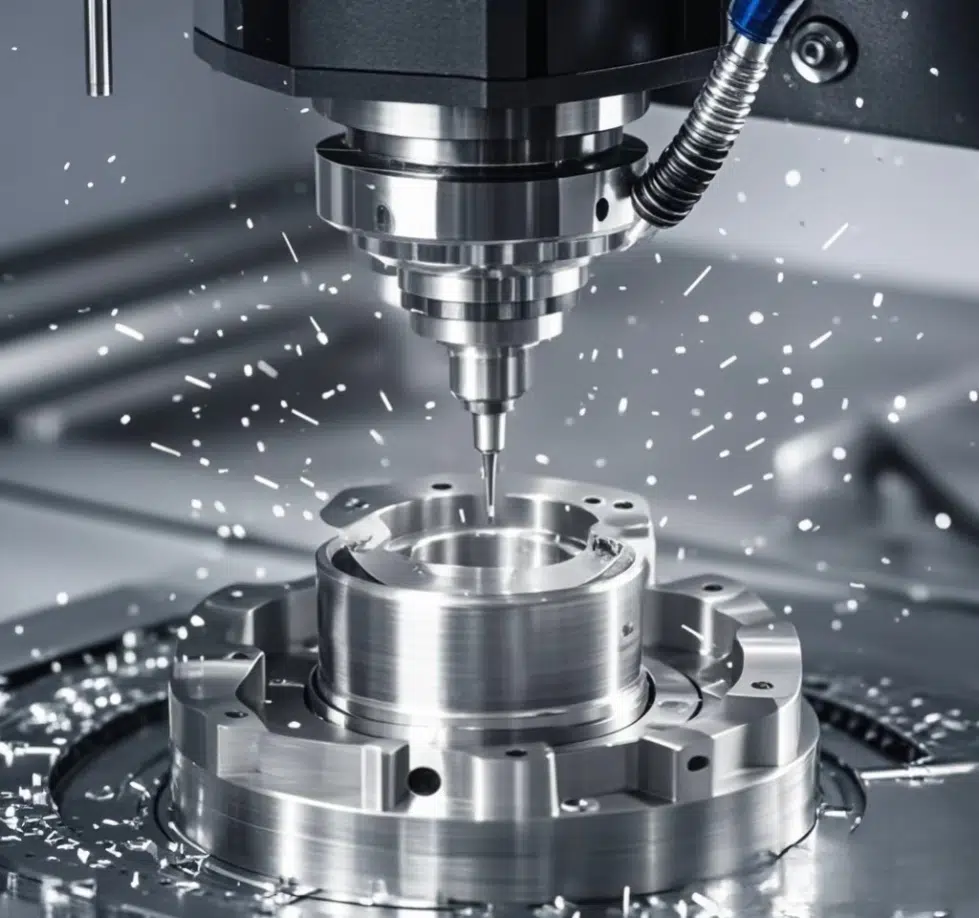
Figure 1: Every cut adds time, and time equals cost. Understanding what drives machining expenses helps you control them.
1. Material Selection: The Foundation of Cost
The material you choose is perhaps the most fundamental CNC machining costs factor. Material costs can vary by an order of magnitude depending on your selection.
Material Price Ranges
- Standard metals: Aluminum 6061 costs approximately $17 per 6″×6″×1″ block
- Engineering plastics: ABS and Delrin offer moderate pricing with good machinability
- Premium alloys: Stainless steel, titanium, and Inconel can cost 5-10× more than aluminum
Why Material Matters Beyond Raw Cost
Harder materials like stainless steel and titanium require:
- Specialized cutting tools with premium coatings
- Slower machining speeds (sometimes 50-70% slower than aluminum)
- Increased tool wear and more frequent replacements
- Higher rigidity requirements for the machine tool
As one industry source notes, “Harder materials require specialized tools and slower machining speeds” . A material like aluminum 6061 is considered highly machinable, allowing for faster feed rates and longer tool life—directly translating to lower costs.
Practical tip: For non-critical components, consider whether a less expensive, easier-to-machine material could meet your functional requirements .
2. Part Geometry and Complexity
The old saying “time is money” has never been truer than in CNC machining. Part complexity directly determines machining time, which typically represents 12-18% of total cost for aluminum parts in moderate batch sizes .
Cost-Driving Geometric Features
- Deep cavities: Require long tools that are prone to deflection and vibration
- Thin walls: Risk deformation during machining; metals should be at least 0.8mm thick
- Small internal radii: May require multiple passes with smaller tools
- Undercuts and angled features: Often need specialized tooling or multi-axis setups
The Multi-Axis Premium
Parts requiring 4-axis or 5-axis machining command higher rates because:
- Equipment investment is significantly higher ($420,000+ for mid-range 5-axis machines )
- Programming complexity increases substantially
- Operator skill requirements are greater
A 3-axis mill typically runs $35-$55 per hour, while 5-axis centers command $75-$130 per hour . However, multi-axis machining can reduce total cost by eliminating multiple setups—it’s a trade-off worth evaluating.
Practical tip: Consider splitting highly complex parts into simpler components that can be assembled later . This often reduces overall machining cost despite adding assembly operations.
3. Tolerances and Precision Requirements
Tolerance requirements have an exponential—not linear—impact on cost. Moving from ±0.1mm to ±0.025mm can increase machining time by 100% or more .
The Cost of Tight Tolerances
- Standard tolerances (±0.1mm): Achievable with normal machining parameters
- Precision tolerances (±0.025mm): Require slower speeds, additional finishing passes, and frequent in-process measurement
- High-precision (±0.005mm): May need specialized equipment, temperature-controlled environments, and multiple inspection steps
As one experienced machinist notes on industry forums, “diminishing returns kick in really early” when pushing for extreme accuracy . The difference between a standard machine and a high-precision machine can be tens of thousands of dollars, and that investment must be recovered through shop rates.
Practical tip: Apply tight tolerances only to functional mating surfaces. For non-critical dimensions, use standard tolerances . Review your drawings and ask: “Does this feature really need ±0.01mm, or would ±0.1mm work just as well?”
4. Production Volume and Economies of Scale
Volume is perhaps the most powerful lever for reducing per-part cost. The relationship between quantity and unit price isn’t linear—it follows an economy of scale curve.
How Volume Affects Cost
- Prototype (1-10 pieces): Highest per-unit cost due to setup, programming, and fixturing amortized over few parts
- Low-volume (10-100 pieces): Setup costs begin to spread, but per-part time remains significant
- Mid-volume (100-1,000 pieces): Economies of scale take effect; per-part cost drops significantly
- High-volume (1,000+ pieces): Maximum efficiency; setup costs fully amortized; potential for automation
The Break-Even Point for In-House vs. Outsourcing
For companies considering bringing work in-house, industry data suggests the break-even point for 3/4-axis work is typically between 1,600-2,400 hours per year. For true 5-axis work, the threshold drops to 1,000-1,500 hours due to higher outsourcing premiums .
Practical tip: If you need prototypes, consider ordering multiple units at once. The incremental cost of additional parts is often much lower than the first unit, and you’ll have spares for testing.
5. Setup and Programming Costs
Hidden costs often lurk in setup and programming—expenses that may not appear in a simple per-hour rate quote.
What’s Included in Setup
- Fixture design and fabrication: Custom workholding can cost hundreds to thousands of dollars
- Machine setup time: Loading tools, zeroing work offsets, and test runs
- Programming: CAM programming typically runs $50-$150 per hour
The Impact of Design Changes
Engineering changes after release can trigger additional charges. As one source notes, “debit for design changes after release” is a common adder in shop quotes . Each change may require reprogramming, new tooling, and additional setup time.
Practical tip: Finalize your design before sending for quote. If changes are unavoidable, understand your supplier’s revision policy and potential costs upfront.
6. Tooling and Consumables
Tooling costs can surprise buyers who don’t realize what’s required for their specific part features.
Tooling Cost Drivers
- Special diameters: Non-standard hole sizes may require custom tools
- Long-reach tools: Deep cavities need extended-length tools at premium prices
- Exotic materials: Machining Inconel or titanium can consume tools rapidly
- Specialized coatings: Diamond or CBN tooling for abrasive materials
One shop reports that on difficult materials, tooling alone can run $18-$25 per hour of machining time . For high-temperature alloys like Inconel 718, a single face mill body with inserts can top $1,200, with inserts at $65 each .
Practical tip: Use standard drill sizes whenever possible . This allows your machinist to use standard tooling rather than ordering expensive custom drills. For high-volume production, investing in higher-quality tooling often pays off through longer tool life and better surface finish .
7. Finishing and Post-Processing
The raw machined part is often just the beginning. Surface treatments and secondary operations add significant cost.
Common Post-Processing Costs
- Anodizing: Adds corrosion resistance and color options
- Plating: Chrome, zinc, nickel—each with different price points
- Passivation: For stainless steel corrosion resistance
- Heat treatment: Stress relieving, hardening, tempering
- Polishing: Achieving mirror finishes requires skilled labor
These processes typically require specialized vendors, adding logistics coordination and potential quality delays. Some finishes (like hard anodizing or specific color matching) command premiums due to tighter process controls.
Practical tip: Specify finishes only where functionally necessary. If a component won’t be visible, consider whether a cosmetic finish adds real value. Discuss finishing options with your supplier early—they may suggest alternatives that meet requirements at lower cost .
Hidden Costs That Can Inflate Your Quote
Beyond the seven main factors, several hidden charges can catch buyers off guard:
Common Hidden Fees
- Material markup: Shops often add 18-35% above market material prices
- Minimum order charges: $25-$200 depending on the shop
- Inspection reports: Full CMM reports can add $50-$150 per part
- Expedite fees: 25-50% premium for rush orders
- Packaging and freight: Often quoted separately
One Reddit discussion highlighted that “companies often pay 200-300% more than necessary due to hidden fees and poor negotiation strategies” . The key is getting detailed, itemized quotes and understanding exactly what’s included.
Quality Costs That Don’t Show Up Until Assembly
Perhaps the most expensive hidden cost is quality escape. A dimension missed by 0.012mm can scrap an entire downstream assembly. The average cost of one quality escape in aerospace supply chains runs $8,000-$25,000 after inspection, rework, expedited shipping, and line-down charges .
Practical Strategies to Reduce CNC Machining Costs
1. Optimize Your Design
Apply Design for Manufacturability (DFM) principles early :
- Avoid thin walls (metal <0.8mm, plastic <1.5mm)
- Limit deep cavities that need long tools
- Use standard drill sizes
- Add radii to internal corners (allows larger tools)
- Consider modular designs for complex parts
2. Choose Materials Wisely
Balance performance requirements with machinability. Sometimes a slightly more expensive material that machines faster results in lower total cost . Aluminum 6061 remains the benchmark for cost-effective machining .
3. Consolidate Orders
Batch similar parts together to amortize setup costs. If you need 50 pieces over six months, consider ordering them at once rather than in multiple small batches .
4. Build Supplier Relationships
Long-term customers often receive better pricing . Shops value predictable work and will invest more in understanding the needs of regular clients. The National Tooling & Machining Association notes that high-performance shops grow sales 8.5% faster by targeting the right work and building strong customer relationships .
5. Get Detailed Quotes
Request itemized quotes that break down:
- Setup fees
- Material costs with markup
- Machining time and rate
- Tooling charges
- Inspection and reporting
- Finishing and post-processing
This transparency allows you to compare apples-to-apples and identify areas for negotiation .
Industry Benchmarks: What Should You Pay?
While every project is unique, here are general 2025 benchmarks for CNC machining services :
| Machine Type | Typical Hourly Rate | Best For |
|---|---|---|
| Garage shops | $35-$45/hour | Simple parts, low precision needs |
| 3-axis job shops | $65-$85/hour | Standard production, moderate complexity |
| 5-axis specialists | $110-$150/hour | Complex geometries, tight tolerances |
| Tier 1 aerospace | $135-$185/hour | Critical components, full documentation |
For aluminum parts, expect total landed costs (including all fees) to be 40-60% above the base hourly rate once programming, setup, material markup, and finishing are included .
Conclusion: Knowledge Is Your Best Cost-Reduction Tool
Understanding the CNC machining costs factors that influence pricing puts you in control. Rather than simply accepting quotes, you can engage in informed discussions with suppliers about design optimization, material selection, and process choices that balance quality with budget.
The most successful manufacturers treat cost management as a partnership with their suppliers. They share their design intent, ask for DFM feedback, and build relationships based on transparency and mutual benefit. As the National Tooling & Machining Association emphasizes, “cost reductions aren’t accidental—they’re earned” through deliberate strategy and continuous improvement .
Whether you’re sourcing prototypes or planning production runs, use the factors outlined in this guide to ask better questions, evaluate quotes more effectively, and ultimately get higher-quality parts at competitive prices.
Have a project in mind? Contact Ranglink Precision Machinery for a detailed, transparent quote. Our engineers will review your design, identify potential cost savings, and deliver quality parts that meet your exact specifications.
📩 Email: rang@ranglink.com
📱 WhatsApp: +86 17338532394
🌐 Request a quote: www.ranglink.com
Related Reading
- Ensuring Robotic Precision: CNC Machining Strategies
- From 3D Model to Automated Cell: Fast-Track Custom Fixturing
- From Digital to Physical: CNC Machining Perfect Class-A Surfaces
External Links:
For more technical discussions on machining challenges and cost optimization, visit the Practical Machinist Forum—a valuable community where experienced professionals share insights on everything from tooling selection to shop management .
To understand the technical specifications behind tolerance requirements, refer to Wikipedia’s Surface Roughness page, which explains the measurement standards (Ra, Rz, etc.) commonly referenced in engineering drawings.